Canada Blocks U.S. Banks? Fact-Checking the Viral “Financial War” Claim Shaking Wall Street
Viral Claims of a U.S.–Canada Financial War Go Global
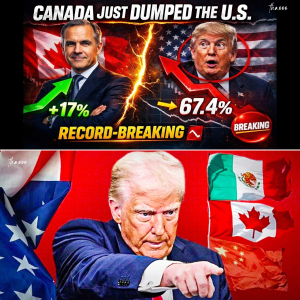
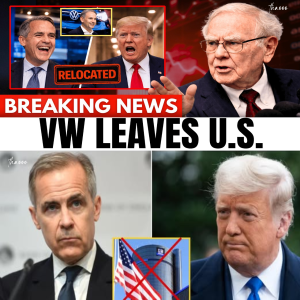
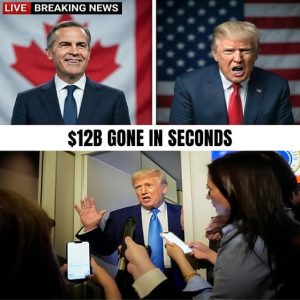
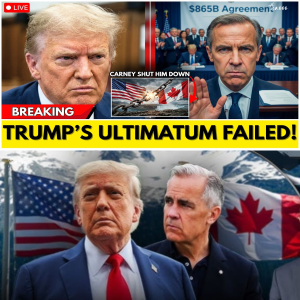
A dramatic YouTube video is circulating online claiming that Canada has suspended the licenses of major American banks, effectively “kicking Wall Street out” in retaliation for tariffs imposed by former U.S. President Donald Trump.
The video alleges that Canadian Prime Minister Mark Carney ordered a sweeping financial blockade through Canada’s banking regulator, freezing over $100 billion in American banking assets and triggering panic on Wall Street.
The claims are explosive.
But are they true?
Has Canada Actually Blocked U.S. Banks?
As of verified public information, there is no official confirmation that Canada has suspended the operating licenses of American Schedule II or Schedule III banks.
Such an action would:
-
Be formally announced by Canada’s financial regulator
-
Trigger immediate filings with global financial authorities
-
Cause documented trading halts or regulatory disclosures
-
Be reported by major financial outlets such as Reuters, Bloomberg, or the Financial Times
No such confirmation exists.
The video presents the situation as an unprecedented financial war, but there is currently no evidence that Canada has frozen U.S. banking assets or revoked clearing privileges.
Understanding the Canadian Banking System
The transcript references Canada’s “Big Six” banks, which indeed dominate the country’s financial sector:
-
Royal Bank of Canada (RBC)
-
TD Bank
-
Scotiabank
-
BMO
-
CIBC
-
National Bank of Canada
Canada’s banking system is more concentrated and tightly regulated than the U.S. system. The regulatory body responsible for overseeing banks is the Office of the Superintendent of Financial Institutions (OSFI).
However, invoking national economic security protocols to block U.S. banks would represent one of the most aggressive financial retaliations in modern North American history.
There is no verified indication that OSFI has taken such steps.
The Tariff Context: Trump’s Trade Strategy
The narrative frames this alleged escalation as retaliation against tariffs imposed by Donald Trump.
During his presidency, Trump did impose tariffs on Canadian steel and aluminum under Section 232 national security provisions. These measures strained relations but did not lead to financial system blockades.
Trade disputes between the U.S. and Canada historically unfold through:
-
Negotiations
-
World Trade Organization complaints
-
Reciprocal tariffs
-
Diplomatic channels
They do not typically escalate into systemic financial isolation between two deeply integrated economies.
Why a Banking Blockade Would Be Catastrophic
The U.S. and Canada share one of the most integrated financial systems in the world.
American banks operate subsidiaries in Canada, and Canadian banks operate extensively in the United States. For example:
-
TD Bank has a major U.S. presence.
-
RBC operates substantial U.S. capital markets divisions.
If either country froze the other’s banking operations:
-
Cross-border trade financing would stall.
-
Corporate payrolls could be disrupted.
-
Energy markets in the U.S. Northeast could experience financing stress.
-
Credit markets would tighten rapidly.
Such an action could potentially trigger severe volatility in global markets.
But again, no verified reports indicate that this scenario is currently happening.
Market Reaction: What Would We See?
If $100+ billion in American banking assets were frozen:
-
Major U.S. banks such as JPMorgan, Citi, or Bank of America would issue immediate disclosures.
-
The New York Stock Exchange would reflect extreme volatility.
-
The U.S. Treasury Department would release a public statement.
-
The Bank of Canada would coordinate communication to prevent panic.
Financial warfare of this magnitude cannot occur quietly.
Markets are highly sensitive to systemic risk. A confirmed regulatory freeze would dominate global headlines within minutes.
The Geopolitical Narrative
The video frames the situation as a strategic masterstroke by Mark Carney, portraying him as a former central banker leveraging institutional precision against populist tariff policy.
It contrasts:
-
Trump’s aggressive tariff tactics
-
Carney’s alleged regulatory counterstrike
While Carney has extensive experience in global finance—having led both the Bank of Canada and the Bank of England—there is no evidence that he has weaponized Canada’s banking regulator in this way.
The narrative leans heavily into political dramatization rather than documented financial action.
Could a Financial Escalation Ever Happen?
In theory, yes.
Modern economic conflicts increasingly involve:
-
Sanctions
-
Regulatory restrictions
-
Capital controls
-
Targeted financial isolation
However, such tools are typically used against geopolitical adversaries—not close allies with deeply intertwined economies like the United States and Canada.
Canada is one of America’s largest trading partners. The two economies exchange hundreds of billions of dollars annually.
A sudden financial rupture would damage both nations severely.
What This Means for Consumers
Even without confirmed banking blockades, tariff disputes can have real economic effects:
-
Higher import costs
-
Supply chain disruption
-
Increased mortgage and loan rates if markets tighten
-
Currency fluctuations
Trade uncertainty alone can influence lending standards and investment flows.
But claims of immediate asset freezes and systemic collapse should be approached with caution unless verified by credible financial authorities.
Why Viral Financial Panic Spreads Quickly
Financial fear spreads faster than almost any other type of news.
Reasons include:
-
Personal exposure (mortgages, savings, retirement funds)
-
Market sensitivity to uncertainty
-
Political polarization amplifying narratives
When videos frame events as “unrestricted financial war” or “mutually assured economic destruction,” the language can escalate anxiety even in the absence of confirmed facts.
It is critical to verify before reacting.
The Bottom Line
There is currently no verified evidence that:
-
Canada has suspended U.S. bank licenses
-
$113 billion in American banking assets are frozen
-
Wall Street is locked out of Canada
The U.S.–Canada trade relationship has experienced tension in the past, particularly during tariff disputes under Donald Trump. But escalation to a full-scale financial blockade would represent an extraordinary and historically unprecedented step.
Such an action would be immediately visible across global markets and financial reporting channels.
Until official confirmation emerges from Canadian regulators, U.S. authorities, or major financial institutions, claims of a “financial war” should be treated as speculative and unverified.
Final Thought: Trade Wars vs. Financial Wars
Trade wars affect goods.
Financial wars affect capital.
The difference is enormous.
While tariffs can strain diplomatic relations, a coordinated banking shutdown between the United States and Canada would risk destabilizing the North American economy itself.
For now, the viral claims appear to be political commentary amplified through dramatic storytelling rather than confirmed economic reality.
Investors, homeowners, and business owners should rely on official financial disclosures—not viral headlines—when assessing risk.