The dramatic confrontation between Prime Minister Mark Carney and Opposition Leader Pierre Poilievre in the Canadian House of Commons has quickly become one of the most dissected political moments of the year.
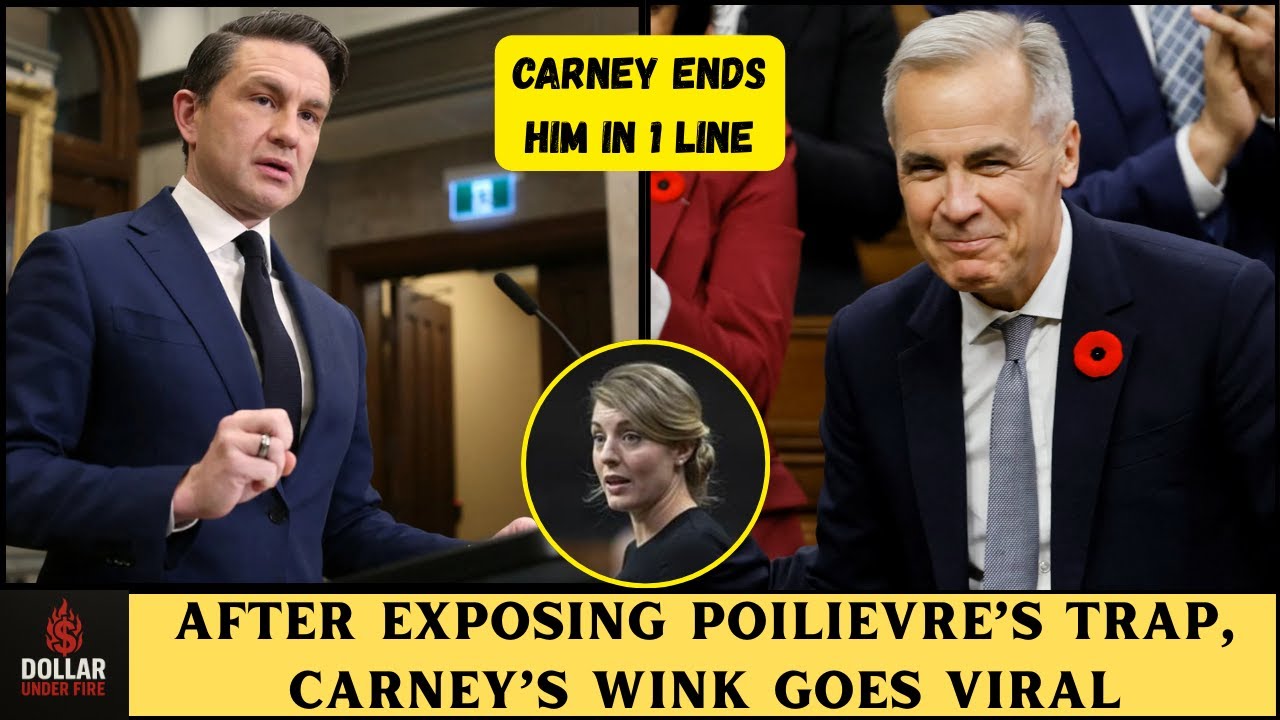 What began as a seemingly strategic move by Poilievre — a motion he believed would trap Carney and expose inconsistencies in the government’s energy policies — ended up collapsing entirely in real time. Instead of cornering the Prime Minister, Poilievre inadvertently set the stage for his own argument to unravel under scrutiny.
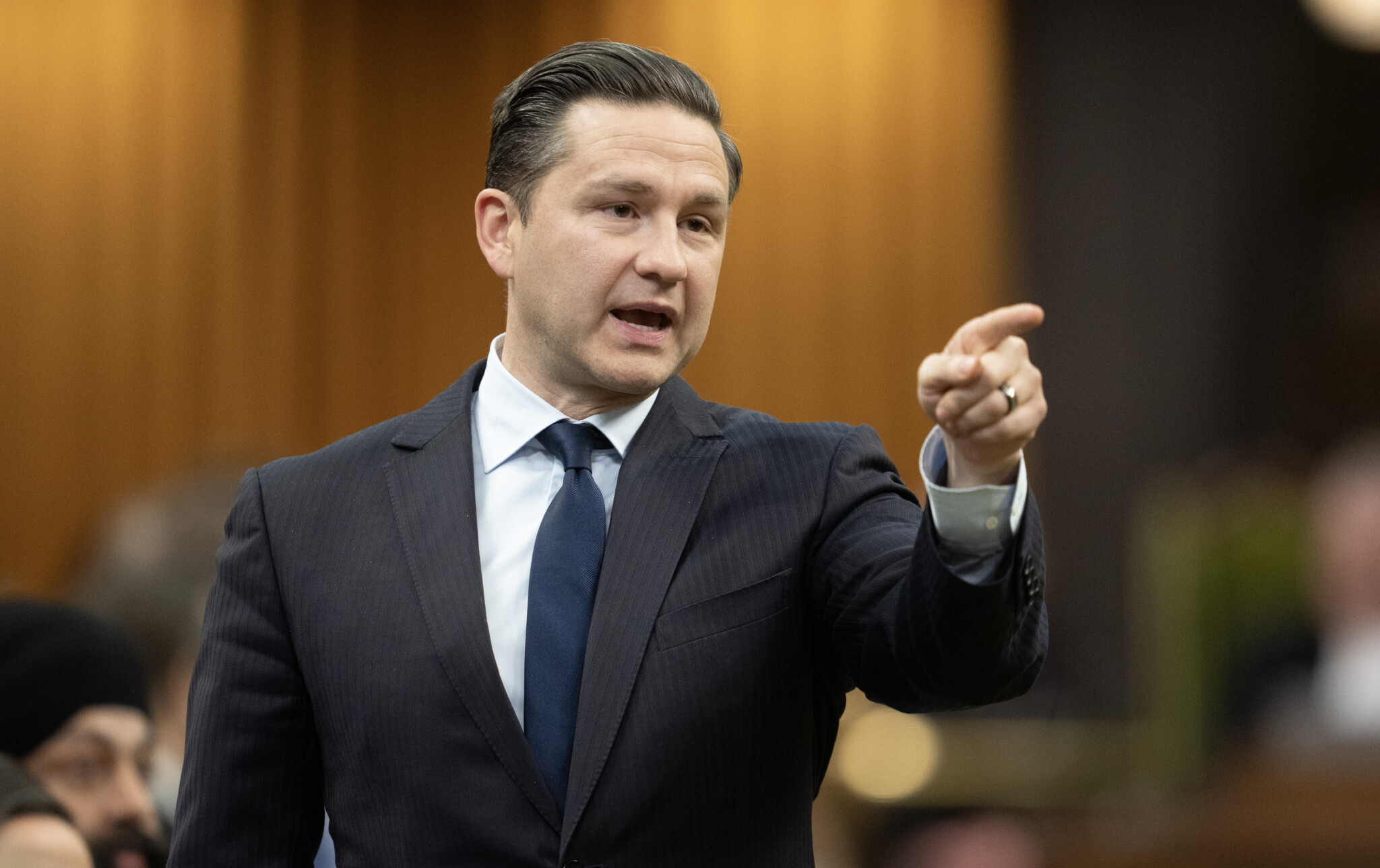
The controversy centered on a motion Poilievre introduced, which he claimed was taken “word-for-word” from the Alberta–Ottawa energy and emissions agreement. His plan was clear: position Carney as someone who supports pipelines and emissions policy flexibility when speaking in Alberta, but who contradicts those positions once back in Ottawa. This, Poilievre believed, would highlight hypocrisy and give the Conservative Party a decisive narrative advantage.
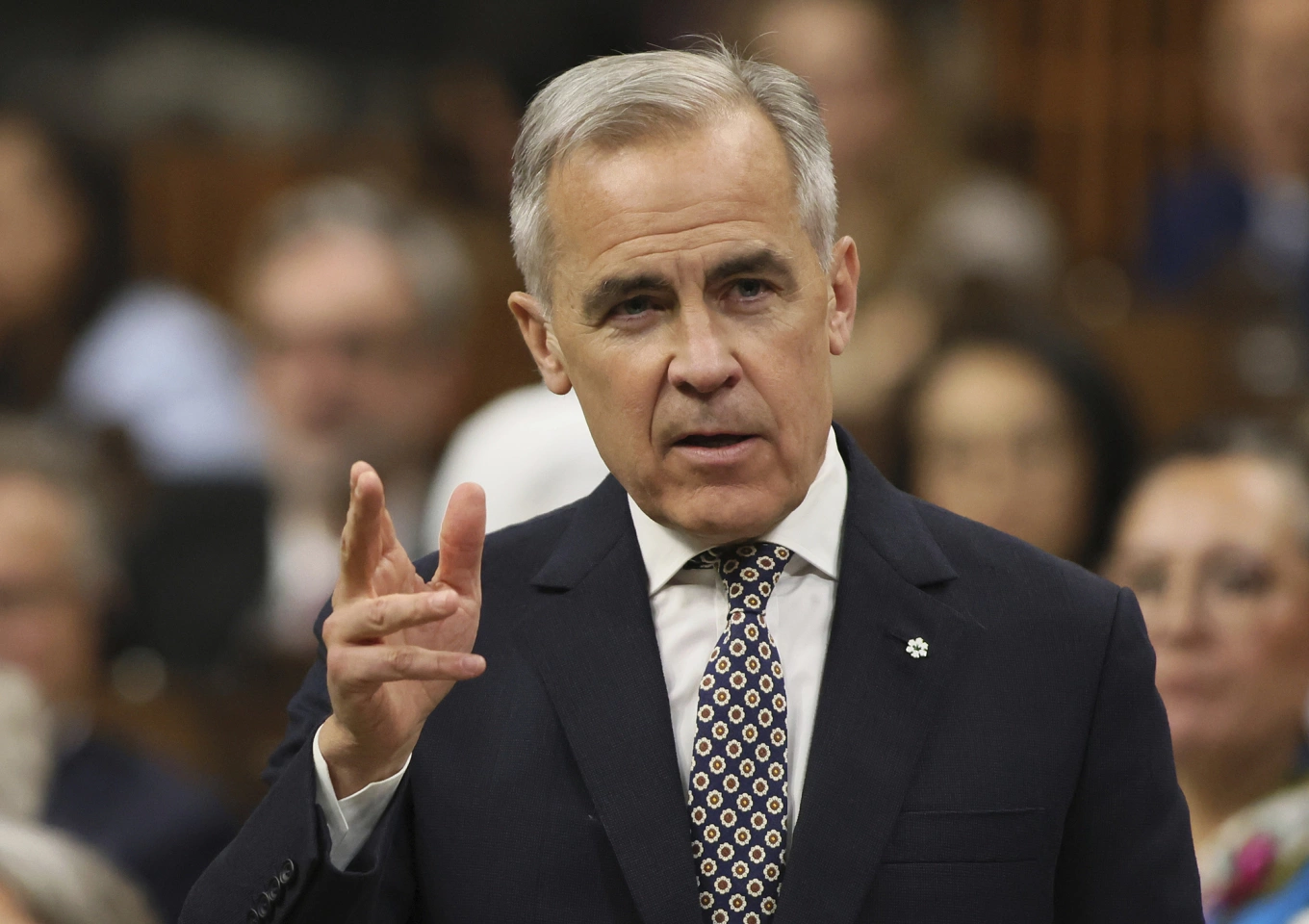
But the moment Carney rose to speak, the chamber shifted noticeably. Rather than responding emotionally or defensively, Carney adopted a methodical, structured approach. He explained that the Alberta–Ottawa agreement cannot be understood by isolating a single paragraph, because it is not a one-page political talking point but a multi-component policy framework. It encompasses industrial carbon pricing, methane emission standards, interprovincial electricity connections, Indigenous consultation requirements, carbon capture responsibilities, and the national commitment to achieving net-zero emissions by 2050.
From this foundation, Carney delivered the line that instantly reframed the debate: understanding the agreement requires “eating the whole meal, not just picking the appetizer.” It was both an analytical and philosophical rebuttal — a reminder that policymakers cannot selectively extract fragments that support their agendas. In the context of long-term strategy, he argued, selective interpretation is not just misleading; it is destabilizing.
The turning point came when Carney highlighted something Poilievre had not anticipated. By including specific clauses related to Indigenous jurisdiction and provincial authority over pipelines in his motion, Poilievre had unintentionally endorsed principles he frequently downplays in public speeches. In other words, the motion Poilievre designed to expose Carney ended up exposing contradictions within his own policy narratives.
Carney deepened the blow by correcting one of Poilievre’s recurring claims — that industrial carbon pricing increases food prices. Citing data from the Climate Institute, Carney clarified that farms below 50 kilotons are not subject to industrial carbon costs at all, and that the price impact on food is “nearly zero.” The rebuttal was rooted entirely in data, leaving Poilievre visibly absent of comparable evidence to defend his assertions.
As the exchange continued, the contrast between the two leaders became even more pronounced. Carney’s responses built upon each other with logical coherence, connecting the Alberta agreement to national climate strategy, energy transition planning, and long-term economic resilience. Poilievre, by contrast, repeated the same core talking point, which grew weaker as the broader context became clearer through Carney’s explanation.
Political analysts have since pointed out that Poilievre’s strategy suffered from a fundamental miscalculation: he attempted to compress a highly complex, multi-layered policy into a simplified narrative for partisan advantage. Once Carney restored the fuller context, the structure of Poilievre’s argument no longer held. His “perfect trap” was revealed to rely on selective quoting — a tactic that cannot withstand a deeper, evidence-based examination.
Media outlets and energy policy experts have emphasized that the exchange reflects more than just a momentary win for Carney. It raises a critical question about leadership competence at a time when energy security, climate policy, and economic planning are increasingly interconnected. Carney’s ability to articulate multi-sector policy relationships, while maintaining clarity and composure under pressure, reinforces his image as a strategic thinker with a firm grasp of national priorities.
Meanwhile, Poilievre’s performance has reignited discussion about whether political simplification — especially on issues as complex as energy transition — can remain effective when confronted with detailed, transparent analysis. His attempt to distill the Alberta agreement into a single-issue narrative has been criticized as insufficient for the depth of today’s policy landscape.
Ultimately, the Carney–Poilievre confrontation will likely be remembered not just for the viral exchange in Parliament, but for what it reveals about the strengths and weaknesses of both leaders. In a political era defined by global energy uncertainty and climate commitments, the ability to navigate complexity may prove more decisive than the ability to craft a viral soundbite.