As Tariff Pressures Rise, Canada Bets on Diversification Over Dependence
By any traditional measure, Canada should be bracing for impact.
With President ŤRUMP once again wielding tariffs as an instrument of leverage, Ottawa faces a familiar challenge: how to preserve economic stability while its largest trading partner signals unpredictability. Yet instead of retreating into caution, Prime Minister Mark Carney has chosen acceleration.
Standing beside Indian Prime Minister Narendra Modi this week, Carney announced a series of agreements that together represent one of the most assertive shifts in Canadian trade policy in a generation. At the center was a $2.6 billion uranium supply contract between India and Cameco, the Saskatchewan-based nuclear fuel producer. The deal is designed to support India’s expanding civilian nuclear energy ambitions while reinforcing Canada’s position as a stable supplier of critical resources.
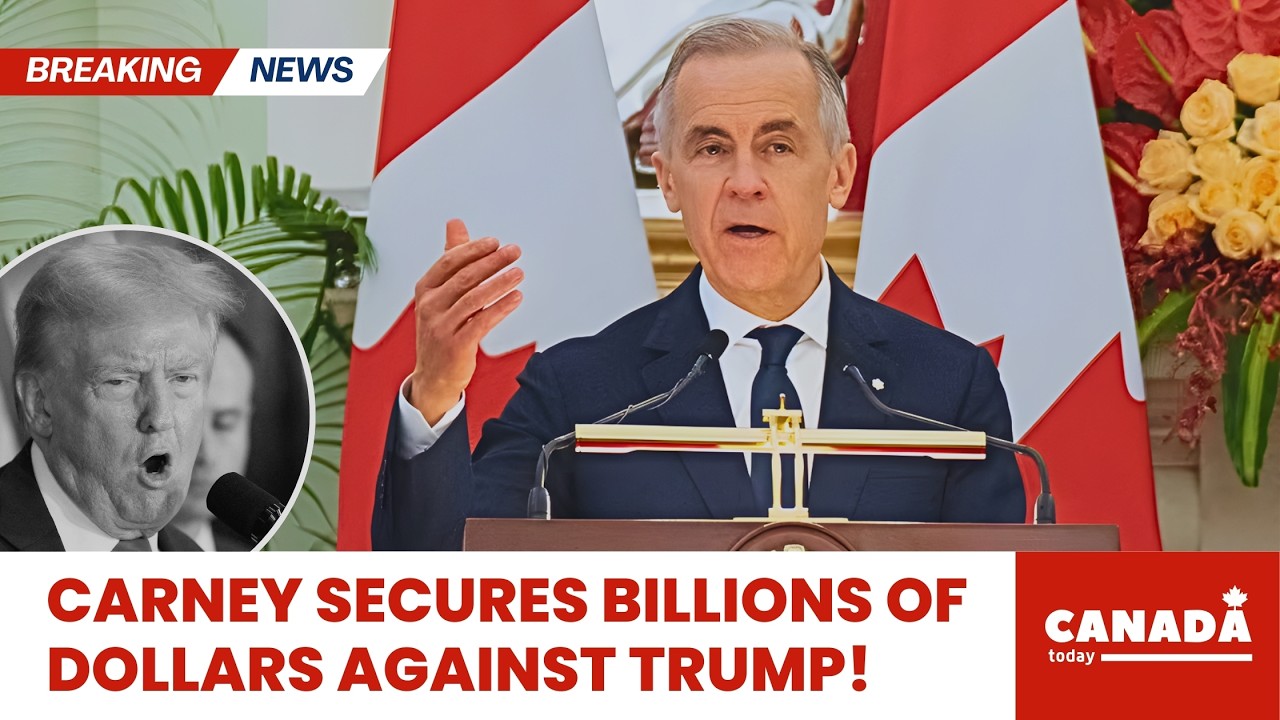
But the uranium contract was only part of a broader message.
Carney outlined a strategic energy partnership, expanded cooperation on critical minerals and clean liquefied natural gas exports, and a faster regulatory pathway for major projects. He pledged that federal and provincial approvals for nationally significant investments would be secured within two years — a timeline intended to reassure global capital that Canada can execute as well as promise.
The speech was calibrated not just for Indian officials but for a global audience of investors and policymakers. Carney emphasized that Canada’s business tax rate on new investment is roughly half the Group of Seven average and 4.5 percentage points below that of the United States. He described Canada’s fiscal position as the strongest balance sheet in the G7 and highlighted free trade agreements with 51 nations covering approximately 1.5 billion consumers.
The implicit contrast was unmistakable.
Where Washington debates tariff schedules, Ottawa is marketing certainty. Where the United States signals friction, Canada is positioning itself as a gateway — to Europe through CETA, to Asia through CPTPP, and increasingly to India through energy and resource ties.
The strategy is not merely defensive. It is a calculated pivot toward diversification.
For decades, Canada’s prosperity has rested heavily on access to the American market. Roughly three-quarters of its exports still flow south. That reality has long made Ottawa vulnerable to political cycles in Washington. Tariff threats — whether over steel, lumber, autos or agriculture — reverberate quickly through Canadian boardrooms.
Carney’s answer appears to be structural rather than rhetorical. Instead of responding to each threat individually, he is attempting to reduce the exposure itself.
“Nostalgia is not a strategy,” he told business leaders — a phrase that carries weight beyond its surface simplicity. The era of assuming frictionless continental integration may be over. In its place, Carney is proposing a networked approach: multiply trade corridors, deepen resource partnerships, and secure long-term contracts that outlast electoral cycles.
Energy lies at the core of this recalibration. Uranium, critical minerals, and liquefied natural gas are not symbolic commodities; they are strategic assets in a world increasingly defined by supply chain security and energy transition. By positioning Canada as a reliable supplier to India — one of the fastest-growing major economies — Ottawa strengthens its leverage in a multipolar landscape.
At the same time, the government is signaling domestic reform. Reducing regulatory delays for major projects has been a persistent demand from industry. By committing to a two-year approval horizon, Carney is addressing concerns that Canada’s environmental and intergovernmental processes, while thorough, have often been slow.

Critics caution that implementation will determine success. Promises of regulatory streamlining have surfaced before. Moreover, diversification cannot happen overnight. The gravitational pull of the United States — in geography, infrastructure and consumer demand — remains immense.
Still, the shift in tone is significant.
Under tariff pressure, many governments instinctively turn inward. Canada is doing the opposite. It is expanding engagement with India, strengthening ties with the European Union, and maintaining active dialogues with partners across Asia and the Gulf. The message is that volatility in one corridor can be offset by stability in others.
Whether this strategy ultimately insulates Canada from American trade turbulence is uncertain. Economic interdependence between the two countries is too deep to unwind quickly. But Carney’s approach suggests a broader rethinking: resilience through diversification, not dependence.
In a period when economic nationalism is resurgent, Canada is wagering that openness — strategically structured and carefully negotiated — can be a form of strength rather than vulnerability.
The test will not be in the announcements but in the contracts executed, the projects approved, and the capital deployed. Yet in choosing to sign multibillion-dollar agreements amid tariff rhetoric, Ottawa has sent a signal.
Canada does not intend merely to endure pressure. It intends to reorient around it.