OTTAWA — Industry Minister Mélanie Joly accused Conservative Leader Pierre Poilievre of directly copying Prime Minister Mark Carney’s positions on trade diversification and economic resilience, renewing a line of attack that has become a recurring feature of parliamentary exchanges and public commentary in recent weeks.

Speaking to reporters following a cabinet committee meeting on February 28, 2026, Joly pointed to Poilievre’s February 26 keynote address to the Economic Club of Canada, in which he called for accelerated critical minerals development, renewed energy infrastructure projects, stronger domestic supply chains, and targeted exemptions in future U.S. trade arrangements. She described several of those proposals as “lifted almost verbatim” from government announcements and legislation introduced since the Liberals returned to power in 2025.
“Mr. Poilievre is now repeating word-for-word what the prime minister and this government have been saying and doing for over a year,” Joly stated. “When you have no original plan for Canadians facing tariffs and economic uncertainty, the easiest path is to borrow someone else’s.”
The accusation fits within a broader pattern observed by political analysts: when governing and opposition parties face the same voter priorities — in this case, persistent U.S. tariffs, job losses in export-dependent sectors, rising costs, and questions over long-term economic sovereignty — their policy prescriptions frequently begin to converge. Public opinion research from multiple firms has shown cost of living, trade relations with the United States, and job protection ranking as the top three concerns among Canadian voters consistently since mid-2025.
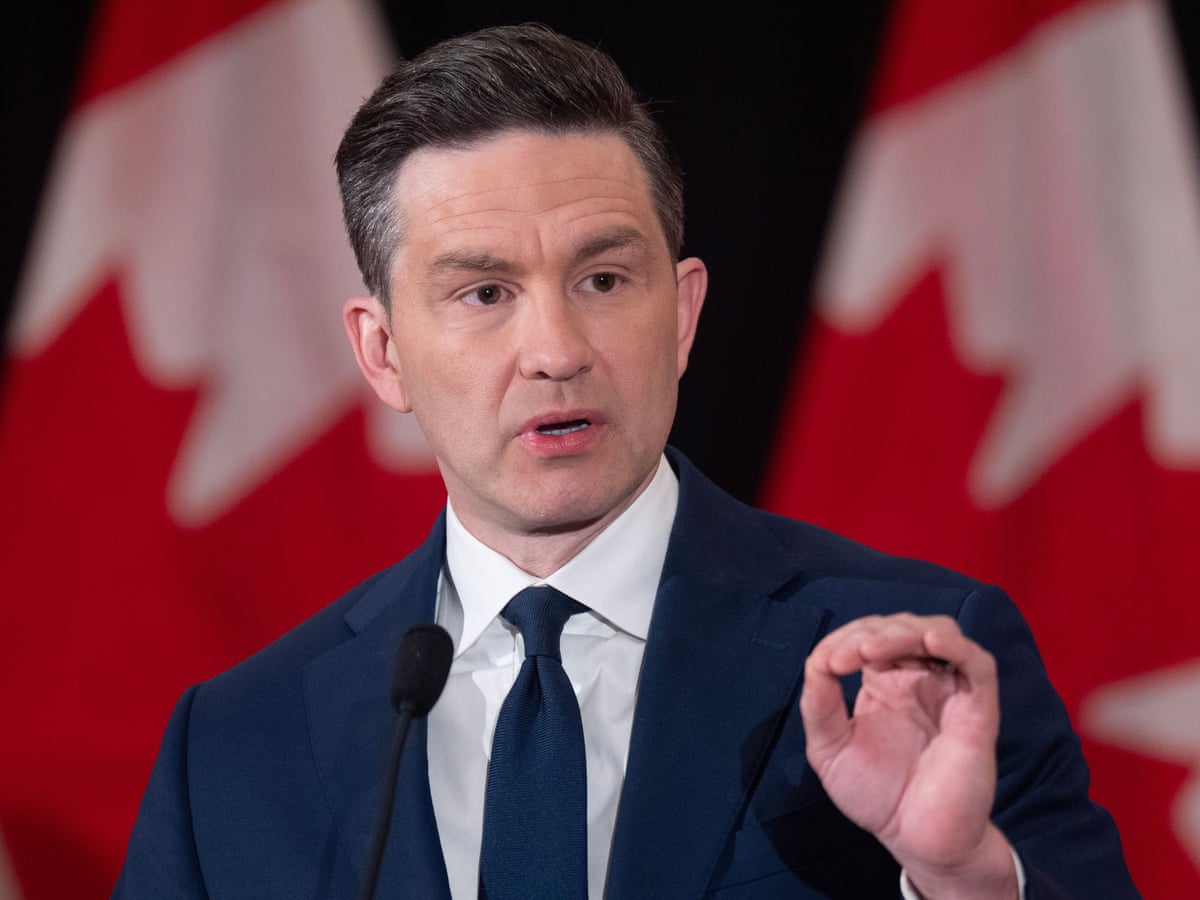
Poilievre’s team dismissed the charge as deflection. Conservative spokesperson Sebastian Skamski responded that “Canadians don’t care who said it first — they care who can actually deliver results. The government has had a year to resolve tariffs and diversify markets. They’ve delivered speeches and photo-ops. We’re offering a concrete plan to build leverage at home.”
Several elements of Poilievre’s Economic Club speech do overlap with government initiatives. Both sides have advocated for:
- Expanding critical minerals production and creating strategic reserves to reduce reliance on single-country supply chains;
- Pursuing new bilateral and multilateral trade frameworks to offset U.S. market access challenges;
- Modernizing interprovincial trade rules to improve domestic economic efficiency;
- Strengthening rules-of-origin provisions in any future North American auto-sector arrangements to limit Chinese content.
Where the approaches diverge is in emphasis and sequencing. The government has prioritized high-profile international diplomacy — including Prime Minister Carney’s visits to Beijing, New Delhi, Canberra, and European capitals — alongside targeted retaliatory tariff adjustments and sector-specific agreements. Poilievre has stressed domestic-first measures, including accelerated approvals for resource projects, military modernization to bolster sovereignty credentials, and an all-party parliamentary process for CUSMA review preparation, arguing these steps create negotiating leverage rather than relying primarily on external goodwill.
Political scientists note that such convergence is common during periods of acute external economic pressure. When an issue — here, U.S. protectionism under President Trump — dominates the national conversation, parties respond to the same data, the same stakeholder input, and the same polling signals. Framing an opponent’s similar ideas as “copying” then becomes a low-risk way to undermine their credibility while reinforcing the government’s claim to agenda-setting leadership.
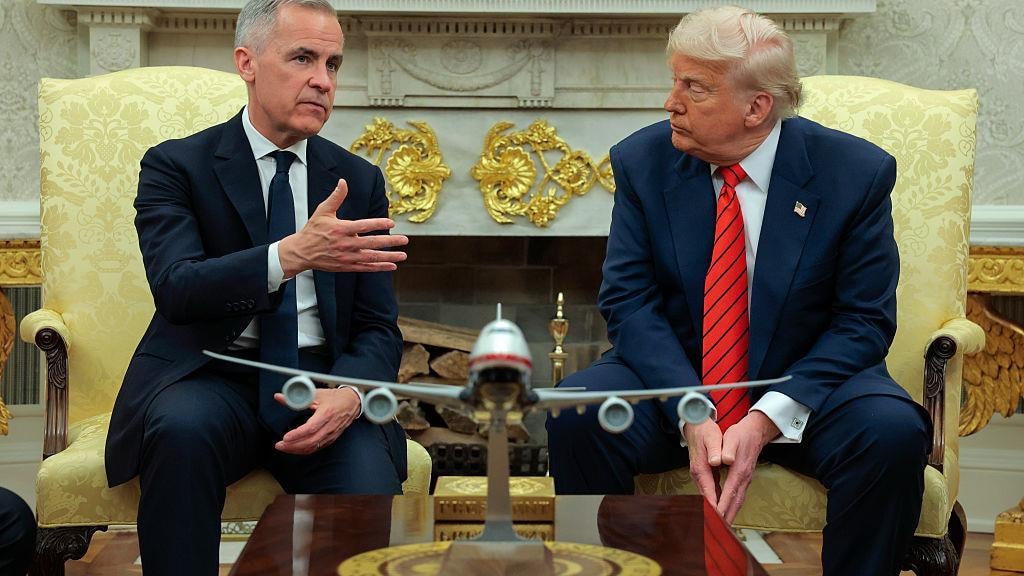
The tactic carries risks. Overuse can backfire if voters perceive it as petty or evasive, particularly when tangible outcomes remain elusive. Recent tracking polls show approval of the government’s handling of U.S. trade relations hovering in the mid-30s, with a plurality of respondents saying Ottawa has not done enough to protect jobs or secure exemptions. At the same time, Poilievre’s net favourability has climbed steadily since his return to Parliament via by-election, though he continues to face questions about differentiation beyond criticism.
The exchange also reflects the minority-government reality. With the Liberals holding a slim edge and relying on ad-hoc support for key votes, both sides have incentive to sharpen messaging around economic competence. Joly’s line seeks to portray Poilievre as reactive and unoriginal; the Conservative response aims to flip the frame to one of delivery versus delay.
As the 2026 CUSMA review approaches and tariff impacts continue to ripple through manufacturing, forestry, and agriculture, the debate over who truly “owns” solutions to Canada’s economic challenges is likely to intensify. Whether convergence signals healthy responsiveness to voter priorities or a failure of creative leadership will depend in large part on whose version voters ultimately trust to produce results.