Canada’s Calculated Energy Leverage Signals a New Era in U.S. Relations
OTTAWA — For much of the modern era, Canada has defined its economic strategy through stability. Integrated supply chains, open borders and deep energy interdependence with the United States formed the quiet architecture of North American prosperity. Disagreements surfaced, tariffs came and went, but the foundation — especially in critical infrastructure — remained largely untouched.
That assumption is now under strain.
In recent days, Canada has signaled that it is prepared to reconsider the terms under which electricity flows south across the border. The move, while measured and technical rather than theatrical, represents a significant departure from decades of strategic restraint. Electricity is not a symbolic export. It is foundational — powering factories in the Midwest, data centers in New York and grid stability across several border states.
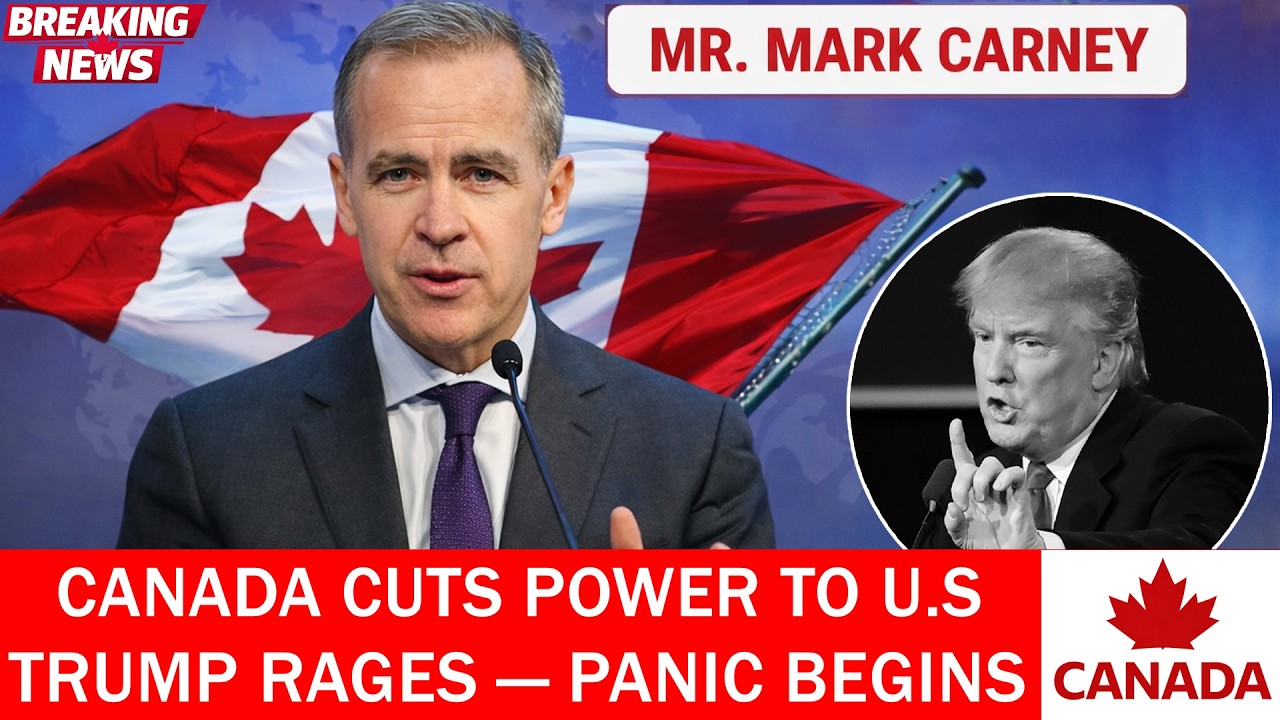
The message from Ottawa is not framed as retaliation. It is framed as sovereignty.
Relations between Canada and the United States have long operated within an asymmetrical structure. The American market absorbs roughly three-quarters of Canadian exports, and Washington has often wielded tariffs as leverage during trade disputes. Under President Donald Trump, that leverage was used aggressively, particularly during negotiations that led to the replacement of NAFTA with the United States-Mexico-Canada Agreement.
While Canada ultimately secured continuity in continental trade, the broader dynamic left a lasting imprint. Many Canadian policymakers concluded that economic integration did not guarantee predictability. Tariffs on steel and aluminum, imposed on national security grounds, underscored how quickly assumptions could shift.
Electricity introduces a different calculus.
Unlike consumer goods, electricity markets react instantly to uncertainty. Wholesale prices respond to perceived risk; utilities hedge; industrial operators recalculate costs. Even the suggestion of constrained cross-border supply can ripple through regional grids. The interdependence that once symbolized partnership now reveals vulnerability on both sides.
Canada’s leverage stems from geography and infrastructure. Provinces such as Quebec and Ontario export significant hydroelectric power to northeastern and midwestern states. These flows are governed not only by federal trade frameworks but also by provincial authorities and long-term commercial contracts. Adjustments, if made, need not be abrupt to have impact. Pricing revisions, capacity reallocations or conditional supply agreements can introduce enough uncertainty to alter market behavior.
In Washington, public rhetoric has emphasized strength and resolve. President Trump has characterized any restriction as provocative. Yet the practical options for retaliation are more limited than political statements suggest. Additional tariffs risk exacerbating inflationary pressures already felt by American consumers and manufacturers. Direct interference in energy infrastructure would invite escalation that could destabilize regional grids.
The United States retains formidable economic influence, but influence is not the same as insulation. In a global economy defined by tight integration, pressure often rebounds.
Financial markets appear to understand this dynamic. Analysts note that infrastructure risk carries a different weight than traditional trade disputes. Investors price stability. When core inputs such as energy become part of geopolitical strategy, volatility premiums rise. The effect may not manifest in blackouts but in higher financing costs, deferred investment decisions and cautious corporate planning.
For Canada, the decision carries risks of its own. Energy exports generate revenue for provinces and support domestic employment. Any sustained restriction could invite countermeasures affecting other sectors, from agriculture to manufacturing. Moreover, narrative framing matters. Ottawa must balance its assertion of sovereignty with reassurance to allies and markets that it remains a reliable partner.
Still, Canadian officials argue that inaction also carries risk. A trade environment characterized by episodic tariffs and shifting demands has eroded the predictability that once justified quiet accommodation. Sovereignty, in this view, is demonstrated not by rhetoric but by the credible ability to act when boundaries are crossed.

The broader implications extend beyond bilateral tension. Middle powers around the world are watching closely. The assumption that leverage belongs exclusively to the largest economies is increasingly contested. Strategic influence can arise from control over critical nodes — energy corridors, rare earth minerals, semiconductor supply chains. Canada’s posture reflects a growing recognition that infrastructure itself is a currency of power.
This moment does not herald the collapse of North American cooperation. The two economies remain deeply intertwined, and both have incentives to preserve stability. But it does signal a recalibration. Partnership, Canadian policymakers suggest, cannot rest solely on goodwill or habit. It requires mutual recognition of leverage and limits.
Whether this strategy proves prudent or perilous will depend less on speeches than on outcomes. If negotiations evolve toward clearer rules and reduced volatility, Ottawa’s gamble may be seen as a disciplined assertion of agency. If escalation follows, critics will question whether infrastructure should ever enter the arena of trade conflict.
For now, what is clear is that Canada has stepped beyond its traditional posture of quiet endurance. The shift is neither loud nor theatrical. It is procedural, strategic and deliberate. In an era where trade disputes increasingly test the boundaries between economics and geopolitics, even a technical adjustment in electricity flows can signal a profound change in the balance of expectations.
The North American relationship is not unraveling. But it is being renegotiated — not only in formal agreements, but in the assumptions that underpin them.