USMCA on the Brink: Trump’s Tariff Threat Ignites Trade War Fears as Canada Refuses to Blink
A familiar specter is haunting North American trade relations. Just months after the hard-fought renegotiation of the United States-Mexico-Canada Agreement (USMCA), rhetorical tensions between Washington and Ottawa have exploded back into the spotlight, raising fears of a new trade war that could unravel the continent’s deeply integrated economy.
What began as a pointed warning from senior U.S. officials about Canadian dairy tariffs and digital services taxes has rapidly escalated into a full-blown policy dispute. President Donald Trump, never one to shy away from trade combat, has reportedly authorized the Office of the U.S. Trade Representative to explore “all available options”—a phrase widely interpreted as a precursor to the reimposition of tariffs on Canadian steel, aluminum, and potentially auto exports.
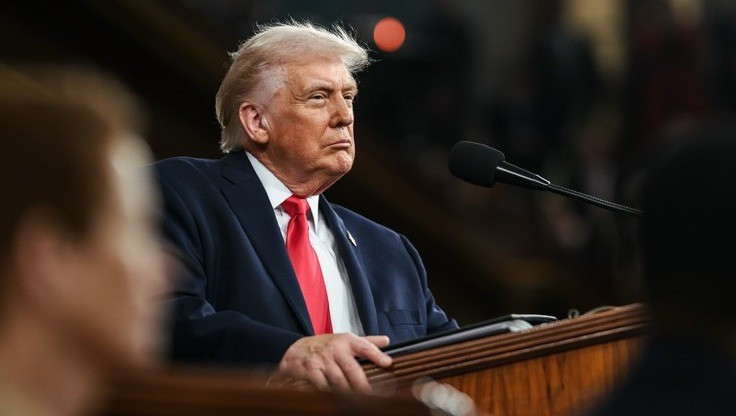
“We cannot continue to allow our northern neighbor to take advantage of American markets while closing their own,” a senior administration official told reporters on condition of anonymity. “The USMCA was supposed to fix this. It hasn’t. We are prepared to act unilaterally if necessary.”
Markets Wobble as Rhetoric Sharpens
The impact was immediate. The Canadian dollar fell nearly a full cent against its U.S. counterpart in morning trading, while the Toronto Stock Exchange posted losses across the industrials and materials sectors. Auto stocks on both sides of the border saw declines as investors priced in the potential disruption of supply chains that have operated seamlessly for decades.
“The market hates uncertainty more than it hates tariffs,” said Carl Weinberg, chief economist at High Frequency Economics. “We are seeing a classic flight to safety because no one knows whether this is negotiating bluster or the beginning of a real trade war.”
Online commentary has only amplified the tensions. Conservative pundits in the U.S. have seized on the rhetoric, framing any concessions to Canada as a betrayal of American workers. Meanwhile, Canadian social media has erupted with calls to “buy Canadian” and retaliate dollar-for-dollar against any American aggression.

Ottawa Holds Firm
Canadian representatives, however, are showing no signs of retreat. Prime Minister Justin Trudeau, speaking briefly to reporters in Ottawa, struck a measured but resolute tone.
“Canada signed a good deal. Canada intends to honor that deal. And Canada expects its trading partners to do the same,” Trudeau said. “We have been through this before. We know how to defend our interests, and we will do so through the established dispute resolution mechanisms that are, in fact, a cornerstone of the USMCA itself.”
Sources within Global Affairs Canada confirm that contingency planning is already underway. Lawyers are being briefed, retaliatory tariff lists are being updated, and diplomatic channels are working overtime to prevent a complete breakdown. Notably, Ottawa has signaled it would target politically sensitive U.S. exports—think Wisconsin dairy, Ohio manufacturing, and Kentucky bourbon—in any retaliatory response.
The Stakes: More Than Just Tariffs
At the heart of the dispute lies a fundamental tension over how the USMCA should function. The agreement, which replaced NAFTA in 2020, was hailed as a modernized framework for 21st-century trade. But it included mechanisms—particularly around dairy market access and dispute resolution—that have proven contentious from the start.

For the U.S., the issue is compliance. Washington argues that Canada is interpreting the rules in ways that effectively nullify American access to Canadian dairy markets. For Canada, the issue is sovereignty. Ottawa insists it is following the letter of the agreement and accuses the U.S. of attempting to rewrite the rules through brute force rather than negotiation.
Industry groups on both sides are sounding alarms. The American Farm Bureau Federation warned that a trade war would devastate agricultural exporters who rely on Canadian markets. The Canadian Chamber of Commerce issued an even stark warning: “Supply chains in autos, agriculture, and energy do not respect borders. They are integrated down to the bolt and the bushel. Disrupting them is not ‘tough negotiation’—it is economic self-harm.”
What Happens Next?
Despite the heated rhetoric, no formal withdrawal from the USMCA has been announced, nor have tariffs been reimposed. Observers caution that public statements often serve as leverage rather than final outcomes. President Trump has a long history of aggressive opening positions that soften into negotiated compromises.
Behind the scenes, diplomatic consultations are reportedly ongoing. U.S. Trade Representative Jamieson Greer and Canadian Trade Minister Mary Ng are said to be in regular contact, though no breakthrough has been announced.
The dispute resolution mechanisms built into the USMCA—the very ones Canada is now invoking—were designed precisely for moments like this. They offer a path forward that avoids the chaos of unilateral tariffs and retaliatory escalation.
Whether that path is taken depends on whether cooler heads prevail. For now, the situation remains fluid, with next steps likely to unfold through institutional trade mechanisms rather than headline momentum. But in the volatile world of Trump-era trade policy, nothing is guaranteed.
As one Canadian official put it privately: “We hope this is bluster. But we are preparing for everything.”