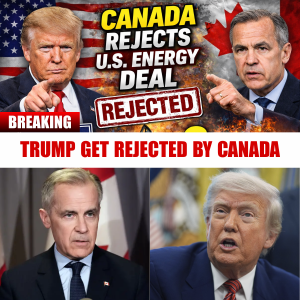
When President Trump threatened tariffs on Canadian potash, the remark was delivered with the familiar cadence of economic brinkmanship. It was framed as leverage — another tool in a widening trade confrontation. But before any executive order was signed, before any customs officer collected a cent, markets moved. Fertilizer prices ticked upward, commodity traders adjusted forecasts, and American farmers began recalculating the cost of planting season.
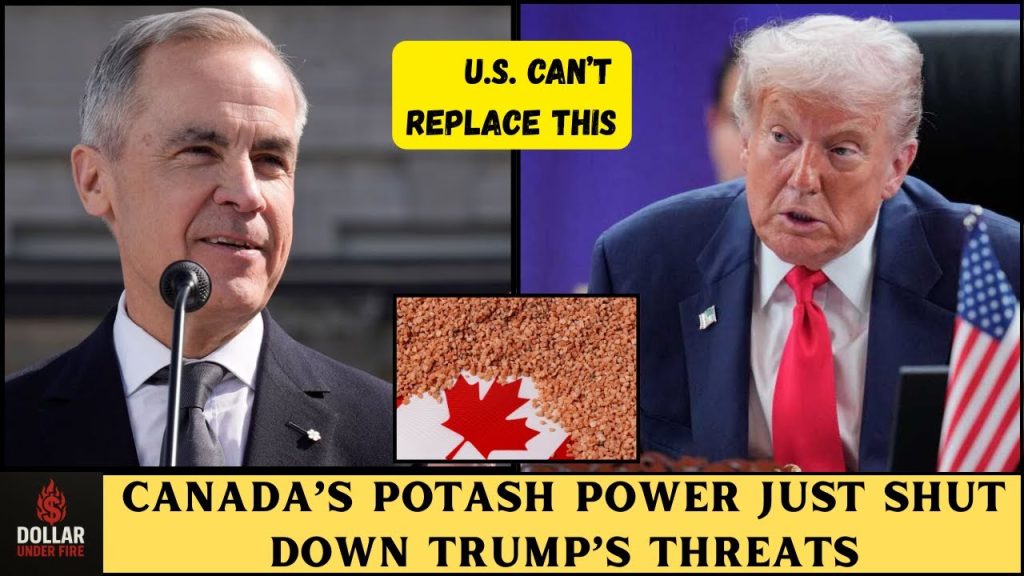
Potash is not a household word, yet it sits at the foundation of modern agriculture. A potassium-rich mineral used in fertilizer, it strengthens crops and increases yields in corn, soybeans and wheat. The United States depends heavily on Canadian supply, importing the vast majority of its potash from mines in Saskatchewan. The geology is not incidental; Canada controls roughly a third of global production and holds some of the largest high-quality reserves in the world.
The threat alone was enough to send benchmark potash prices climbing by roughly $20 a ton in a matter of days. For farmers already navigating volatile grain prices and tight margins, the increase was more than symbolic. Fertilizer represents one of the largest input costs in crop production. A sudden spike, even temporary, can shift planting decisions and squeeze operating loans. In farm country, political rhetoric quickly translated into arithmetic.
Industry groups responded with unusual speed. Executives at major fertilizer distributors warned that any tariff would be passed through the supply chain. Agricultural economists noted that the burden would fall primarily on American importers, not Canadian exporters. Tariffs are taxes paid by domestic buyers. In this case, the buyers are farmers whose output ultimately fills supermarket shelves.
The broader economic implications extend beyond rural counties. Higher fertilizer costs feed into higher food prices. Grain prices ripple into livestock feed, then into meat and dairy. In an inflation-sensitive political environment, even small increases in grocery bills carry weight. Analysts at several commodity research firms described the tariff idea as “self-defeating,” noting that alternative suppliers — such as Russia or Belarus — are constrained by sanctions and geopolitical tensions.
Canada’s response was notably restrained. Officials in Ottawa declined to escalate rhetorically, emphasizing instead the stability of their supply and the legal framework governing cross-border trade. Behind the scenes, provincial leaders in Saskatchewan and federal policymakers in Ottawa reportedly coordinated contingency planning but avoided public confrontation. The message was implicit: Canada’s leverage lies not in volume but in indispensability.
There is also a fiscal dimension. In previous trade disputes, the United States has compensated farmers for losses triggered by retaliatory tariffs or disrupted export markets. Aid packages have reached tens of billions of dollars. If potash tariffs were enacted and fertilizer prices surged further, pressure would likely mount for another round of federal assistance. Taxpayers would subsidize farmers to offset costs created by trade policy — a circular dynamic that has become familiar in recent years.
The episode underscores a structural reality of North American integration. Supply chains in agriculture, energy and manufacturing are not easily disentangled. Decades of cross-border investment have created interdependence that cannot be unwound without cost. Political leaders can threaten disruption swiftly; markets absorb and redistribute the shock just as swiftly.
It also highlights a subtle shift in global perception. In an era marked by climate volatility and geopolitical fragmentation, countries that control essential resources — food inputs, rare minerals, energy — hold quiet power. Stability becomes a competitive advantage. When suppliers are perceived as predictable, they attract long-term contracts and investment. When buyers appear volatile, partners begin to hedge.
Whether the potash tariff threat materializes remains uncertain. Past trade warnings have sometimes faded after brief turbulence. But even a withdrawn threat leaves residue. It signals to allies and markets that essential commodities may be drawn into political contests. For Canada, the lesson reinforces diversification efforts and diplomatic outreach beyond a single dominant partner. For the United States, it raises a more immediate question: how much leverage is gained when the first economic blow lands at home?