As Politics Overtakes the Pitch, the 2026 World Cup Faces a Test of Its Global Promise
The 2026 World Cup was conceived as a celebration of continental unity — a sprawling, three-nation festival of football shared by the United States, Canada and Mexico. Instead, with barely months before kickoff, it has become something else: a case study in how geopolitics can overwhelm even the most carefully choreographed spectacle.
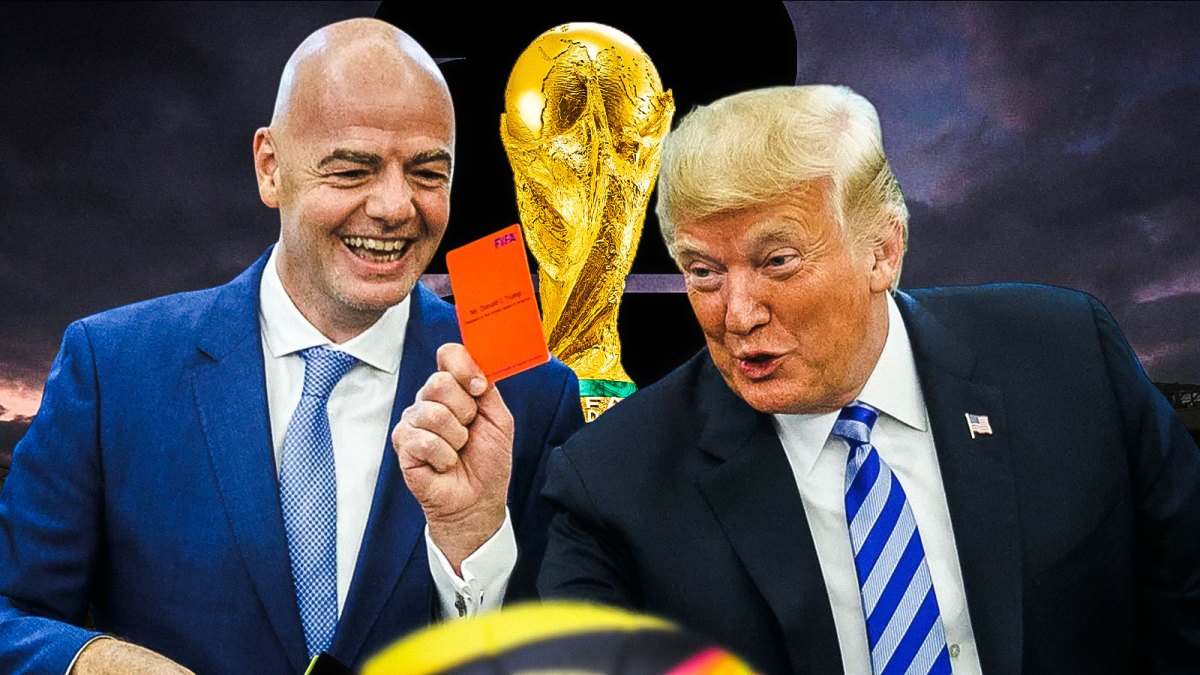
For President Donald Trump, who has framed the tournament as a crowning achievement of his presidency, the stakes are personal as well as political. Since returning to office, Trump has cast the World Cup as proof that America remains the gravitational center of global culture and commerce. FIFA’s president, Gianni Infantino, reinforced that narrative in December when he presented Trump with an inaugural “FIFA Peace Prize” at a ceremony in Washington — a gesture that critics viewed as a startling departure from the organization’s professed neutrality.
But what was meant to signal harmony has instead deepened divisions.
In recent weeks, political leaders in parts of Europe have begun to publicly contemplate a boycott of the tournament, citing tensions over U.S. foreign policy and trade. The flashpoint has been Trump’s renewed insistence that the United States should assert control over Greenland, the autonomous territory within the Kingdom of Denmark and a member of NATO. Though such rhetoric has surfaced before, European officials say the tone has grown more urgent — and more tied to economic pressure.
Lawmakers in Germany and France have warned that participation in a U.S.-hosted tournament would be difficult to justify if Washington continues to threaten punitive tariffs or territorial maneuvers against European allies. A survey conducted in Germany in January suggested that nearly half of respondents would support a boycott under those circumstances. In Britain, a cross-party group of Members of Parliament has introduced a motion calling for the government to reassess its involvement should diplomatic tensions escalate further.
None of these proposals guarantee withdrawal. But their very existence underscores a reality FIFA had hoped to avoid: the tournament’s viability is now being debated not only in sports federations but in parliaments.
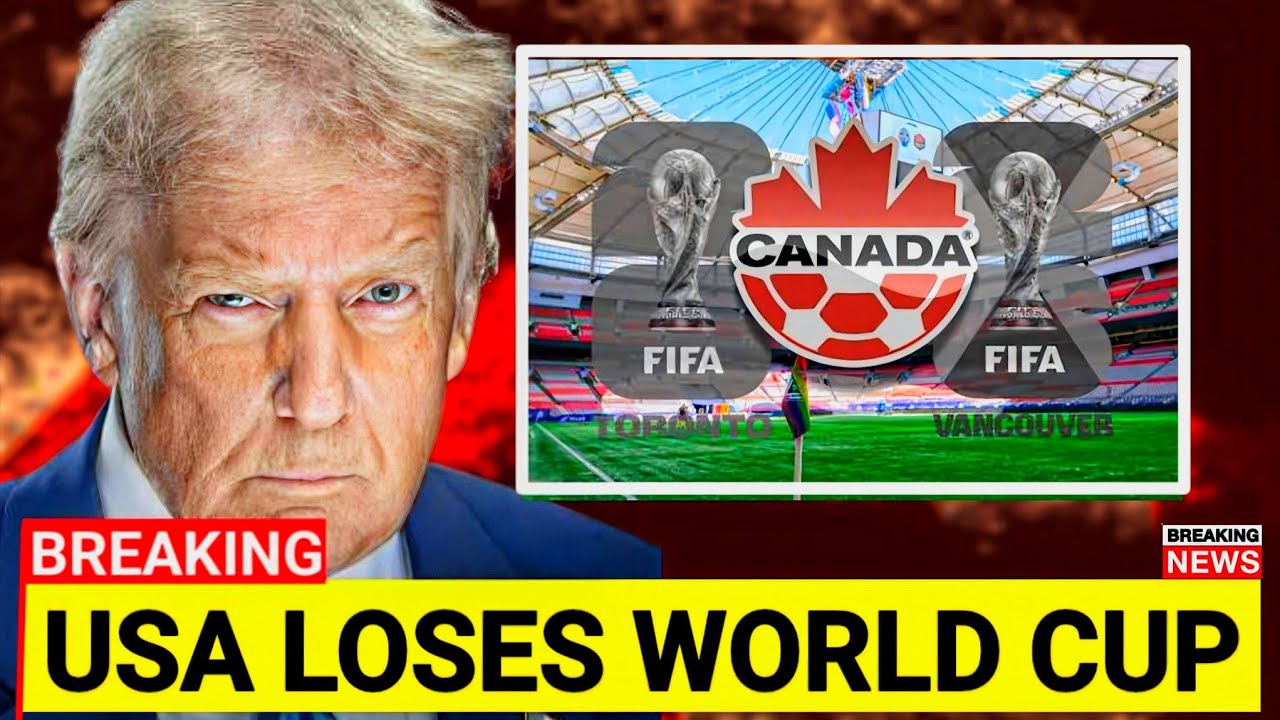
Canada, a co-host scheduled to stage matches in Toronto and Vancouver, finds itself in an especially delicate position. The country has invested heavily in infrastructure and security preparations, anticipating a surge of tourism and global visibility. Yet Canadian officials are also navigating domestic pressure to distance themselves from policies enacted by their southern neighbor.
Recent immigration restrictions imposed by the Trump administration have raised concerns among advocacy groups that fans, journalists or even support staff from certain nations could face barriers entering the United States. Because the tournament’s format requires teams and supporters to move across borders, any perception of uneven access risks undermining the event’s inclusive branding.
Prime Minister Justin Trudeau has so far emphasized cooperation, noting the economic benefits at stake. Billions of dollars in goods cross the U.S.-Canada border each day, and Ottawa is reluctant to inflame trade tensions further. At the same time, Canadian newspapers and civic leaders have questioned whether co-hosting can remain politically neutral if the tournament becomes entwined with broader disputes.
For FIFA, the turbulence presents a financial quandary. The organization projects roughly $11 billion in revenue from the 2026 cycle, driven largely by broadcast contracts and sponsorship agreements in Europe and North America. A withdrawal by even a handful of major European teams would alter television audiences dramatically, potentially triggering renegotiations or losses that ripple across the sport’s ecosystem.
The irony is difficult to ignore. The World Cup has long been marketed as an arena where political differences recede behind the shared language of sport. Yet its scale — 48 teams, matches spanning an entire continent — also makes it uniquely vulnerable to diplomatic strain. A tournament so expansive cannot easily insulate itself from the foreign policies of its principal host.
Even former FIFA president Sepp Blatter, once synonymous with the organization’s own controversies, has weighed in, urging fans to reconsider travel to the United States. His intervention, while unlikely to determine outcomes, reflects the unusual breadth of voices now drawn into the debate.
For the Trump administration, the prospect of empty seats or diminished participation would represent more than a logistical setback. The president has repeatedly described the event as a showcase of American leadership. A fragmented tournament would complicate that narrative, replacing images of unity with questions about isolation.
Still, many analysts argue that the economic incentives to proceed remain overwhelming. National federations depend on World Cup revenue to fund youth development and domestic leagues. Sponsors have committed billions. And fans, regardless of politics, have already purchased tickets and booked travel.
The coming months will test whether those forces are strong enough to withstand diplomatic headwinds. If they are, the 2026 World Cup may yet unfold as the sprawling celebration its organizers envisioned. If not, it could become a reminder that in an era of sharpened alliances and revived territorial debates, even the world’s most popular sport cannot escape the reach of politics.
The tournament was designed to unite three nations in welcoming the globe. Whether the globe feels welcomed remains an open question.