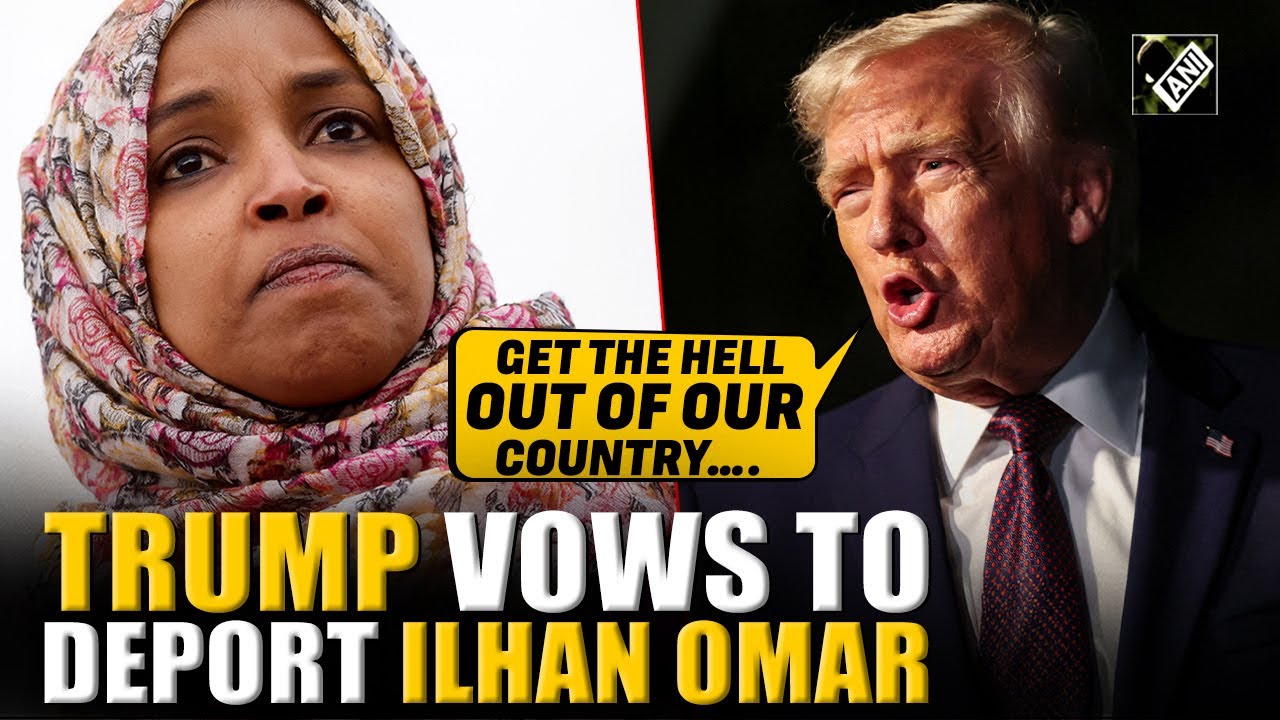
At a recent rally, Donald Trump delivered a wide-ranging attack that ricocheted across social media within minutes, folding together immigration, fraud, policing and Minnesota politics into a single, incendiary narrative. The remarks—punctuated by applause and jeers—zeroed in on Ilhan Omar, whom Mr. Trump accused of wrongdoing and called for removal from office, while praising conservative entrepreneur Mike Lindell as a potential gubernatorial contender.
The speech drew instant attention not only for its tone, but for the claims it made. Mr. Trump alleged, without evidence presented at the event, that Ms. Omar had committed crimes, repeated a long-circulating accusation about her marriage that has been investigated previously and found unsupported, and asserted that she fabricated an encounter involving law enforcement and her son. He also invoked an eye-catching dollar figure—“$9 billion”—to describe alleged fraud in Minnesota, tying it broadly to Somali immigrants.
Those claims collide with a more prosaic—and documented—reality. Minnesota has been the site of one of the nation’s largest pandemic-era fraud prosecutions, centered on a nonprofit network known as Feeding Our Future, where federal prosecutors have alleged the theft of hundreds of millions of dollars in federal child-nutrition funds. Dozens of defendants have been charged; some have pleaded guilty, others await trial. But investigators have not accused Ms. Omar of participating in or directing that scheme, and no court filings substantiate the multibillion-dollar figure cited at the rally.
On the policing claim, officials have said publicly that they have no record matching the description offered on stage. Ms. Omar has disputed that characterization, saying accounts differ and that the matter was misrepresented in political coverage. As with many viral claims, the exchange underscores how quickly allegations harden into talking points before documentation emerges.

The speech also trained its fire on Minnesota’s Democratic leadership, particularly Governor Tim Walz, accusing the state of lax oversight and corruption. State officials counter that the pandemic programs were built rapidly under federal emergency rules and that whistleblowers and law enforcement ultimately uncovered the fraud—leading to prosecutions and reforms. Audits and tighter controls followed, they say, as evidence mounted that safeguards had been exploited.
What set the rally apart was less the substance of any single allegation than the way disparate themes were braided together: immigration enforcement, criminal justice, public spending and electoral politics. Mr. Trump’s praise of Mr. Lindell—who has promoted false claims about the 2020 election—fit that pattern, turning the event into a referendum on loyalty and grievance as much as policy. Clips from the rally surged across platforms, amplified by partisan outlets and commentators.
Media analysts note that such moments thrive in a fragmented information environment. Assertions are delivered in a live setting, rewarded with applause, and then circulate as short videos detached from caveats or context. Corrections, when they arrive, travel more slowly. Fox News, which the former president praised during the speech for airing economic charts, has also hosted segments questioning the fraud figures and repeating the claims—illustrating how even partial skepticism can coexist with repetition.
For Ms. Omar, the episode revives a familiar dynamic. As a high-profile progressive lawmaker and a frequent target of the former president, she has faced waves of scrutiny that blur policy disagreements with personal attacks. Her office reiterated that she has not been charged with any crime and condemned calls for expulsion or deportation as dangerous rhetoric. Civil-rights groups warned that singling out immigrant communities while citing inflated figures risks fueling harassment.
The legal process, meanwhile, remains bounded by evidence. Courts will decide the fate of those charged in Minnesota’s fraud cases; inspectors general will assess oversight failures; lawmakers will debate fixes. None of those steps hinge on rally applause. But politically, the damage can accrue regardless. As one veteran campaign strategist put it, “Once a claim becomes a chant, the correction is a footnote.”
The rally illustrates a broader tension in American politics: the power of accusation versus the discipline of proof. In an election season already defined by mistrust, speeches that collapse verified facts and unverified claims into a single story can mobilize supporters—and harden divisions—long before the record is settled.