Minneapolis — For years, an endorsement from Donald Trump was treated as political gold inside Republican primaries: a marker of loyalty, a fundraising boost, and a signal to a motivated base. In Minnesota, however, party strategists are increasingly asking whether that formula has begun to work in reverse.
The question has sharpened around the emergence of Mike Lindell, the businessman and outspoken Trump ally who has moved from promoting election fraud claims into the state’s Republican political arena. Lindell, best known as the founder of MyPillow, became a prominent figure after the 2020 election by insisting — without evidence accepted by courts — that the vote was rigged. He spent millions of dollars pursuing those claims, all of which failed in court.
Lindell’s loyalty to Trump has never wavered. Trump, in turn, has praised him publicly, casting him as a victim of persecution and a model of steadfast support. That relationship, once a clear advantage in Republican politics, has unsettled Minnesota Republicans who view the state as competitive but unforgiving of candidates with high negative ratings.
Minnesota has long been a swing state at the margins. While Democrats have held statewide offices for decades, Republicans have remained competitive in legislative races and periodically mounted serious statewide challenges. Party leaders say that success depends less on national grievance politics than on local issues: affordability, education, public safety and economic stability.
Lindell’s candidacy threatens to nationalize the race. His public persona is inseparable from Trump’s post-2020 claims and from a series of legal and financial setbacks. Courts have ruled against him in defamation cases tied to false allegations about voting machine companies, and arbitration panels have ordered him to pay millions of dollars after he failed to substantiate claims he publicly guaranteed he could prove.
Those outcomes have become central to the political debate, not because they establish criminal wrongdoing, but because they shape voter perceptions. In focus groups and early polling reviewed by party operatives, Lindell’s name recognition is high — but so is skepticism. For many swing voters, he is defined less by business success than by conspiracy-driven activism.
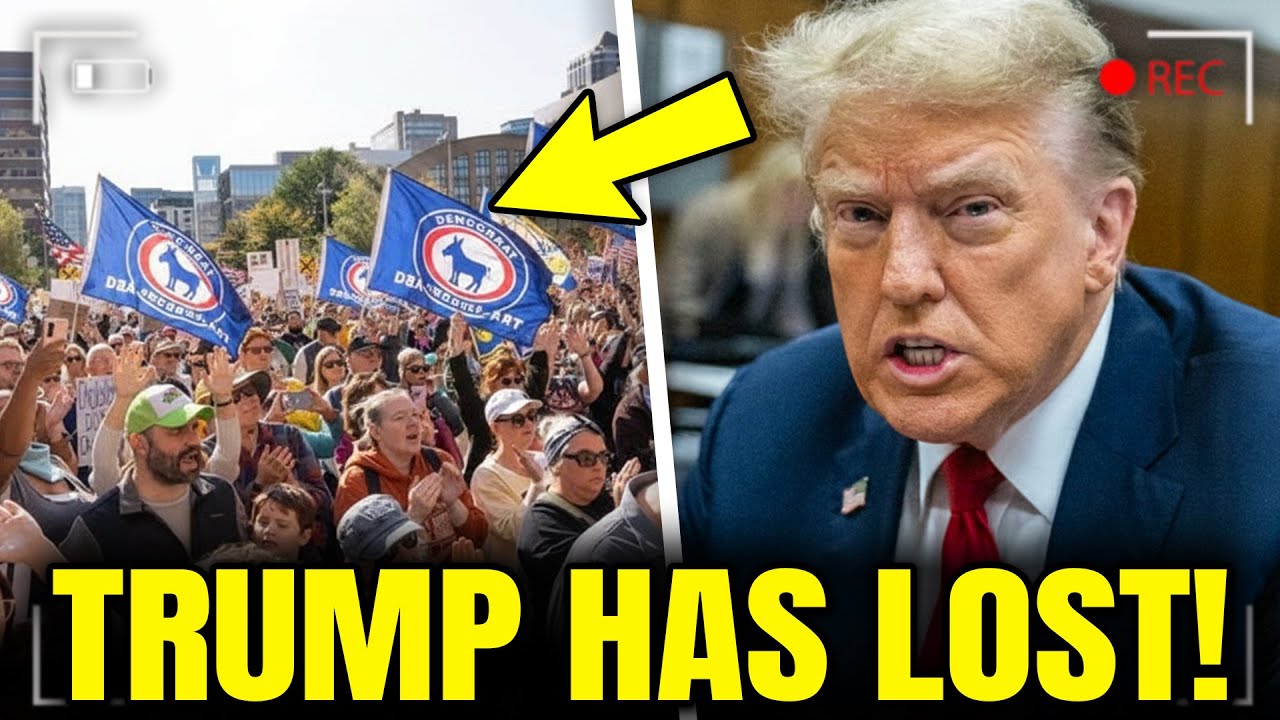
That dynamic has implications for Trump as well. Republicans in Minnesota say that Trump’s silence following recent setbacks — including losses in closely watched contests — reflects an awareness that his brand no longer carries uniform appeal. Where he once dominated media cycles with immediate responses, he has at times chosen restraint, allowing allies to absorb the political consequences of defeat.

The issue is not loyalty, party officials say, but electability. Trump’s endorsement signals fealty to a particular style of politics — one centered on personal allegiance and grievance — that plays well in deep-red primaries but less so in states where margins are thin. When endorsed candidates lose, the damage can extend beyond a single race, affecting fundraising, volunteer engagement and down-ballot contests.
Minnesota Republicans privately express concern that a Lindell-led ticket would allow Democrats to nationalize the race around Trump rather than debate state policy. That would simplify Democratic messaging and complicate Republican efforts to broaden their coalition. “It turns a local election into a referendum on Trump,” said one Republican strategist who requested anonymity to speak candidly.
For Democrats, the situation presents an opportunity but also a caution. While Trump-aligned candidates have struggled in several swing states, party leaders warn against complacency. Minnesota’s electorate remains divided, and economic concerns can still cut across partisan lines. A weak opponent does not guarantee victory.
The broader implication is about the Republican Party’s direction. Trump’s endorsement strategy prioritizes loyalty over experience or ideological breadth, a choice that reinforces internal discipline but narrows appeal. In states like Minnesota, where voters are accustomed to pragmatic governance, that narrowing may carry a measurable cost.
Political scientists note that endorsements function as shortcuts for voters. When the endorser’s reputation shifts, so does the signal. What once communicated strength can begin to communicate risk. “Endorsements don’t exist in a vacuum,” said a University of Minnesota political analyst. “They import the endorser’s entire record into the race.”
Lindell’s rise illustrates that shift. His personal story — from business success to political activism and legal defeat — has become a proxy for Trump’s post-presidency strategy. For supporters, it represents conviction. For skeptics, it underscores a pattern of prioritizing allegiance over outcomes.
As Minnesota Republicans look toward upcoming elections, the debate is no longer theoretical. Party leaders must decide whether Trump-backed candidates can still win in competitive terrain or whether the endorsement now functions as a liability. Trump, meanwhile, faces a parallel calculation: whether doubling down on loyalty continues to advance his influence, or whether repeated losses will quietly erode it.
In Minnesota, at least, the answer may arrive not in speeches or rallies, but at the ballot box — where voters tend to judge not declarations of loyalty, but the practical consequences of political choices.