A group of former senior Justice Department officials from across the political spectrum is raising alarms about what they describe as an escalating confrontation between the executive branch and the federal judiciary, warning that rhetoric portraying judges as enemies risks undermining public trust in the rule of law.
The concerns were aired during a recent public forum hosted by Speak Up for Justice, a nonpartisan organization focused on legal accountability. The panel brought together former U.S. attorneys and senior Justice Department lawyers who served under both Democratic and Republican administrations. While their political backgrounds varied, their message was strikingly consistent: institutional guardrails, they argued, are under increasing pressure.
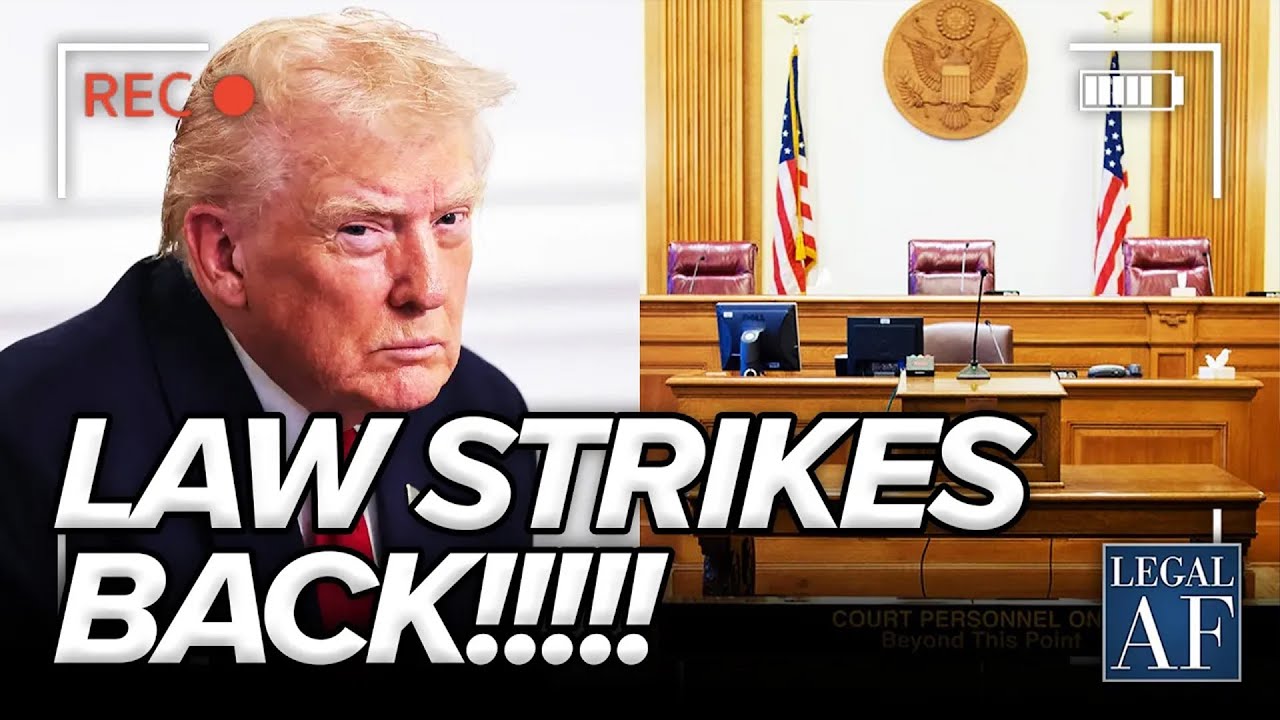
At the center of the discussion was recent language from senior Justice Department leadership characterizing certain judges as “rogue” or “activist.” Critics on the panel said such framing, especially when paired with aggressive litigation strategies, risks turning routine judicial oversight into a perceived battleground.
“This is not how the system is supposed to work,” said Chris Christie, who served as U.S. attorney for New Jersey under President George W. Bush before becoming governor. Christie emphasized that disagreement with court rulings is a normal part of the legal process, but portraying judges as adversaries crosses a dangerous line. “When prosecutors start talking about being ‘at war’ with judges, that should concern everyone, regardless of party.”
The panel also featured Liz Oyer, a former career Justice Department official who served as pardon attorney. Oyer described being dismissed after refusing to recommend restoring firearm rights to a politically connected individual, citing public safety concerns and department guidelines. She later testified before Congress about her firing.
According to Oyer, the experience underscored what she sees as a shift away from institutional norms. She recounted receiving what she characterized as a late-night warning shortly before her testimony, which she said left her shaken but more determined to speak publicly. The Justice Department has not commented on her account.
Another panelist, Preet Bharara, who served as U.S. attorney for the Southern District of New York during the Obama administration and briefly into the Trump presidency, drew a distinction between legitimate policy direction and improper intervention.
“There is nothing wrong with a president setting broad law-enforcement priorities,” Bharara said. “What becomes problematic is pressure directed at specific cases or individuals.” He described his own dismissal after declining to engage in direct communication with the president about matters potentially within his office’s jurisdiction, citing ethical concerns.
The panelists warned that the cumulative effect of these episodes could be corrosive. Courts, they noted, are designed to slow executive action when necessary, not to rubber-stamp it. While judicial review can be frustrating for administrations eager to implement policy, it is a core feature of constitutional governance.
Legal scholars observing the event said the debate reflects a deeper tension over how power is exercised in polarized times. Public attacks on judges, they argue, risk normalizing the idea that unfavorable rulings are illegitimate rather than part of a lawful process.

The Justice Department has defended its actions, saying it is pursuing policies it believes are lawful and necessary, and that it will continue to challenge rulings it views as incorrect through established appellate channels. Supporters of the administration argue that courts have overstepped their authority in blocking nationwide policies and that forceful language reflects genuine frustration with judicial overreach.
Still, the former officials cautioned that tone matters as much as tactics. “Once the public starts to see judges as political actors instead of neutral arbiters, the damage is very hard to undo,” Bharara said.
The forum concluded with a call for renewed commitment to institutional norms — not as a partisan demand, but as a civic one. “This is bigger than any administration,” Christie said. “The system only works if everyone accepts limits on their own power.”
Whether those warnings gain traction remains to be seen. But the unusual alignment of voices from different administrations suggests that concerns about the health of the justice system are no longer confined to one side of the political divide.