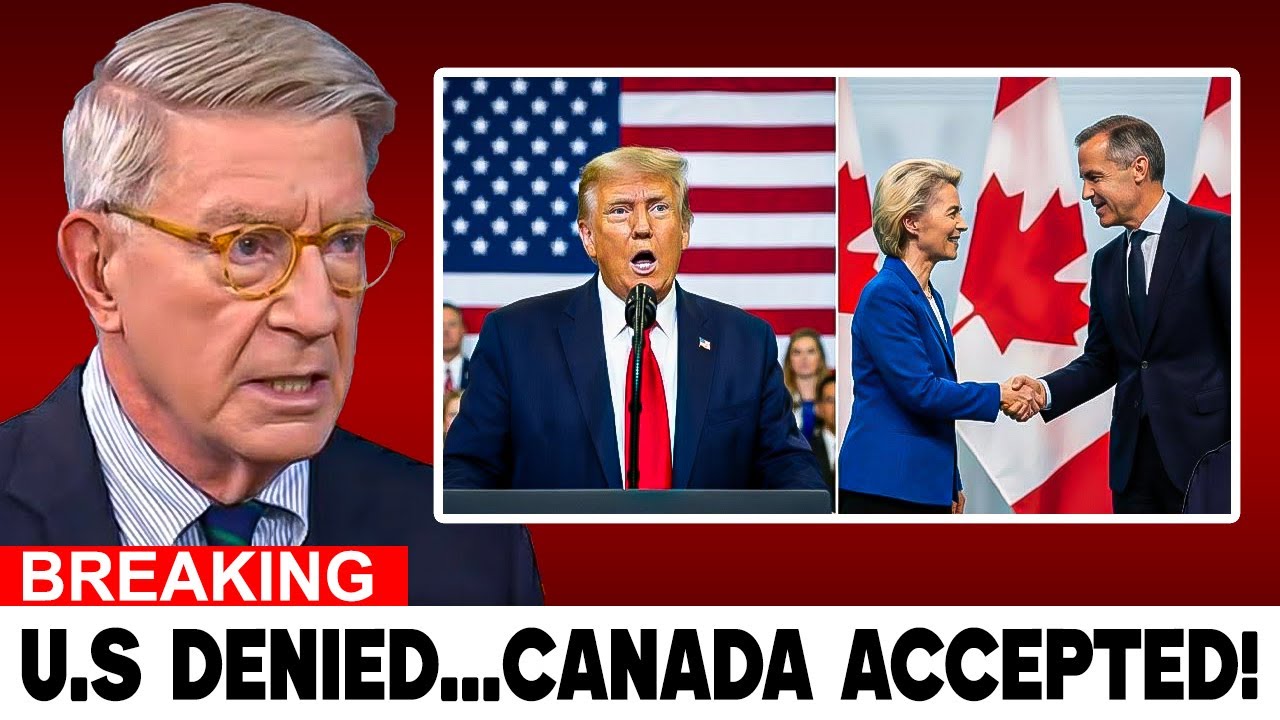
OTTAWA / BRUSSELS — The announcement was spare, almost technical, and easy to miss amid a crowded global news cycle. Yet within diplomatic circles, it landed with unusual force. Canada, under the leadership of Mark Carney, had been welcomed into a European defense coordination framework designed explicitly to limit access. The move, confirmed by multiple officials familiar with the talks, has prompted a reassessment of long-standing assumptions about who Europe trusts — and why.
The framework in question, known in Brussels shorthand as SAFE, was conceived to streamline joint procurement, industrial coordination, and long-term planning among European partners facing an increasingly volatile security environment. It was not, by design, meant for non-European states. That Canada was brought inside the tent has therefore raised eyebrows from Washington to Westminster, where officials are still parsing what this says about the evolving geometry of alliances.
Publicly, European leaders have framed the decision as pragmatic. Canada already operates closely with Europe through NATO, contributes to continental security missions, and shares intelligence through established channels. Privately, however, diplomats describe a more pointed calculus: reliability has become as valuable as raw power.
In recent years, Europe has been forced to plan for instability not only from adversaries but also from within its traditional security architecture. Elections swing, commitments wobble, and long-term projects are suddenly subject to domestic political reversal. Against that backdrop, Canada’s reputation for continuity — technocratic, process-driven, and comparatively insulated from abrupt policy lurches — has taken on new weight.
“Predictability is the new deterrence,” said one senior European defense official, speaking on condition of anonymity because of the sensitivity of the discussions. “You can plan around limits. You can’t plan around chaos.”
For Washington, the development has been unsettling less for its immediate military impact than for its symbolism. The United States remains Europe’s dominant security partner, and no European official is suggesting otherwise. But Canada’s inclusion in SAFE hints at a desire to diversify trusted relationships — to hedge against uncertainty without openly challenging the transatlantic order.
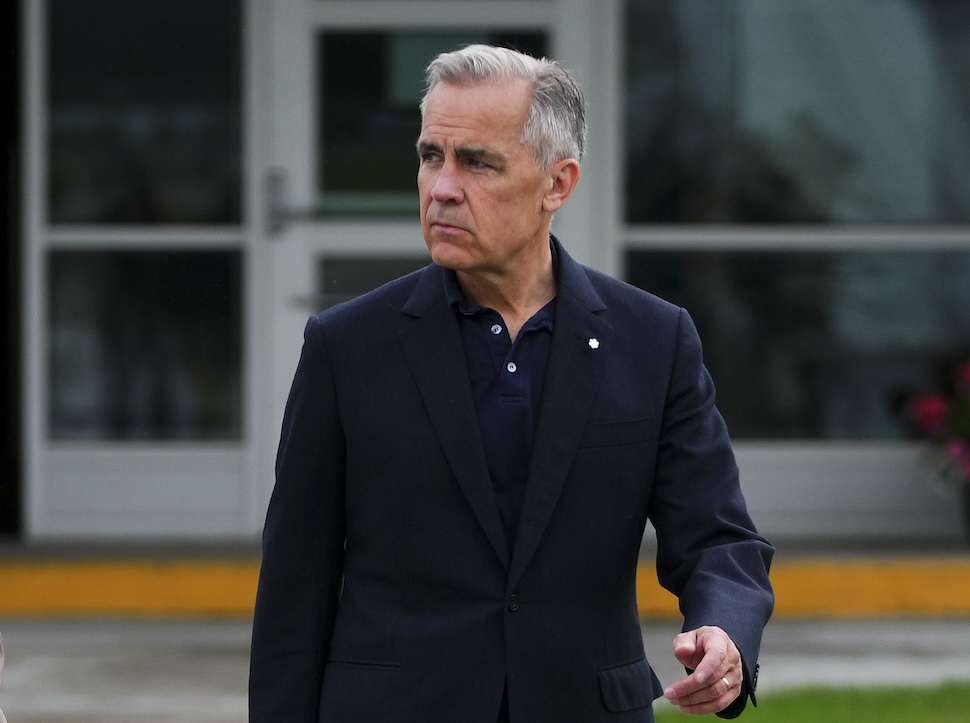
Carney’s role has been central, if understated. Since entering politics, he has emphasized institutional credibility, long planning horizons, and depoliticized decision-making — themes that resonate strongly in European capitals bruised by years of crisis management. According to people briefed on the talks, Carney’s pitch was not about ambition but alignment: Canada, he argued, could be counted on to show up, invest steadily, and avoid turning defense cooperation into domestic theater.
That message appears to have landed. Under the SAFE umbrella, Canada gains access to collaborative research pipelines, coordinated procurement strategies, and early-stage planning on capabilities ranging from air defense to cyber resilience. Europe, in turn, gains a partner with advanced industrial capacity, Arctic expertise, and political distance from the continent’s own internal rivalries.
Not everyone is convinced this is a benign evolution. Some analysts in London and Washington warn that expanding closed frameworks risks fragmenting existing alliances or creating parallel structures that complicate coordination. Others question whether Europe is sending an unintended signal about its confidence in traditional leadership.
Yet supporters argue the opposite: that this is adaptation, not abandonment. By broadening its circle of trusted partners, Europe is seeking resilience — the ability to sustain collective defense even if one pillar weakens. In that reading, Canada is not a substitute for anyone but a stabilizer in a system under stress.

The economic implications are also significant. Defense cooperation at this scale shapes supply chains measured in the hundreds of billions, influencing where factories are built, which technologies mature, and who controls critical intellectual property. Over time, participation in SAFE could anchor Canadian firms more deeply into European defense ecosystems, subtly rebalancing industrial ties that have long tilted south toward the United States.
For now, officials on all sides are downplaying drama. There were no flag-draped ceremonies, no triumphalist speeches. The emphasis has been on continuity and quiet competence. But in geopolitics, restraint can be as telling as rhetoric.

What is unfolding is less a rupture than a recalibration — a sign that alliances are becoming more fluid, more layered, and more sensitive to trust as a strategic asset. Canada’s elevation into Europe’s inner defense circle reflects that shift.
Whether Washington ultimately views this as a warning, a footnote, or an opportunity to rethink its own engagement may determine how far the realignment goes. But one conclusion is already difficult to avoid: in an era defined by uncertainty, those who can offer steadiness may find doors opening that once seemed firmly closed.