Canada’s Quiet Pivot: A New Defense Partnership Signals a Broader Strategic Shift
For decades, Canada’s economic and security architecture has been deeply intertwined with that of the United States. Trade, intelligence, and military cooperation flowed naturally across the world’s longest undefended border. Nearly 70 percent of Canadian exports have historically gone to the American market, a level of integration unmatched by most other U.S. allies. Yet recent developments suggest that Ottawa may be quietly recalibrating its strategic posture.
Canada’s newly signed comprehensive military cooperation agreement with the South Korea marks a notable moment in that recalibration. The agreement covers a wide range of areas: classified intelligence sharing, defense production partnerships, industrial security protocols, legal frameworks governing military collaboration, and long-term strategic planning. While such agreements are not unusual in themselves, the broader context surrounding this one has drawn considerable attention among foreign policy analysts.
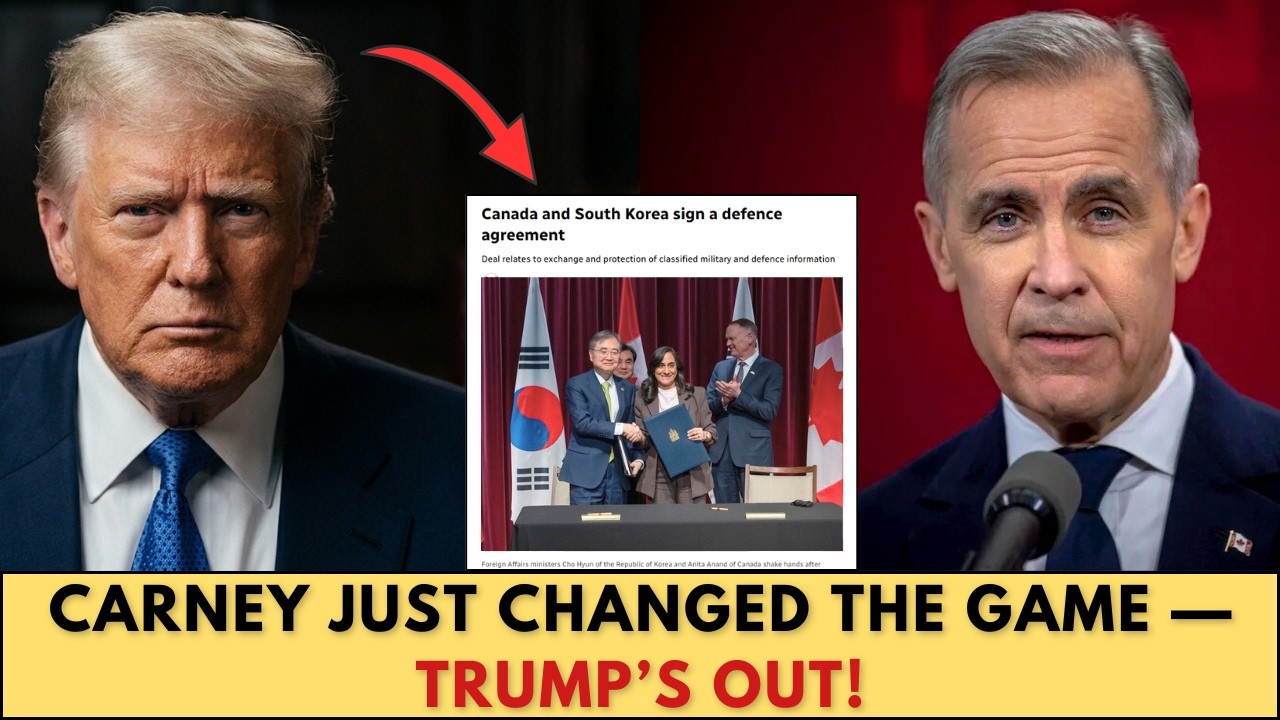
The timing is significant. Only weeks earlier, Canada’s prime minister, Mark Carney, speaking at the World Economic Forum Annual Meeting in Davos, argued that so-called “middle powers” needed to strengthen cooperation with one another to withstand geopolitical pressure from larger states. His remarks were widely interpreted as a subtle critique of the increasingly unpredictable dynamics shaping global trade and security.
In the decades following the Cold War, the United States stood at the center of the international economic order. Institutions, supply chains, and alliances were built with Washington as their anchor. Canada benefited immensely from that system. But recent shifts in global politics—particularly the use of tariffs and trade restrictions in disputes with allies—have prompted countries to rethink the risks of excessive dependence.
Canada appears to be among those reassessing the balance.
Trade data illustrates the point. In March 2025, Canadian exports to non-U.S. markets surged by nearly 25 percent compared with the previous month, one of the largest increases in the country’s recent trade history. During the same period, exports to the United States declined noticeably. Economists caution against drawing sweeping conclusions from a single month of data, but the broader trend has been unmistakable: Canadian businesses are seeking customers beyond their traditional southern market.
This diversification effort extends beyond trade.
Canada has recently strengthened industrial cooperation with Germany, expanded investment engagement with India, and pursued new technology partnerships with Australia and Japan. Diplomatic channels with China—strained in recent years—have also begun cautiously reopening, while ties with the European Union continue to deepen.
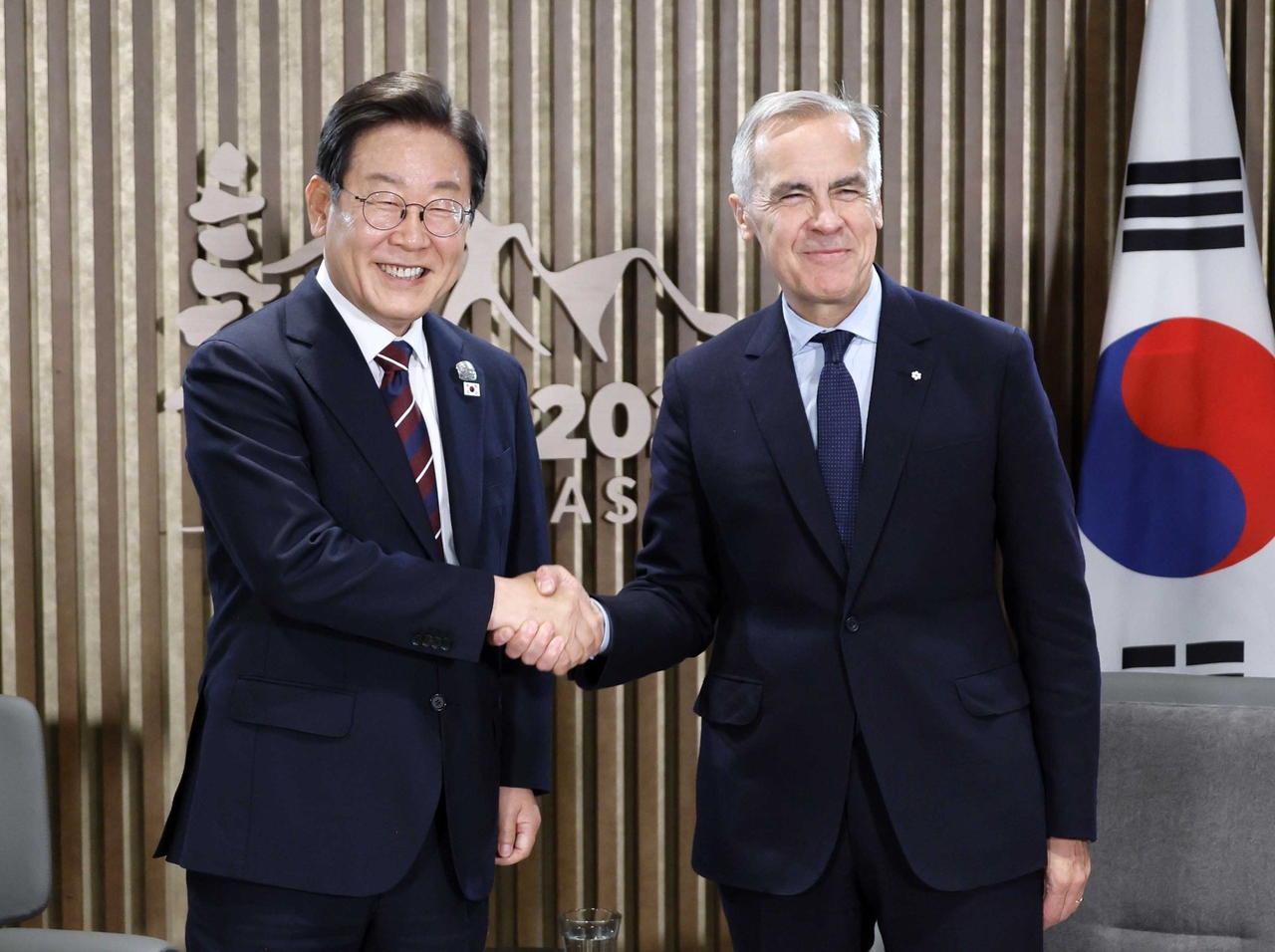
The defense sector offers an even clearer illustration of the shift. South Korean defense companies are now competing to supply Canada with as many as twelve next-generation submarines, a program expected to be worth tens of billions of dollars over its lifetime. German manufacturers are also considered serious contenders.
Notably absent from the front-running candidates are American contractors, who historically would have been expected to dominate such a competition.
At the same time, Canada has begun expanding its own domestic defense manufacturing capacity. The government has committed to increased military spending while encouraging the development of local supply chains. The strategy reflects a broader effort to reduce vulnerability to disruptions in global markets or political disputes between allies.
None of this suggests that Canada is abandoning its partnership with the United States. The two countries remain bound by deep economic ties, extensive intelligence sharing through the Five Eyes intelligence alliance, and longstanding military cooperation through the North Atlantic Treaty Organization.
But analysts increasingly describe Canada’s approach as one of “strategic diversification.” Rather than relying overwhelmingly on a single partner, Ottawa appears to be building a network of selective partnerships that distribute economic and security risk across multiple relationships.
The logic is straightforward. In an era when economic tools—from tariffs to export controls—can be used as instruments of geopolitical leverage, countries may feel compelled to broaden their options.
Canada is not alone in this reassessment. Across Europe and the Asia-Pacific, governments are investing in regional supply chains and new defense arrangements. Nations such as India, Japan, and Australia are strengthening technological and industrial cooperation that does not depend entirely on American leadership.

The result is not necessarily the collapse of alliances but their gradual evolution.
For much of the postwar era, global power flowed through a largely centralized system dominated by Washington. What may now be emerging is a more distributed structure, in which middle powers coordinate more actively among themselves while maintaining, but not exclusively relying upon, their ties with the United States.
Canada’s agreement with South Korea may ultimately prove to be just one piece of that larger transformation. Yet its significance lies less in the document itself than in what it represents: a quiet but deliberate attempt by a close American ally to adapt to a changing geopolitical landscape.
In international politics, such shifts rarely occur overnight. More often they unfold gradually—through trade figures, investment flows, defense contracts, and the steady accumulation of new partnerships.
Canada’s latest move suggests that this process may already be well underway.