🔥 BREAKING: United States Department of Defense RAISES CONCERNS OVER Saab JAS 39 Gripen TALKS — Ottawa RESPONDS SWIFTLY ✈️🇨🇦
OTTAWA — What was expected to be a routine modernization of Canada’s aging fighter fleet has evolved into a pointed debate over sovereignty, industrial policy and the balance of power within NATO.
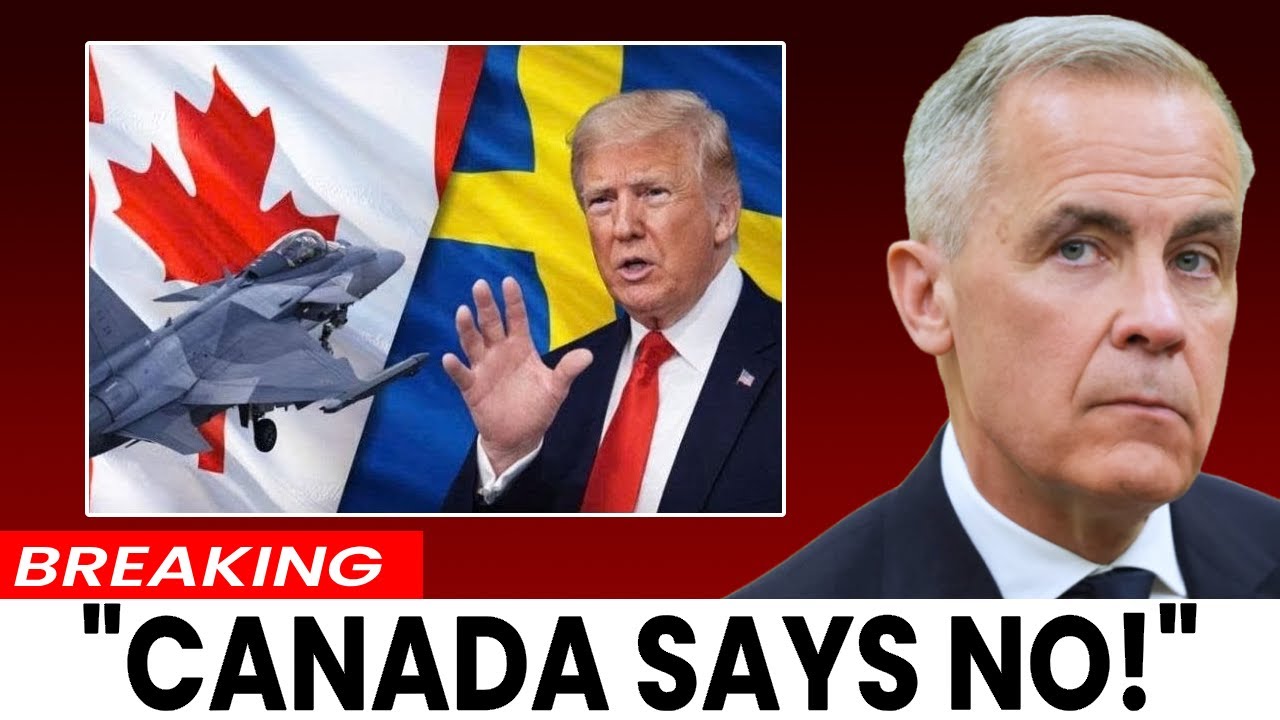
For years, Canada’s replacement of its Cold War–era CF-18 jets appeared straightforward: purchase 88 F-35 aircraft from the American defense giant Lockheed Martin and deepen integration with the United States under the framework of North American Aerospace Defense Command, the binational command known as NORAD.
Instead, Ottawa’s decision to reassess that plan — and to entertain a rival offer from Sweden’s Saab AB for its JAS 39 Gripen fighter — has stirred unease in Washington and raised questions about how much autonomy middle powers can exercise within tightly knit alliances.
The F-35, a fifth-generation stealth fighter developed by Lockheed Martin, is widely regarded as the most advanced multirole combat aircraft in production. It offers sophisticated sensor fusion, stealth characteristics and seamless interoperability with U.S. and NATO forces. For many alliance planners, its adoption by member states reinforces shared command structures and intelligence integration.
But the program also binds participating countries into an American-led ecosystem. Software upgrades, mission data files and key sustainment elements are centrally managed, largely under U.S. control. Supporters say that ensures security and interoperability. Critics counter that it embeds long-term dependence.
The alternative under discussion, the Gripen E, represents a different philosophy. Designed by Saab for Sweden’s defense posture during the Cold War, the aircraft emphasizes dispersal, rapid turnaround and operations from austere airstrips. It has been adopted by Sweden, Brazil, Hungary and the Czech Republic, among others.
Saab has proposed assembling the jets in Canada in partnership with local industry, including the aerospace manufacturer Bombardier, and transferring significant technology. The company has promised thousands of jobs and a greater degree of domestic control over upgrades and weapons integration.
The shift from what had seemed a settled procurement decision to an open strategic debate has reverberated beyond technical specifications.
According to Canadian officials and defense analysts, U.S. counterparts have privately emphasized the implications for interoperability and continental defense should Canada scale back its F-35 commitment. Under NORAD, the United States and Canada jointly monitor and defend North American airspace, sharing radar networks and coordinating intercept missions.
The U.S. ambassador to Canada, Pete Hoekstra, said in an interview with the Canadian Broadcasting Corporation that Canada’s fighter fleet size directly affects continental defense planning. If Ottawa were to reduce its purchase, he suggested, the United States might need to increase its own operational presence to compensate.
Such comments have been interpreted in Ottawa as a signal that procurement choices carry diplomatic weight.

Prime Minister Mark Carney ordered a reassessment of the F-35 contract after projected program costs rose significantly in recent years. The review comes at a delicate moment in bilateral relations, strained by trade disputes and tariff threats from President Donald Trump.
Canadian officials insist that the reconsideration is not a rejection of the United States or of NATO commitments. Rather, they frame it as an effort to ensure that defense spending aligns with national priorities, including domestic industrial benefits and operational requirements in the Arctic.
Canada’s geography looms large in the debate. The country is responsible for patrolling vast northern approaches, where infrastructure is sparse and weather conditions severe. Aircraft must operate in extreme cold, fly long distances and, potentially, function from damaged or improvised runways in a crisis.
Advocates of the Gripen argue that its design — which allows for rapid refueling and rearming by small crews and operations from short or dispersed airstrips — better suits those conditions. Proponents of the F-35 respond that its advanced sensors and stealth capabilities would provide unmatched awareness and deterrence in an era of renewed great-power competition, including increased Russian military activity in the Arctic.
The dispute has exposed a broader tension within NATO. Over decades, major defense programs have intertwined military capability with political alignment. Aircraft platforms shape not only tactics but also supply chains, data access and long-term strategic relationships.
If Canada, a core U.S. defense partner, were to pivot away from the F-35, it could embolden other countries to seek alternatives that promise greater national control. That possibility, analysts say, may explain the intensity of Washington’s engagement.
Still, Canada’s room for maneuver is limited. Even with a non-American fighter, its air defense would remain deeply integrated with U.S. radar, satellite and command networks under NORAD. Full autonomy is neither feasible nor desired, Canadian officials acknowledge. The question is one of degree.
For Ottawa, the choice is not simply between two aircraft. It is between models of alliance: one that prioritizes deep technological integration and one that leaves more authority in national hands.
Whatever the final decision, the episode underscores how procurement choices can ripple through geopolitics. In an era when economic pressure, trade disputes and security commitments intersect, even the selection of a fighter jet can test the boundaries between cooperation and dependence.
As Canada weighs its options, allies across NATO are watching closely — not only to see which jet it chooses, but to gauge how much sovereignty a middle power can assert without unsettling the alliance that has long underpinned its security.