Sweden Steps Forward in NATO’s Northern Skies
KEFLAVIK, Iceland — On a wind-scoured stretch of runway at Keflavik Air Base, six Swedish fighter jets taxied into position in early February, their arrival marked by little more than the low hum of engines and the ritual precision of a military handover. Yet the moment carried significance well beyond the gray North Atlantic horizon.
For the first time since joining NATO in 2024, Sweden assumed leadership of the alliance’s Icelandic Air Policing mission, a quiet but symbolically potent step for a nation that had maintained military non-alignment for more than two centuries.
The aircraft — Saab JAS 39 Gripens — replaced a departing Belgian F-16 detachment, continuing a rotation that has operated almost continuously since 2008. Iceland, a founding NATO member, has no standing air force. Its strategic position between North America and Europe, however, makes its airspace critical terrain in monitoring activity across the North Atlantic.
Under NATO’s collective defense framework, allied nations take turns deploying fighter detachments to Keflavik. Their task is straightforward in description but exacting in practice: maintain a constant quick reaction alert posture, scramble within minutes when unidentified aircraft approach allied airspace, and operate seamlessly within NATO’s integrated command structure.
Sweden’s leadership role in the mission underscores how quickly the country has transitioned from neutral observer to operational contributor. When Russia launched its full-scale invasion of Ukraine in 2022, Swedish policymakers concluded that neutrality no longer guaranteed security in an era of revived conventional warfare in Europe. Accession to NATO, finalized in March 2024, offered the protection of Article 5 — the principle that an attack on one member is an attack on all — but also imposed new responsibilities.
Integration into NATO is less ceremonial than it appears from the outside. It demands technical interoperability, secure communications, standardized procedures and constant coordination with multinational command centers. Fighter pilots must operate under alliance rules of engagement; aircraft must plug into shared data networks without friction. Leadership of an ongoing mission signals that these requirements have been met.
The Icelandic assignment provides a proving ground. Although the mission does not involve combat operations, it requires sustained readiness and credible deterrence. Russian long-range bombers and reconnaissance aircraft continue to patrol near NATO’s northern approaches, often flying in international airspace but without filing flight plans or communicating with civilian air traffic control. Each time radar operators detect such aircraft nearing alliance boundaries, NATO fighters launch to identify and shadow them.

Swedish pilots now carry out those intercepts under NATO command authority. The encounters are professional and governed by international law, yet they serve a strategic purpose: demonstrating presence and ensuring transparency in increasingly contested skies.
The choice of aircraft also reflects broader debates within defense circles. The Gripen, developed by Sweden’s aerospace firm Saab, was designed during the Cold War with the assumption that Swedish air bases might be targeted in wartime. As a result, it can operate from short runways — even stretches of highway — and be maintained by small teams. It lacks the stealth profile of fifth-generation aircraft such as the F-35, but it integrates modern radar systems and secure data links compatible with NATO networks.
For air policing missions, availability and endurance often matter more than cutting-edge stealth. Identifying and escorting aircraft over open ocean demands reliable sensors, secure communications and the ability to launch quickly in harsh weather. The Gripen’s lower operating cost allows Sweden to sustain deployments without overextending its defense budget — a practical consideration in a region where rotations are constant.
Sweden’s participation also reflects a broader transformation across the Nordic region. Finland joined NATO in 2023; Norway and Denmark have long been members. With Stockholm’s accession, the alliance now encompasses nearly the entire Nordic arc, simplifying regional defense planning. Shared geography and climate familiarity strengthen cooperation in Arctic and subarctic conditions.
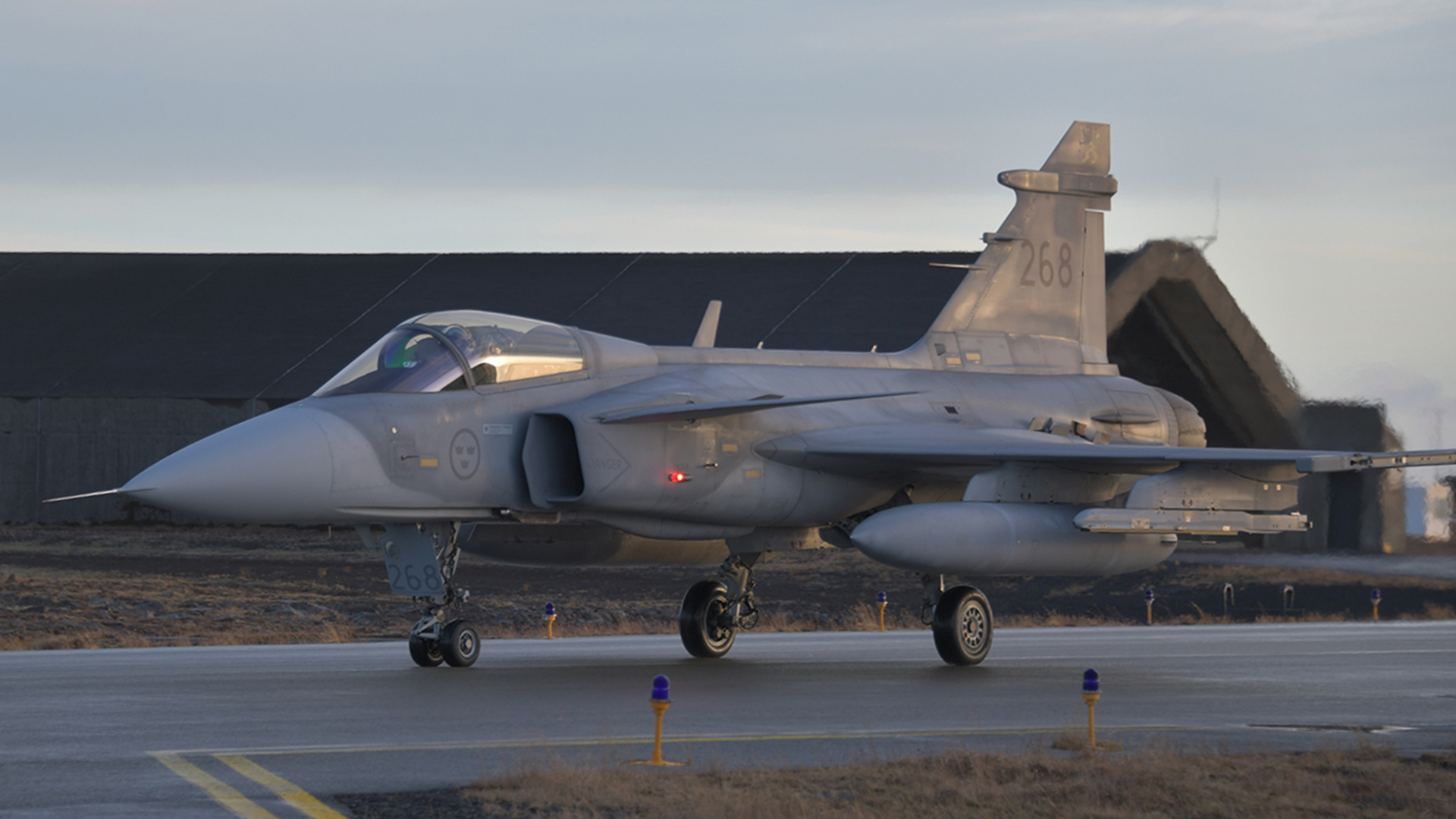
At Keflavik, the daily rhythm is methodical rather than dramatic. Maintenance crews inspect airframes between sorties. Pilots review intelligence briefings and rehearse contingency procedures. Commanders coordinate with NATO’s Combined Air Operations Center, balancing alliance directives with national command authority over their forces.
Burden-sharing — a phrase often invoked in political debates — becomes tangible in such rotations. No single member state can indefinitely cover every air policing mission across NATO’s vast territory, which stretches from the Baltic to the Black Sea and from the Mediterranean to the Arctic. Each capable partner that assumes a rotation frees others to allocate resources elsewhere.
For Sweden, leading in Iceland carries both practical and symbolic weight. It demonstrates that the country’s choice to join NATO was not merely a strategic hedge but a commitment to collective responsibility. For Iceland, the arrangement provides essential air defense without the costs of maintaining its own fighter fleet.
The scene on the tarmac may appear routine, but it illustrates how alliances function in practice: through repetition, interoperability and steady contributions rather than dramatic gestures. In the thin winter light above the North Atlantic, Swedish Gripens now stand ready on alert — a visible sign that a nation once defined by neutrality has embedded itself within a collective defense system that depends on participation as much as power.