At 8:34 a.m. Eastern time, Canada’s top banking regulator released a directive that, within minutes, rippled through trading floors in New York and Toronto. The order, issued by the Office of the Superintendent of Financial Institutions, imposed new constraints on American banks operating in Canada and temporarily restricted certain cross-border financial transactions. By midmorning, U.S. bank stocks were sliding and Treasury yields were climbing — a market signal that investors understood the move as more than routine supervision.
The directive requires U.S.-based financial institutions with Canadian operations to submit enhanced disclosures detailing cross-border exposures, derivative positions and holdings tied to U.S. government securities. It also pauses expansion of new branch activity and freezes specific categories of transactions involving U.S. Treasury instruments between Canadian entities and American counterparties. Canadian officials framed the measures as temporary safeguards during a period of “external policy volatility.” In Washington, they were viewed as retaliation.
For decades, North American banking integration has been treated as a constant — an unspoken pillar beneath trade flows, investment corridors and pension fund allocations. Major U.S. banks maintain significant subsidiaries in Canada, servicing corporate lending, underwriting and wealth management. Canadian pension funds, for their part, are among the largest foreign holders of U.S. government debt. The financial relationship is dense, profitable and deeply interwoven.
Markets reacted with speed. Shares of several large American banks fell sharply in early trading, reflecting concern about revenue exposure and regulatory uncertainty. Treasury yields rose, suggesting reduced demand or heightened risk premiums in government debt markets. Though movements moderated later in the day, volatility underscored a central anxiety: if financial channels become instruments of statecraft, integration can no longer be assumed.
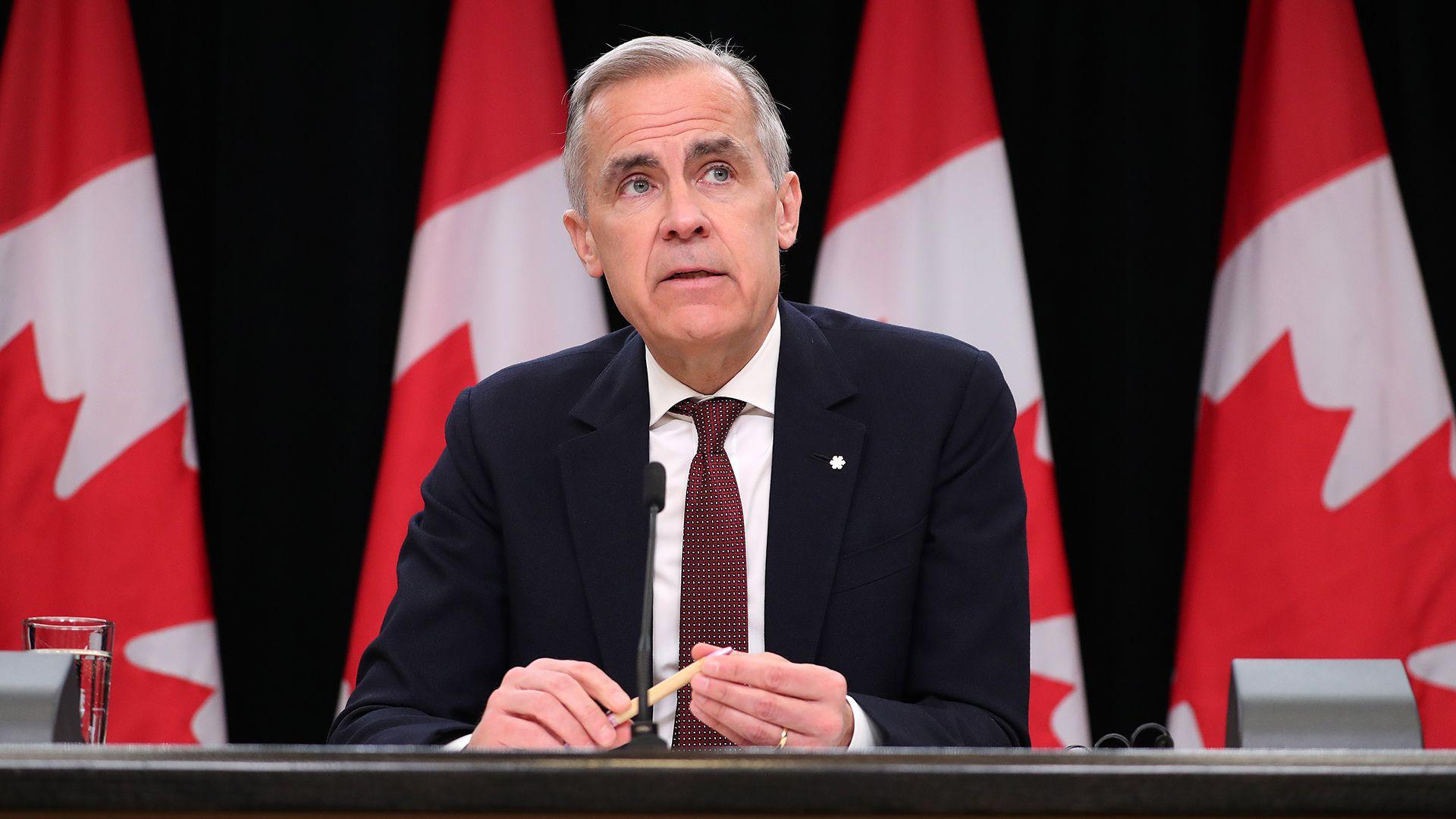
In Ottawa, Prime Minister Mark Carney presented the action as a defensive measure rather than escalation. He emphasized the legal authority of Canadian regulators to protect domestic financial stability and signaled that restrictions would be reviewed periodically. The language was measured, but the message was unmistakable. Canada was prepared to use regulatory leverage in response to mounting economic pressure from Washington.
American officials responded cautiously. The Treasury Department convened consultations with regulators and industry leaders to assess exposure. Public statements described Canada’s move as destabilizing and potentially inconsistent with trade obligations, yet advisers acknowledged privately that retaliation in kind could deepen market stress. Financial decoupling, even partial, would reverberate across bond markets, currency exchange and cross-border lending.
The broader question is whether this episode marks a tactical maneuver or a structural inflection point. Financial systems thrive on predictability. When regulatory frameworks become tools of geopolitical signaling, capital tends to retreat to safer ground. Investors begin to price political risk into assets that once traded on fundamentals alone. If similar restrictions were contemplated by other major economies, the implications for U.S. borrowing costs and global dollar liquidity would be profound.
Yet there are constraints on escalation. The United States and Canada share not only markets but infrastructure — clearing systems, payment networks, institutional investors and regulatory coordination agreements. A rapid unwinding would be costly to both sides. Canadian banks operate extensively in the United States; American firms rely on Canadian capital and commodities. Interdependence creates leverage, but it also imposes discipline.
Some analysts see the episode as a negotiation tactic designed to draw Washington back to the table. Others worry it could harden positions and encourage other governments to reconsider exposure to U.S. financial instruments. The symbolism matters. For the first time in this dispute, the battleground shifted from tariffs and procurement rules to the plumbing of the financial system itself.
By late afternoon, markets had stabilized somewhat, though uncertainty lingered. Traders were parsing language from Ottawa and Washington for hints of de-escalation. Behind the scenes, bank executives were reportedly urging both governments to contain the fallout before confidence erodes further.
Whether this confrontation resolves quickly or evolves into a longer-term recalibration of North American finance will depend on political decisions in the days ahead. What is clear is that a line has been crossed. Financial integration, once treated as immune to trade quarrels, is now part of the contest. In that shift lies both risk and revelation: in a deeply connected system, even measured regulatory moves can carry the force of a geopolitical statement.