🔥 BREAKING: DEFENSE DEAL FACES TURBULENCE — CANADA REASSESSING FIGHTER JET OPTIONS AMID RISING TENSIONS ✈️🇨🇦
Canada’s plan to purchase 88 F-35 fighter jets, a deal once framed as the cornerstone of its air force modernization, is now under review amid a widening political rift with the United States.
The agreement, signed in June 2023 with Lockheed Martin, committed Canada to acquire 88 F-35A aircraft for approximately 19 billion Canadian dollars, or about $13 billion. The first 16 jets are already in production and scheduled for delivery between 2026 and 2030. But the remaining 72 aircraft — representing roughly 16 billion Canadian dollars — are no longer assured.
Prime Minister Mark Carney has ordered a formal review of the purchase, directing defense officials to determine whether proceeding with the full acquisition remains in Canada’s long-term interest. The reassessment comes after a period of escalating trade tensions and pointed rhetoric from President Donald Trump, including suggestions that defense cooperation could be reevaluated if Canada failed to align with American procurement priorities.
Although the White House has not formally linked the F-35 purchase to broader disputes, remarks by American officials warning that the United States might reconsider aspects of continental defense arrangements were widely interpreted in Ottawa as pressure. In Canada, where concerns about economic sovereignty have grown, the episode has altered the political calculus around a project that had already endured years of debate.
Canada first joined the F-35 program in 2002 as a development partner. Over two decades, successive governments studied alternatives, paused participation and reopened competitions before ultimately selecting the F-35 as the Royal Canadian Air Force’s preferred replacement for its aging CF-18 fleet. Military planners have argued that the fifth-generation aircraft offers advanced stealth capabilities and seamless interoperability within NORAD, the joint U.S.-Canadian command responsible for continental air defense.
Those technical arguments remain largely unchanged. What has shifted is the political environment.
Public opinion surveys conducted in recent weeks show strong support for diversifying defense procurement, with many Canadians favoring either a mixed fleet or a pivot away from American suppliers altogether. That shift has given the Carney government greater latitude to reconsider the deal without appearing to compromise national security.
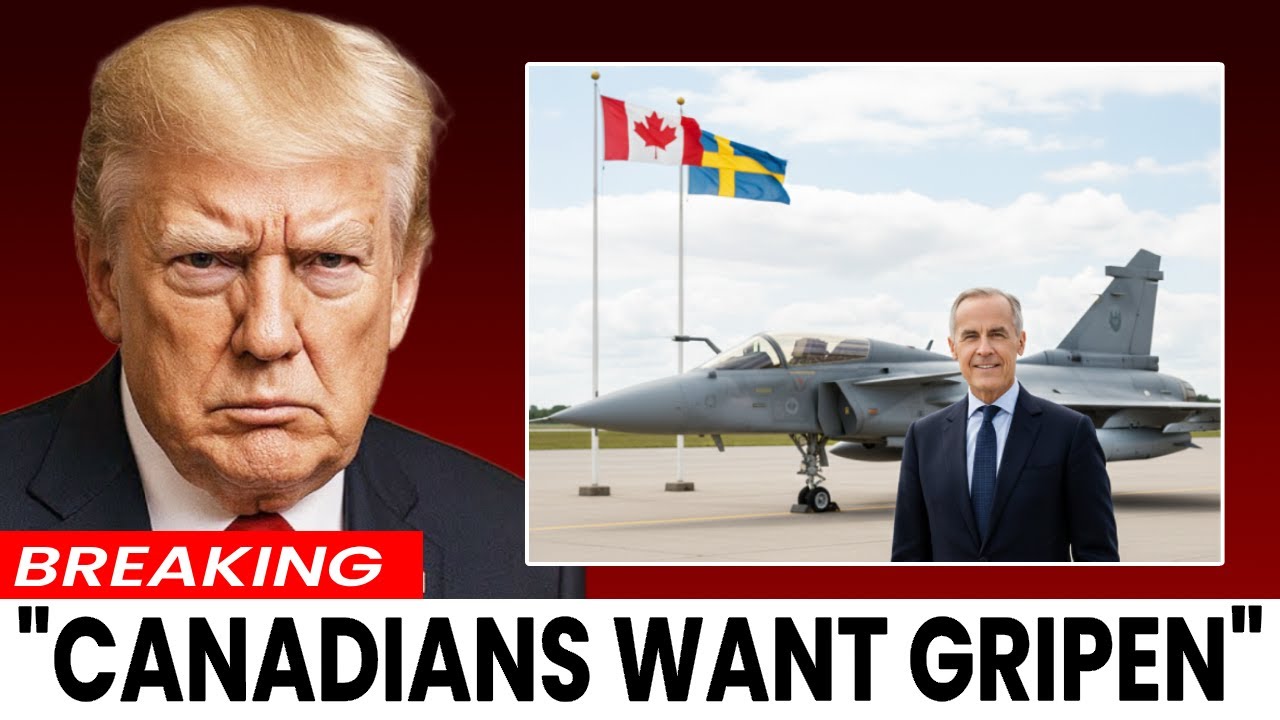
At the same time, Canada has reopened discussions with Saab regarding its JAS 39 Gripen fighter. Saab’s proposal includes assembling aircraft in Canada and transferring significant technology to Canadian firms — an offer officials say could generate more than 12,000 domestic aerospace jobs. Unlike the F-35 program, in which Canadian companies supply components within a global chain but do not assemble complete aircraft, Saab’s bid emphasizes local production and long-term industrial autonomy.
The contrast highlights a broader strategic debate. Supporters of the F-35 note that more than 110 Canadian companies already participate in its international supply network, collectively securing billions in contracts. They argue that remaining within the program ensures access to cutting-edge technology and reinforces Canada’s standing among NATO allies.
Critics counter that Canada does not control the aircraft’s core software, maintenance systems or upgrade pathways, all of which depend on American oversight. In a climate of strained relations, they argue, reliance on a single foreign supplier carries new risks.
For Lockheed Martin, the stakes are substantial. Canada’s order represents one of the largest export commitments in the F-35 program and carries symbolic weight as participation by a founding partner. The jet’s pricing structure depends in part on broad international uptake; if additional countries reconsider purchases, per-unit costs could rise for remaining buyers.
Other allies are watching closely. Denmark has faced its own tensions with Washington over Arctic policy, and officials in Portugal have signaled interest in reviewing future fighter options. Any Canadian withdrawal would intensify questions about the durability of multinational defense partnerships in an era of sharper geopolitical rhetoric.
Within Canada’s defense establishment, the prospect of a mixed fleet presents logistical complications. Operating two different fighter platforms would increase training and maintenance costs and could dilute interoperability advantages. Historically, the Royal Canadian Air Force has favored a single-platform solution for precisely those reasons.
Yet procurement decisions are never solely technical. They sit at the intersection of defense strategy, industrial policy and diplomacy. Mr. Carney campaigned on reducing Canada’s economic dependence on the United States and broadening trade relationships. A decision to scale back the F-35 order could be framed domestically as consistent with that mandate.
For now, the 16 aircraft already in production will proceed. The future of the remaining 72 jets — and the broader tenor of U.S.-Canadian defense cooperation — remains uncertain.
The F-35 was designed as a symbol of allied integration, a shared platform binding militaries together through common technology. In Canada, it has instead become a test of how resilient that integration is when political trust frays.