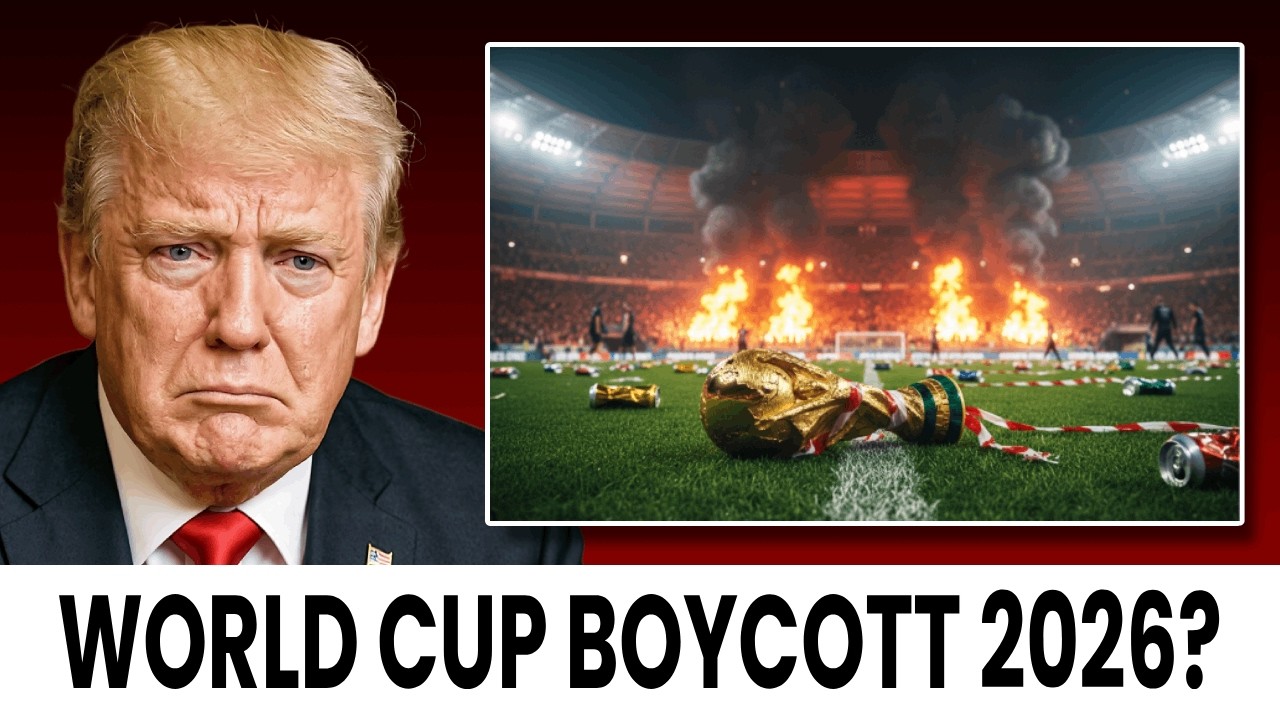
World Cup 2026 Faces Political Crosscurrents as Boycott Calls Grow in Europe
The 2026 World Cup, awarded to a tri-national partnership spanning United States, Canada and Mexico, was conceived as a celebration of soccer’s expanding global footprint — a tournament enlarged to 48 teams and 104 matches, unprecedented in scale and commercial ambition. Instead, with five months until kickoff, it has become entangled in a widening political debate that stretches far beyond the pitch.
In parts of Europe, lawmakers and civic groups have begun openly discussing whether national teams should reconsider participation. In the Netherlands, more than 150,000 people signed a petition urging their federation to boycott. In Germany, members of the center-right Christian Democratic Union have raised similar questions. British members of Parliament have framed participation as a moral test. What was once confined to sports radio has migrated into parliamentary chambers and prime-time news broadcasts.
The tournament’s organizing body, FIFA, insists that preparations remain on track. Broadcast contracts are signed. Stadium renovations are underway. Corporate sponsors have committed billions. FIFA projects that the competition could generate roughly $10 billion in revenue and create hundreds of thousands of temporary jobs across North America.
Yet critics argue that the issue is not logistical feasibility but symbolism.
President Donald Trump, who is serving as chair of a White House task force dedicated to the tournament, has woven the event into a broader narrative of national projection. The administration has emphasized immigration enforcement and assertive foreign policy moves in recent months. Supporters describe these policies as necessary demonstrations of sovereignty. Detractors contend that they risk transforming a global sporting festival into a stage for geopolitical messaging.
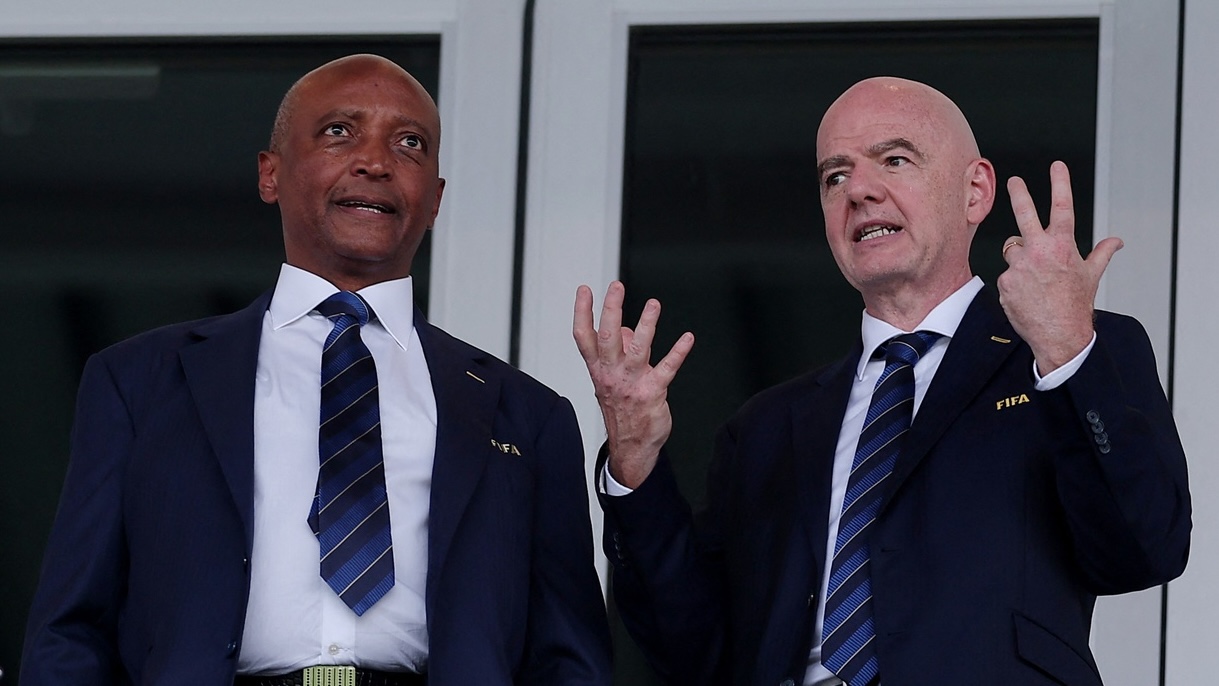
The optics have not gone unnoticed. Gianni Infantino, FIFA’s president, has appeared frequently alongside Mr. Trump and has defended close coordination with American authorities as essential to ensuring security and organizational success. Human rights advocates, however, have questioned whether the governing body is maintaining sufficient independence from host-nation politics.
The debate has been fueled by broader geopolitical tensions. Proposals of new tariffs on European goods, sharp rhetoric regarding territorial questions in the Arctic, and a high-profile military intervention in Venezuela earlier this year have intensified scrutiny. While these matters are formally separate from sport, they shape public perception. For some European observers, participation risks appearing as tacit endorsement.
History offers cautionary parallels. The United States led a boycott of the 1980 Moscow Olympics in protest of the Soviet invasion of Afghanistan. The Soviet Union responded with its own boycott of the 1984 Los Angeles Games. In both cases, athletes bore the brunt of political decisions taken far above them. Other tournaments have unfolded amid controversy — Argentina’s 1978 World Cup during military rule, Russia’s 2018 edition following the annexation of Crimea, and Qatar’s 2022 competition despite labor rights concerns. None produced a unified international withdrawal.
Analysts widely consider a full-scale boycott in 2026 improbable. Federations face binding contractual obligations. Players have trained for years, often their entire lives, for the opportunity to compete on soccer’s grandest stage. Broadcasters and sponsors would resist disruptions that threaten billions in revenue. The economic stakes for host cities — from Los Angeles to Toronto to Mexico City — are considerable.
Still, improbability is not irrelevance. Even absent a formal boycott, the atmosphere surrounding the event has shifted. Visa policies for visiting delegations are under scrutiny. Civil liberties groups have urged federal authorities to guarantee the rights of peaceful demonstrators and traveling supporters. European politicians, mindful of domestic constituencies, are calibrating their statements carefully.
Some advocates propose alternatives to withdrawal. Teams could participate while staging visible gestures of dissent — coordinated statements, symbolic apparel, or meetings with civil society groups — echoing precedents from prior tournaments. Such actions would aim to separate athletes’ aspirations from government policy while preserving the integrity of competition.
Others counter that symbolic protest risks dilution in a media environment saturated with spectacle. A boycott, they argue, would carry unmistakable clarity. Yet it would also impose severe personal costs on players and could deepen fractures within federations and fan bases.
For Canada and Mexico, co-hosts alongside the United States, the situation is particularly delicate. Both governments have navigated complex diplomatic exchanges with Washington in recent months. Publicly, officials emphasize cooperation and the shared economic benefits of a successful tournament. Privately, they are aware that instability could ripple across borders.
The question facing European federations is therefore less about feasibility than about philosophy. Should sport serve as a neutral meeting ground insulated from statecraft? Or is neutrality itself a political stance when global tensions are acute?
Between June 11 and July 19, 2026, the world’s attention will converge on North America. Goals will be scored. New stars will emerge. Revenues will be tallied. Yet alongside the familiar rhythms of competition, there will be another scoreboard — one measuring whether the tournament deepens division or demonstrates that international sport can still function as a fragile bridge.
For now, the matches remain scheduled. The stadiums await. But the meaning of participation, once taken for granted, has become part of the contest itself.