Canada’s Fighter Jet Debate Signals a Broader Reckoning Over Sovereignty and Alliance Politics
OTTAWA — What began as a routine effort to replace Canada’s aging CF-18 fighter jets has evolved into a defining test of how modern alliances distribute power.
At the center of the debate are two aircraft: the American-made F-35 Lightning II and Sweden’s Saab JAS 39 Gripen, produced by Saab AB. On paper, the choice appears technical — a comparison of stealth capability, operating costs and interoperability. In practice, it has forced Ottawa to confront deeper questions about sovereignty, operational control and the nature of its defense relationship with Washington.
For years, Canada’s path seemed set. As a longtime participant in the F-35 program, Ottawa was expected to formalize its purchase, modernize its fleet and reinforce its integration within North American defense networks. The transition was widely framed as procedural — a continuation of decades of military cooperation with the United States under the umbrella of North American Aerospace Defense Command, better known as NORAD.
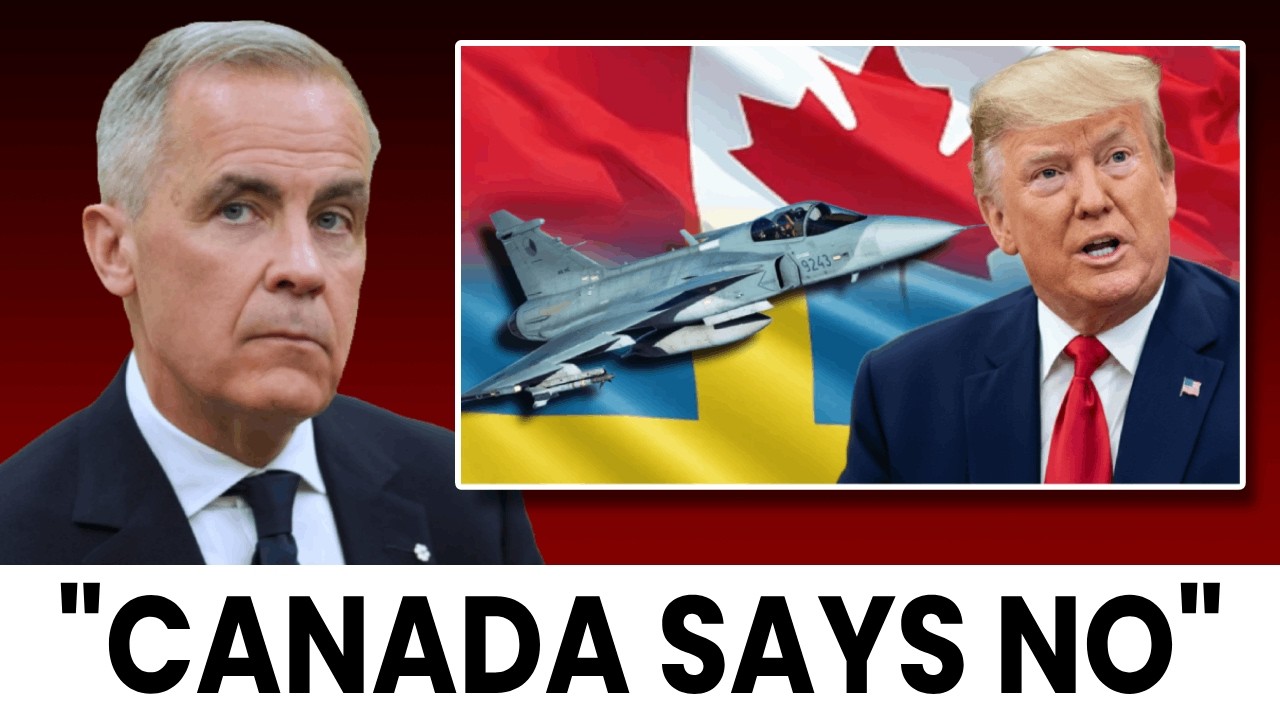
But as Sweden’s Gripen entered serious consideration, the tenor of discussions reportedly shifted. According to defense officials familiar with internal deliberations, American representatives cautioned that moving away from the F-35 could complicate intelligence sharing and joint operational planning. The implication was that procurement choices carry strategic consequences.
The F-35 is widely regarded as the most advanced multirole fighter in production, with stealth characteristics and sensor fusion capabilities unmatched by most competitors. Yet participation in the program also entails reliance on American-managed software systems, mission data files and sustainment networks. Updates and certain weapons integrations are coordinated through U.S.-controlled infrastructure.
The Gripen offers a contrasting model. Designed during the Cold War with Sweden’s doctrine of dispersed operations in mind, the aircraft emphasizes survivability and national control. Saab has pledged extensive technology transfer should Canada proceed, including local manufacturing, final assembly and long-term maintenance support — potentially creating thousands of jobs in partnership with Canadian firms such as Bombardier. More significantly for policymakers, the Gripen’s software architecture allows operators to retain domestic authority over mission data and upgrades.
For Canadian officials, the debate has unfolded against a shifting geopolitical backdrop. Prime Minister Mark Carney ordered a review of projected costs for the F-35 fleet after estimates rose sharply in recent years. At the same time, relations with Washington have been strained by tariff threats from President Donald Trump, injecting political uncertainty into what had long been treated as a stable partnership.
Canada’s strategic circumstances add urgency to the decision. The country is responsible for defending the world’s second-largest airspace, much of it stretching across Arctic regions where extreme cold, limited infrastructure and vast distances complicate operations. Russian military activity near northern approaches has increased in recent years, underscoring the importance of rapid response and sustained availability.
In such conditions, operational philosophy matters as much as technological sophistication. The Gripen was engineered to operate from short or improvised runways, with small maintenance teams and minimal ground equipment. Its doctrine assumes that fixed air bases may be targeted early in a conflict and that aircraft must disperse quickly.
The F-35, by contrast, excels within a highly integrated ecosystem, drawing strength from real-time data connectivity and advanced support infrastructure. Its advantages are amplified by seamless coordination across allied forces — a defining feature of contemporary NATO operations.
Defense analysts caution that the choice is not binary in strategic effect. Even a non-American fighter would operate within broader NATO command structures and sensor networks. Canada’s membership in NORAD ensures enduring integration with U.S. air defense systems, regardless of platform.
Still, degrees of autonomy matter. A decision to diversify away from complete reliance on American-managed systems would signal a recalibration of alliance dynamics. It would not represent a break with the United States, officials insist, but rather an assertion that partnership need not entail full technological dependence.
Within NATO, procurement decisions have long served as instruments of cohesion — and, critics argue, influence. Shared platforms facilitate interoperability but also bind allies through digital architectures, upgrade cycles and data pipelines. If Canada demonstrates that operational sovereignty can coexist with alliance commitments, other countries may revisit assumptions about how tightly their defense capabilities must be tethered to Washington.
For now, Ottawa’s review continues. The government faces competing imperatives: maintaining the highest level of integration with its closest ally while safeguarding flexibility in an era of political unpredictability.
The fighter jet decision will ultimately determine more than the shape of Canada’s air fleet. It will reflect how a middle power navigates alliance politics at a moment when technology, economics and geopolitics converge. In weighing stealth against sovereignty, Canada is confronting a broader question confronting many democracies: how to balance solidarity with autonomy in an increasingly uncertain world.