When President Donald Trump lashed out at Canada’s prime minister this week, the immediate objective seemed familiar: reassert leverage, dominate the narrative and remind a smaller partner of the asymmetry in power. Instead, the episode unfolded in a way that many diplomats and analysts described as unexpectedly counterproductive.
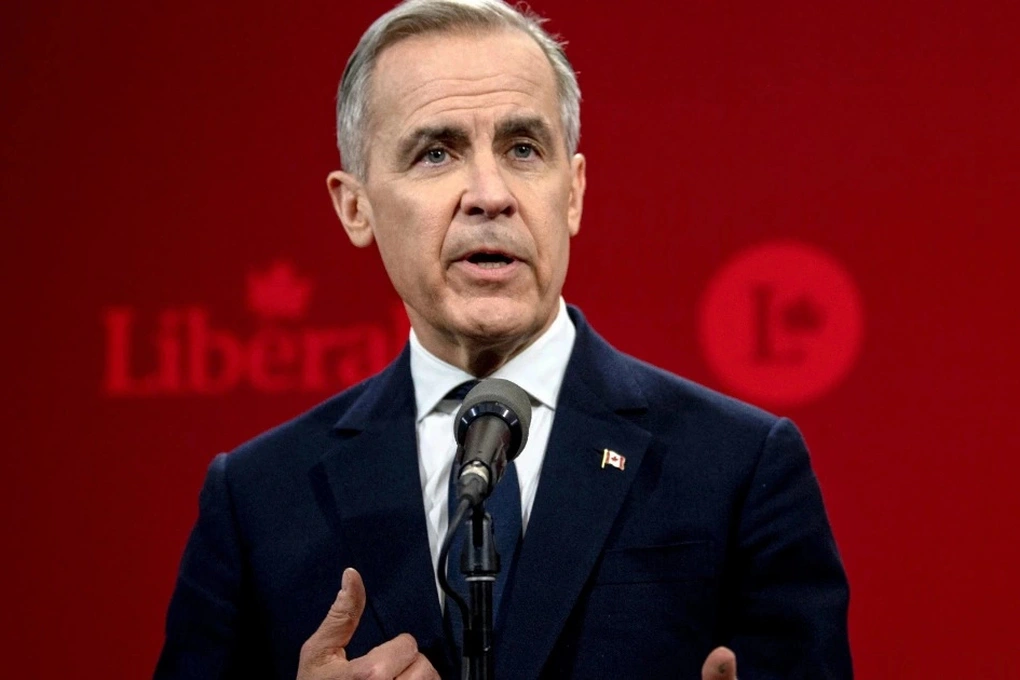
The clash began after Prime Minister Mark Carney delivered remarks at the World Economic Forum in Davos, where he spoke broadly about the risks of economic coercion and overreliance on single trading partners. He did not mention Mr. Trump by name. He did not announce retaliatory measures. But his argument — that middle powers must build resilience and diversify relationships — was widely interpreted as a subtle rebuke of Washington’s tariff-heavy approach to trade.
Within days, Mr. Trump responded publicly, accusing Canada of drifting toward China and questioning Ottawa’s reliability as a partner. A proposed invitation for Mr. Carney to join a newly floated American advisory initiative was quietly withdrawn. The president also invoked security rhetoric involving Greenland and continental defense, framing Canada’s diversification strategy as strategic disloyalty.
What followed was not the escalation that some in Washington may have anticipated. Mr. Carney did not issue a counterattack. There was no televised rebuttal, no emergency press conference. Instead, Canadian officials continued with previously scheduled trade and diplomatic engagements, emphasizing economic pragmatism and supply chain resilience.
In the absence of direct confrontation, the contrast in tone became the story. European and Asian commentators framed the exchange less as a bilateral dispute and more as a reflection of shifting geopolitical dynamics. Several analysts noted that Mr. Carney’s Davos remarks echoed concerns shared quietly by many governments: that economic access is increasingly used as leverage, and that diversification is a rational response rather than an act of defiance.
The episode highlighted a broader recalibration already underway. Canada has expanded trade talks with Indo-Pacific partners, increased investment screening capacity and pursued deeper coordination with European allies. These moves do not sever ties with the United States, which remains Canada’s largest trading partner by a wide margin. But they reduce singular dependence — a nuance that can alter negotiating posture without dramatic rupture.

Mr. Trump’s approach has long relied on visible pressure. By raising tariffs or threatening market access, the administration seeks concessions that it argues benefit American industries. The strategy assumes that counterparties will calculate that the cost of resistance outweighs the benefit of diversification. That calculus may be changing, at least incrementally.
Diplomats describe a delicate inflection point. If economic relationships are framed primarily as instruments of leverage, partners begin hedging against volatility. In that environment, silence can become a tactic. By declining to engage rhetorically, Mr. Carney denied Mr. Trump the dynamic of escalation that has characterized previous disputes.
The domestic political implications are equally significant. In Canada, the absence of reactive messaging allowed Mr. Carney to appear measured and focused on structural policy rather than personality-driven conflict. In the United States, some lawmakers expressed concern that public confrontations with close allies complicate broader strategic goals, particularly at a time of heightened competition with China.
None of this signals a collapse in the U.S.–Canada relationship. Defense cooperation, intelligence sharing and cross-border commerce continue. Yet the incident underscores how rapidly tone and perception can shape diplomatic narratives. In a media environment that amplifies every exchange, restraint itself can carry weight.
For decades, North American relations were characterized by quiet pragmatism, punctuated occasionally by trade disputes resolved through negotiation. The current moment feels different, not because of a single speech or post, but because of the evolving assumptions beneath them. When pressure elicits not panic but adaptation, the effectiveness of that pressure comes into question.
In that sense, the episode may be remembered less for its rhetoric than for what it revealed: that influence in a multipolar economy depends not only on scale, but on credibility and predictability. Whether the recalibration continues will depend on decisions made well beyond social media — in trade rooms, cabinet meetings and quiet diplomatic channels where power shifts are rarely announced, but steadily felt.