World Cup 2026 Faces Political Crosscurrents as U.S. Immigration Debate Shapes Global Perception
The 2026 FIFA World Cup, an event designed to showcase unity across continents, is approaching amid an unexpected undercurrent of political debate. What was envisioned as the largest and most commercially ambitious tournament in the history of the 2026 FIFA World Cup has, months before kickoff, become entwined with broader conversations about immigration policy, security enforcement and America’s global image.
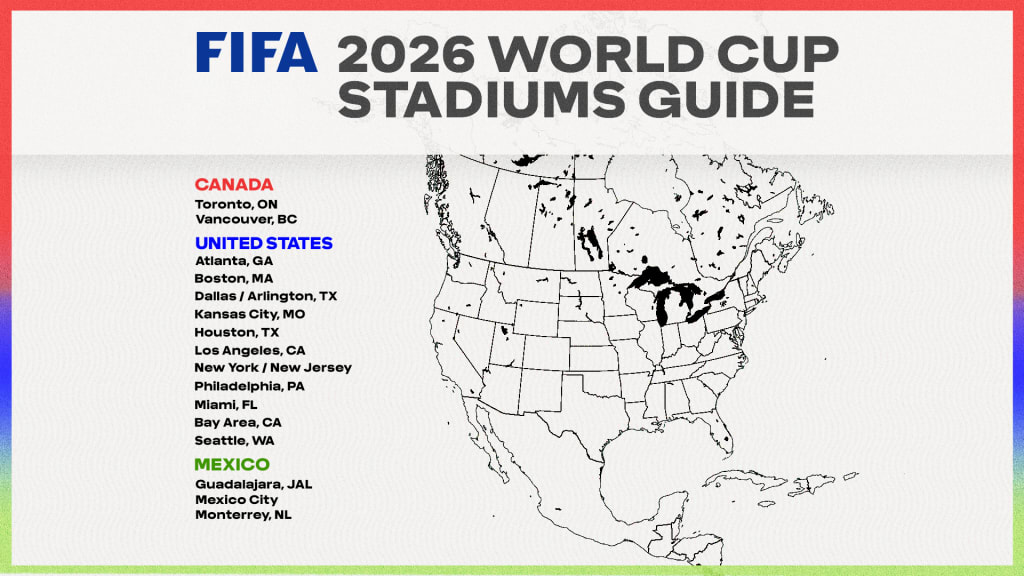
For the first time, the World Cup will be co-hosted by three nations — the United States, Canada and Mexico — and expanded to include 48 national teams. Organizers have projected billions of dollars in economic activity, with estimates suggesting that as much as $5 billion could flow into the United States alone through tourism, hospitality and retail spending. Host cities including Dallas, Atlanta, Miami, Los Angeles and New York have invested heavily in infrastructure upgrades, stadium modernization and transit planning in anticipation of millions of visitors.
Yet in recent weeks, online discourse in parts of Europe, Africa, the Middle East and South Asia has reflected a different tone. Some supporters have publicly questioned whether to travel to the United States, citing concerns about visa processing times, documentation requirements and the unpredictability of entry procedures. While many individual accounts circulating on social media remain unverified, they have nonetheless contributed to a perception challenge at a delicate moment for tournament organizers.
Human rights groups such as Amnesty International and Human Rights Watch have previously raised concerns about U.S. immigration enforcement practices, arguing that policies perceived as discriminatory can erode confidence among international travelers. For a tournament marketed as a celebration of equality and global fellowship, even the suggestion of unequal treatment resonates widely.
Security planning has added another dimension. U.S. Immigration and Customs Enforcement is expected to play a role in broader public safety operations surrounding the tournament. Officials have emphasized that large-scale events require heightened coordination among federal and local agencies. Advocacy groups, however, have urged clarity on how enforcement priorities will intersect with the presence of international visitors, particularly those engaging in peaceful demonstrations or political expression.
The political context has also amplified scrutiny. President Donald Trump has drawn international attention in recent months over foreign policy rhetoric that sparked debate in Europe. Although FIFA has maintained that preparations remain on track, some soccer officials abroad have floated the idea of symbolic boycotts, even as national federations have largely avoided formal positions.
Former FIFA president Sepp Blatter, who once supported bringing the tournament back to North America, recently voiced unease about the broader climate. While his influence within the organization has diminished following past controversies, his comments nonetheless underscored how quickly the event has become a forum for geopolitical discussion. Current FIFA president Gianni Infantino has not endorsed any boycott calls, reiterating that the tournament is intended to transcend politics.
Corporate stakeholders are watching carefully. Multinational sponsors including Emirates, Visa and Adidas have invested heavily in marketing campaigns tied to packed stadiums and vibrant fan festivals. Sports economists note that while global television audiences are likely to remain robust, the atmosphere generated by traveling supporters plays an important role in shaping broadcast appeal and commercial returns.
At the same time, attention has increasingly turned toward Canada and Mexico. Canadian cities such as Toronto and Vancouver and Mexican venues in Mexico City and Guadalajara are being discussed online as potentially more straightforward entry points for some international visitors. Canada’s visa procedures are often described as transparent and predictable, and Mexico’s longstanding soccer culture carries its own appeal. Though FIFA has not indicated any plan to alter match allocations, the comparative reputations of the three host nations have become part of the broader narrative.
Historically, large-scale sporting boycotts have been rare and politically charged. The 1980 Moscow Olympics and the retaliatory boycott of the 1984 Los Angeles Games remain prominent examples. The World Cup itself has never faced a coordinated withdrawal by qualified national teams for political reasons. That context underscores how unusual the current debate feels, even if it ultimately proves limited in scope.
None of this ensures diminished attendance. The World Cup remains one of the most powerful brands in global sport, with billions expected to watch regardless of travel patterns. Many fans who express reservations online may still choose to attend. National teams will compete, broadcasters will carry every match and cities will host festivities designed to welcome the world.
Still, perception often shapes legacy as much as outcomes on the field. International tournaments serve as opportunities for host nations to project openness and hospitality. In an era when digital narratives travel faster than official assurances, maintaining confidence among visitors is as critical as preparing stadiums.
As ticket sales accelerate and qualification campaigns intensify, the coming months will test whether online calls to reconsider travel translate into measurable shifts in attendance or fade into the background of a global spectacle. The tournament was conceived as a symbol of cooperation among neighboring nations. It may yet fulfill that promise. But it has also become a barometer of how sport and politics intersect in a world where borders, policies and perceptions remain deeply intertwined.