By XAMXAM
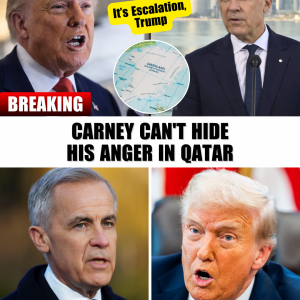
From a Doha media briefing, thousands of miles from Washington, Mark Carney chose a word diplomats rarely use lightly. He called Donald Trump’s threats over Greenland an “escalation.” In the carefully coded language of international politics, the term carries weight. It signals not disagreement, but danger—an acknowledgment that a line has been crossed.
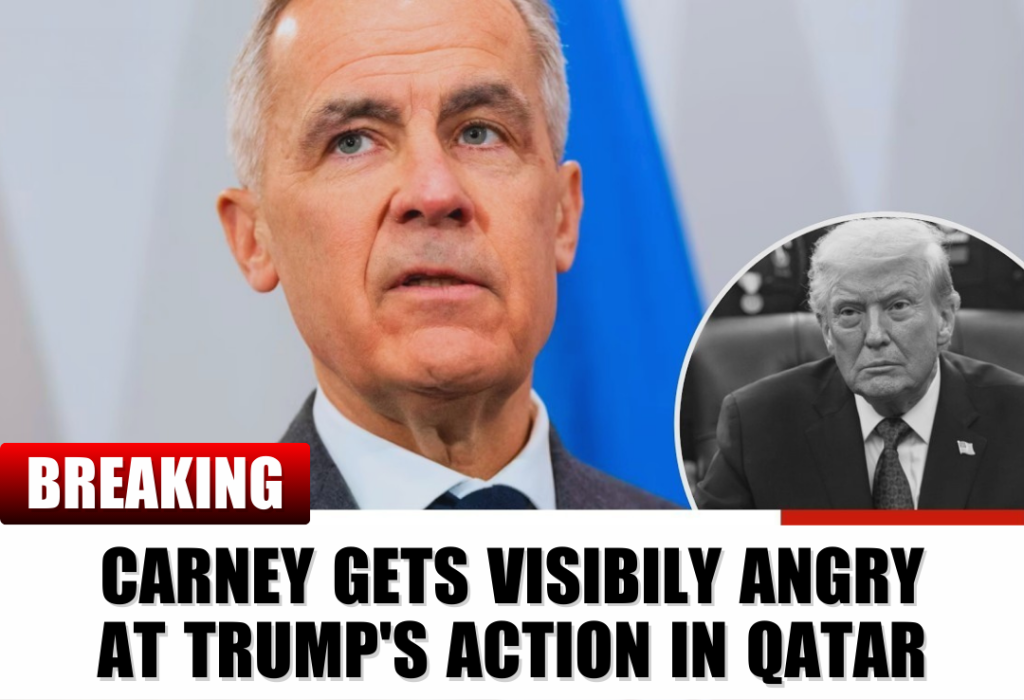
Carney’s remark came in response to Trump’s suggestion that the United States could use tariffs against European allies to pressure Denmark into allowing the sale of Greenland. The idea itself was not new. What was new was Canada’s decision to confront it publicly and without euphemism. Speaking alongside Qatari officials, Carney made clear that sovereignty and territorial integrity were not negotiable commodities, and that economic coercion had no place in determining borders.
For Washington, the moment landed with unusual force. Canada has traditionally been among the most cautious of American allies, preferring quiet diplomacy to public rebuke. That caution was absent in Doha. Carney did not downplay Trump’s rhetoric as bluster or theatrics. He labeled it an escalation and aligned Canada explicitly with Denmark, Greenland, and Europe, emphasizing that decisions about Greenland’s future belonged to Greenlanders and the Danish state alone.
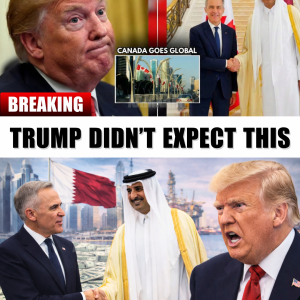
The context mattered as much as the message. Carney was not speaking from Ottawa or Brussels, but from Qatar—a global capital hub whose sovereign wealth shapes infrastructure and energy projects across continents. In the same appearance, Carney confirmed that Canada and Qatar had agreed to deepen what he called a “strategic partnership,” including long-term investment in Canadian infrastructure, energy, and advanced industries.
That combination—warning and backing—changed how the words were heard.
In isolation, statements of principle can be dismissed as symbolic. Delivered amid announcements of new capital commitments and recent trade resets with China, they read differently. Canada was not simply objecting to Trump’s tactics; it was demonstrating that it had options, partners, and financial support beyond Washington’s reach.
Diplomats often note that silence can function as consent. Ambiguity can signal tolerance. Carney offered neither. By using the term “escalation,” he placed Trump’s Greenland threats in the same conceptual category as other acts that destabilize international order. He also drew a parallel with Ukraine, underscoring that the principle at stake was not geography, but the norm against rewriting borders through pressure.
European leaders have voiced similar concerns, but often with hedging language. Canada’s intervention stood out for its clarity. Carney confirmed that Ottawa had already been coordinating with NATO partners and Nordic governments, and that Greenland’s security was a matter for those directly involved—not a bargaining chip for outsiders.
For Trump, accustomed to bilateral pressure and transactional diplomacy, the shift is uncomfortable. His leverage has often depended on treating allies individually, applying tariffs or threats to extract concessions. Carney’s stance suggested a different reality: a coordinated response backed by capital and multilateral alignment.
The warning also reflected a deeper recalibration in Canadian foreign policy. Years of unpredictability in U.S. trade and security policy have prompted Ottawa to diversify its relationships. China offered restored market access. Qatar offers long-term investment. Europe offers strategic alignment on security norms. None replaces the United States, but together they reduce Canada’s vulnerability to pressure.
That reduction is what makes the Doha remarks consequential. A year ago, such a statement might have been brushed aside as rhetorical. Today, it arrives amid evidence that Canada is no longer calibrating every move around Washington’s reaction. When a country can point to alternative markets and investors, warnings sound less symbolic and more structural.
The immediate impact will be debated. Trump’s tariff threats have a history of appearing and receding. But Carney’s intervention shifts the frame. It signals that certain tactics will be treated not as negotiating ploys, but as destabilizing actions with collective consequences.
In geopolitics, lines are rarely drawn with fanfare. They are drawn when leaders decide that restraint no longer preserves stability. From Doha, Carney made that decision clear. Canada would not normalize economic coercion as a tool of territorial change. And it would say so publicly, even when the easier path was silence.
What happens next will depend on how far Trump presses his case. But one change is already evident. Canada is no longer responding alone, and no longer speaking without support. In a system where leverage depends on isolation, that may be the most consequential shift of all.