By XAMXAM
When Mark Carney stepped off the plane in Mexico City after a tightly choreographed 36-hour visit, the trip barely registered in Washington. There were no grand speeches, no dramatic denunciations, no attempt to dominate the news cycle. And yet, beneath the surface, something significant had shifted.
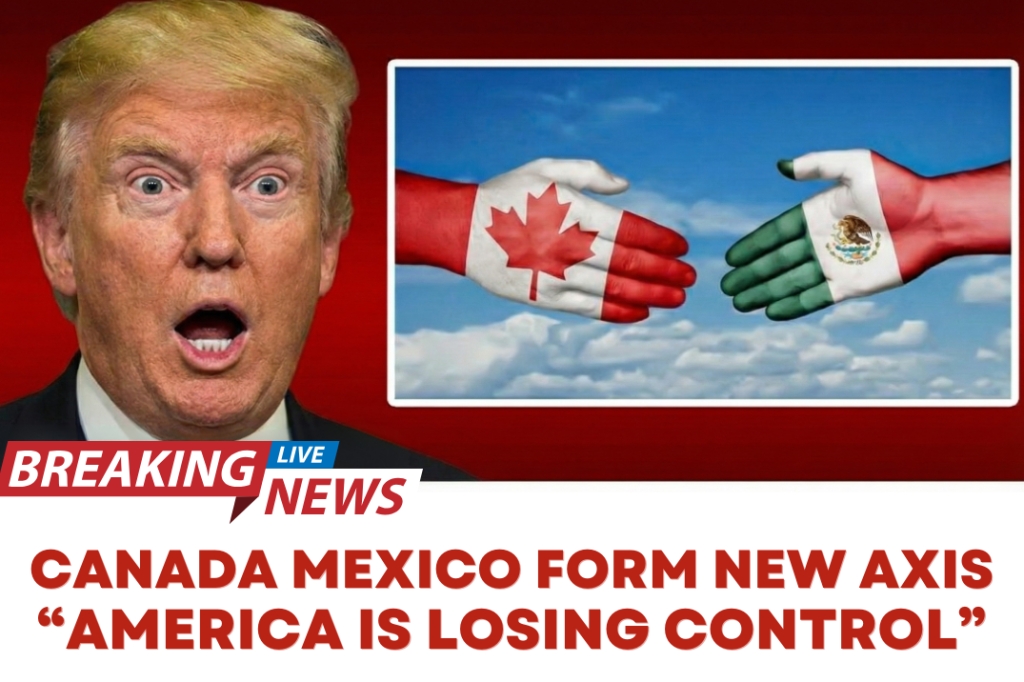
Canada and Mexico were no longer simply coordinating policy. They were recalibrating the structure of North American economic power.
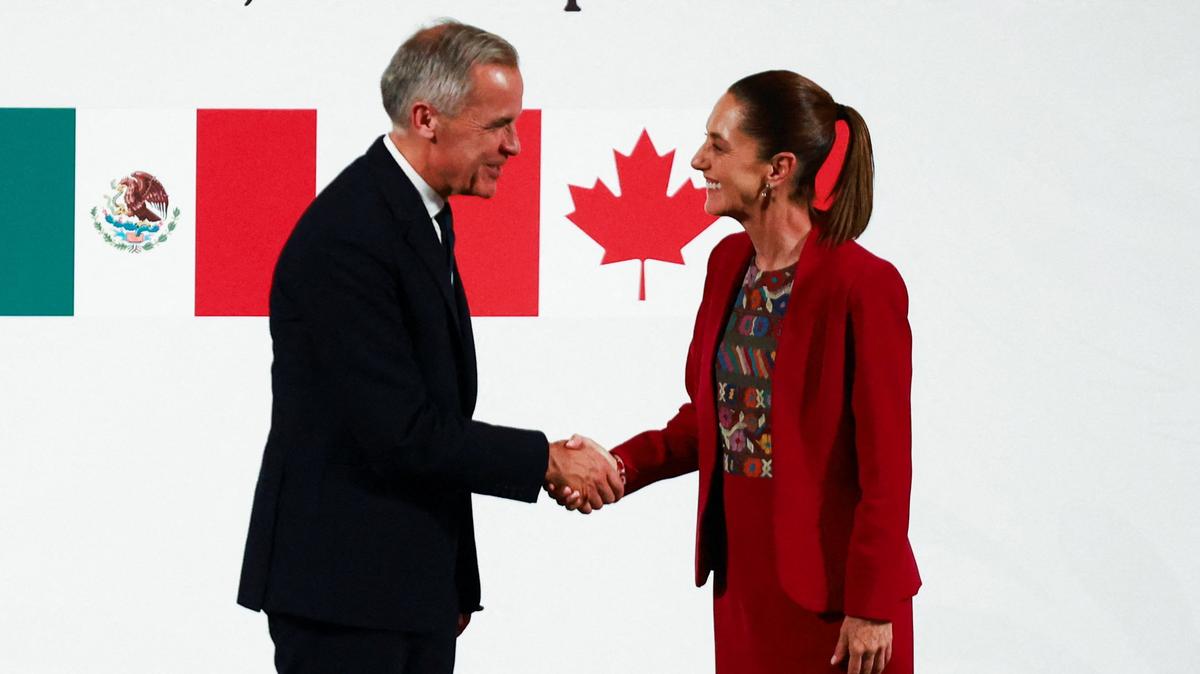
Standing alongside Claudia Sheinbaum, Carney announced what both sides carefully described as a “comprehensive strategic partnership.” The language was restrained, almost technocratic. But its meaning was unmistakable. For the first time in more than eight decades of diplomatic relations, Canada and Mexico were aligning themselves not as peripheral partners orbiting the United States, but as bilateral counterparts capable of building resilience without Washington at the center.
This shift did not emerge overnight. It has been forming quietly, driven less by ideology than by uncertainty. Under Donald Trump, the United States has embraced tariffs, abrupt negotiations, and transactional pressure as tools of economic statecraft. Canada and Mexico have each experienced this volatility firsthand. What changed in 2025 was the conclusion they drew from it: American reliability could no longer be assumed.
Rather than waiting to absorb the next shock, Ottawa and Mexico City began planning around it.
The clearest signal came with Canada’s decision to send the largest trade mission in its history to Mexico in February 2026. Hundreds of Canadian companies, spanning advanced manufacturing, clean energy, agriculture, and digital services, have already applied to participate. The scale of interest has surprised organizers. The urgency has surprised no one.
Trade between Canada and Mexico has grown steadily for three decades, rising from under five billion Canadian dollars in 1994 to more than fifty-six billion by 2024. But volume alone does not explain the current moment. What is different now is intent. The goal is no longer simply to trade more. It is to trade in ways that reduce exposure to American leverage altogether.
Officials on both sides have begun discussing redundant supply chains, joint production strategies aimed at Asian and Latin American markets, and expanded access for Mexican exporters to Canadian Pacific ports. These are not symbolic gestures. They are structural adjustments designed to function even if U.S. pressure intensifies.
The timing is deliberate. The mandatory review of the Canada–United States–Mexico trade agreement begins in mid-2026. By launching the trade mission months earlier, Canada ensures that hundreds of new commercial relationships are already in place before negotiations start. Those relationships create facts on the ground that cannot be easily unwound at the bargaining table.
For businesses, the motivation is practical rather than political. Repeated tariff announcements, temporary exemptions, and sudden reversals have forced companies to rewrite contracts, restructure supply chains, and absorb planning costs that compound with every policy shift. What was once considered friction has come to be seen as risk.
Mexico, with its manufacturing depth, growing consumer market, and extensive trade agreements beyond North America, has emerged as the most viable alternative. Canadian firms are no longer treating it solely as a low-cost production base. It is becoming a strategic gateway.
For Mexico, the calculus mirrors Canada’s. Greater access to Canadian infrastructure and investment reduces dependence on a single export destination. Diversification, once discussed cautiously, is now pursued openly.
This alignment carries broader implications. For decades, North American trade functioned through a hub-and-spoke model, with Washington at the center and Canada and Mexico negotiating largely through it. That structure is now being challenged. By coordinating positions and building bilateral mechanisms that do not require U.S. mediation, Canada and Mexico dilute the effectiveness of divide-and-pressure tactics.
None of this amounts to a rupture. The United States remains Canada’s and Mexico’s largest trading partner by a wide margin. But leverage is not binary. It erodes gradually, then suddenly.
What makes this moment notable is its quietness. There are no dramatic declarations of independence, no rhetorical breaks. Instead, there is infrastructure, planning, and alignment. Once built, these things tend to outlast presidencies.

Trade wars are often launched with the expectation that pressure will force compliance. In this case, pressure has produced something else: coordination. The alliance now taking shape between Canada and Mexico was not born of defiance, but of preparation.
By the time Washington fully notices the shift, the architecture may already be in place.