Europe Prepares for the Unthinkable as Trump Keeps Greenland “On the Table”
Paris —
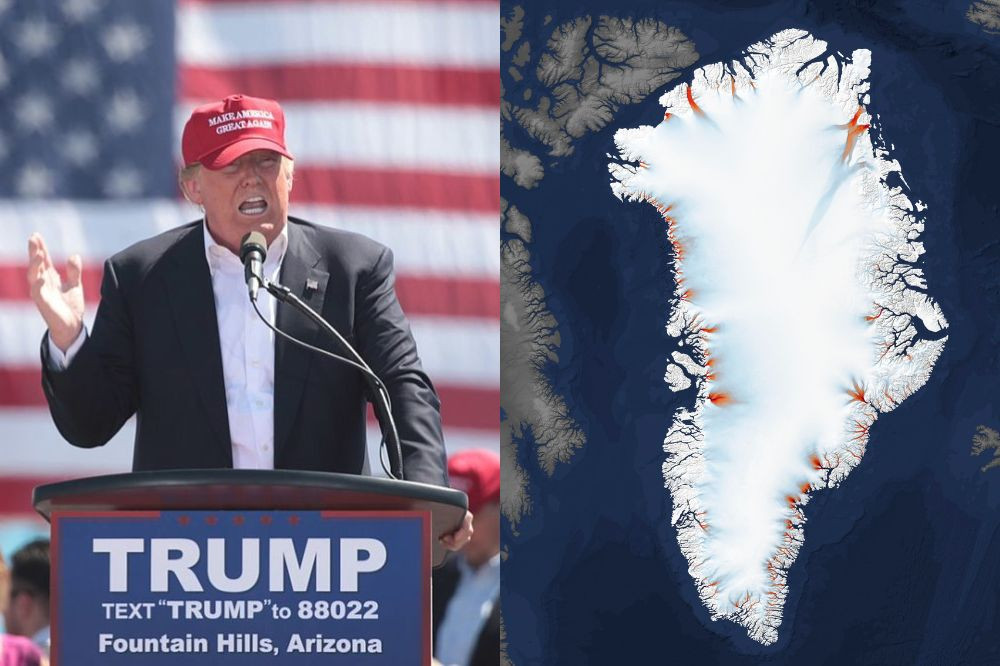
What once would have been dismissed as a fringe provocation has, in recent weeks, hardened into a scenario that European capitals are now quietly planning for: the possibility that the United States, under President Donald Trump, could attempt to assert control over Greenland by force.
According to multiple reports from Reuters, European allies including France, Germany, and Denmark have begun coordinated contingency discussions focused specifically on how they would respond if Washington were to move militarily against the semi-autonomous Arctic territory, which remains under Danish sovereignty. Officials speaking on condition of anonymity described the talks as “serious,” “strategic,” and unprecedented in their framing of the United States not as a partner, but as a potential aggressor.
The preparations mark one of the most profound ruptures in the transatlantic alliance since the founding of NATO.
Denmark’s Cold War Doctrine Resurfaces
At the center of the crisis is Denmark, which governs Greenland and has repeatedly rejected Trump’s renewed claims that the island is strategically “necessary” for American security.
This week, Denmark’s Defense Ministry confirmed to the Danish newspaper Berlingske the continued validity of a little-known 1952 military doctrine, developed during the early Cold War. Under the rule, Danish forces are required to “shoot first and ask questions later” in the event of an invasion, acting immediately without waiting for political authorization — even if no formal declaration of war has been issued.
The confirmation, later cited by The Telegraph, sent shockwaves through diplomatic circles. While Danish officials emphasized that the doctrine is defensive and longstanding, the timing of its reaffirmation was widely interpreted as a pointed message to Washington.
Greenland’s own government has been unequivocal. “We are not for sale,” Greenlandic leaders reiterated this week, echoing Denmark’s position and rejecting any suggestion of annexation or coercive acquisition.
Europe Coordinates Behind Closed Doors
Reuters reported that France and Germany are now actively coordinating with Denmark on a shared European response framework. A senior German government source told the news agency that Berlin views Greenland as “an inseparable component of European territorial integrity,” despite its geographic distance from continental Europe.
France has taken a particularly prominent role. Over the past 48 hours, Paris hosted a “coalition of the willing” meeting focused on European security guarantees — officially centered on Ukraine, but widely understood to also address broader concerns about U.S. unpredictability under Trump.
French President Emmanuel Macron sought to strike a careful balance in public remarks, stating that he could not imagine a scenario in which the United States would violate Danish sovereignty. Yet his administration’s actions tell a more cautious story. French diplomats at the United Nations have increasingly framed U.S. behavior — particularly in Venezuela — as emblematic of a broader disregard for international law.
Echoes of Venezuela
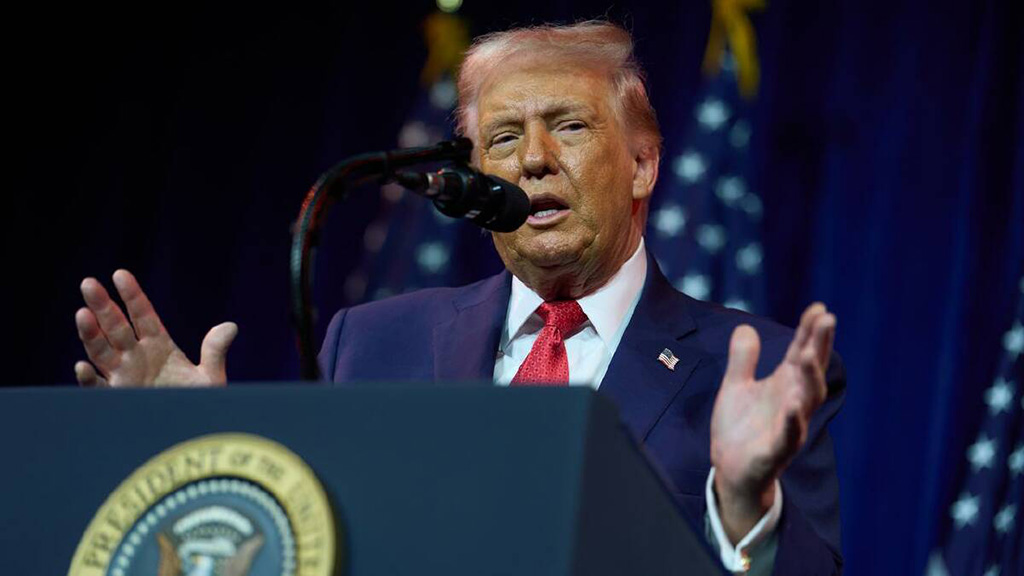
The European anxiety is not occurring in a vacuum. Trump administration officials have repeatedly cited Venezuela as a model of decisive American action, pointing to the removal of Nicolás Maduro and the installation of an interim leadership aligned with U.S. interests.
At the time, France’s ambassador to the United Nations sharply criticized the operation, warning that the use of force by permanent members of the Security Council erodes the foundations of the international order. Those remarks, once seen as exceptional, are now being reexamined in European capitals as prescient.
French public broadcaster France 24 has continued to air reporting that contradicts the Trump administration’s narrative of success in Venezuela, highlighting ongoing repression, paramilitary violence, and instability following U.S. intervention.
Washington Refuses to Rule It Out
Fueling European concern is the Trump administration’s refusal to categorically rule out military action against Greenland.
Asked directly why the White House would not reassure Denmark, Press Secretary Caroline Leavitt told Fox News that “all options are always on the table,” arguing that openly ruling out force would telegraph U.S. strategy to adversaries. She pointed to Venezuela and Iran as examples of Trump’s willingness to escalate when diplomacy fails.
That response reverberated across European media and social platforms, where commentators described it as unprecedented rhetoric toward a NATO ally.
Cracks Inside the Republican Party
Notably, resistance to Trump’s Greenland posture is emerging even within his own party.
Representative Don Bacon of Nebraska, a centrist Republican and former military officer, called the threats “amateurish” and compared the administration’s behavior to “high school kids playing Risk.” Senator Thom Tillis of North Carolina, a senior member of the Senate Armed Services Committee, warned that undermining Denmark sends a dangerous signal to Russia and weakens NATO at a critical moment.
“The only thing worse than going to war with allies,” Tillis said, “is going to war without them.”
Yet influential MAGA-aligned figures remain supportive. Senator Eric Schmitt of Missouri has openly endorsed the idea of acquiring Greenland, citing its strategic value, mineral resources, and missile defense importance. His comments have circulated widely on conservative social media, reinforcing European fears that expansionist rhetoric is not confined to Trump alone.
Canada and NATO Reassess
Canada, long accustomed to viewing the United States as its primary security guarantor, is also recalibrating. Prime Minister Mark Carney recently announced a dramatic increase in defense spending, a move he framed as strengthening NATO but which Canadian commentators increasingly link to concerns about American intentions.
In meetings with NATO Secretary General Mark Rutte, Carney emphasized the need for “robust security guarantees” — language that European diplomats privately interpret as hedging against U.S. volatility as much as Russian aggression.
A Historic Inflection Point
For decades, NATO has operated on an unspoken assumption: that the United States, whatever its internal politics, would never turn its power against its own allies. That assumption is now under strain.
European officials stress that no one expects an imminent invasion of Greenland. But the fact that such a scenario is being war-gamed at all represents a historic shift in global politics.
As one European diplomat told Reuters, “Trust, once lost, is very difficult to rebuild. And trust is what alliances are made of.”
Whether Trump’s rhetoric is negotiation, provocation, or genuine intent may ultimately matter less than its consequences. Across Europe, governments are preparing for a world in which even the most unthinkable contingencies can no longer be ignored.