Why the Epstein Files Keep Shrinking — and Why It Matters
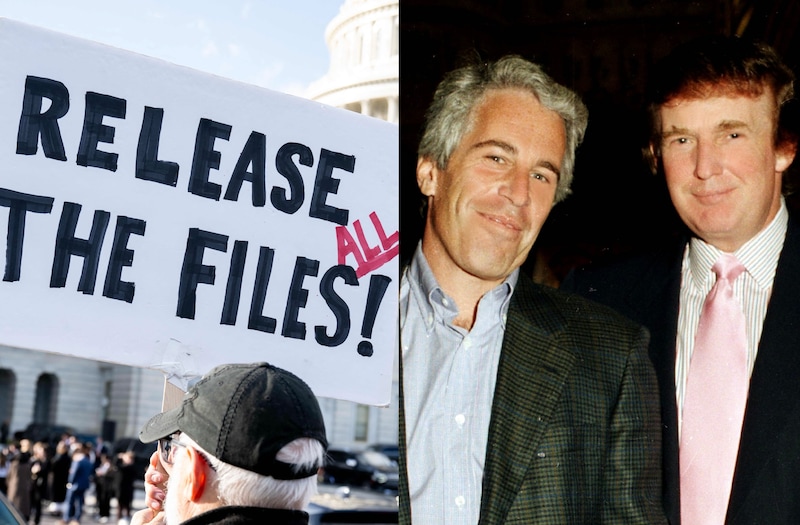
For months, the numbers surrounding the unreleased Jeffrey Epstein files have refused to stay still.
First, federal officials suggested there were hundreds of thousands of records yet to be reviewed. Then the figure quietly climbed to 1.2 million. By early spring, court filings and public statements referenced more than five million documents still under review. Now, in a recent disclosure to a federal court, the Department of Justice says the number has fallen again — to approximately two million.
The shifting estimates have raised an increasingly urgent question among lawmakers, legal experts, and victims’ advocates: What exactly is being counted — and what is not?
At stake is not only public confidence in the government’s handling of one of the most consequential criminal cases in modern American history, but also compliance with the Epstein Transparency Act, a federal law requiring the prompt disclosure of non-privileged records related to Epstein’s trafficking network, with the sole exception of redactions necessary to protect victims’ identities.
Documents, Not Pages
A critical detail often lost in public discussion is that these figures refer to documents, not pages.
In large-scale federal investigations, a single “document” can include dozens — sometimes hundreds — of pages. Financial ledgers, bank transaction reports, corporate records, emails with attachments, flight manifests, surveillance logs, and legal memoranda are frequently bundled as single items within electronic discovery systems.
Legal experts familiar with complex financial and racketeering cases estimate that two million documents could easily translate into 20 to 30 million pages of material.
“This is not a shoebox of papers,” said one former federal prosecutor who worked on multi-district money-laundering cases. “This is an ecosystem of records spanning decades, jurisdictions, shell companies, and co-conspirators.”
Why the Numbers Keep Changing
According to current and former Justice Department officials, the fluctuating figures reflect — at least in part — the late identification of additional “custodians,” the legal term for individuals or offices holding relevant records.
In the Epstein matter, those custodians span multiple federal districts, including the Southern District of New York and the Southern District of Florida, as well as the Treasury Department, federal banking regulators, international law enforcement partners, and private financial institutions involved in earlier civil and criminal proceedings.
But critics argue that explanation only goes so far.
“It strains credibility that this volume of material is still being ‘discovered’ years after Epstein’s death and months after the law required disclosure,” said a lawyer representing several Epstein survivors. “At best, this is gross mismanagement. At worst, it’s intentional delay.”
The Financial Trail
One reason experts long doubted early low estimates is the sheer scale of Epstein’s financial operations.
Court records and investigative reporting by outlets such as The New York Times, The Wall Street Journal, ProPublica, and Miami Herald have documented hundreds of millions — possibly billions — of dollars moving through Epstein-linked accounts, often via offshore entities and shell corporations.
Each account generates daily transaction records. Each suspicious transfer triggers compliance reviews, internal bank reports, and, in some cases, federal referrals. Forensic accounting alone can produce millions of pages.
“You could set aside the photos, the emails, the contact lists, the travel records — and the financial data by itself would still be massive,” said a former partner at a major law firm who oversaw electronic discovery in international fraud cases.
Political Pressure and Presidential Silence

The renewed scrutiny comes as President Donald Trump faces mounting political pressure over his past association with Epstein and his administration’s handling of the files.
Although Trump has repeatedly claimed he severed ties with Epstein years before Epstein’s arrest, reporting by The Wall Street Journal and contemporaneous gossip columns from the mid-2000s suggest Epstein continued to attend events at Trump-owned properties after the alleged falling-out.
The administration has denied any attempt to suppress evidence. But critics note that Trump has publicly acknowledged concerns about releasing information that could “hurt people who don’t deserve it,” a remark that has fueled accusations of a broader cover-up.
Victims and the Clock
For survivors, the delays carry tangible consequences.
Several states, including California and New York, have opened limited “look-back windows” allowing victims of sexual abuse to file civil claims long after statutes of limitations would normally expire. Access to Epstein-related records could provide crucial corroborating evidence — names, dates, locations, financial ties — needed to pursue those cases.
Advocacy groups argue that every month of delay effectively denies justice.
“Time is the defense here,” said a spokesperson for a national survivors’ organization. “The longer records are withheld, the fewer victims will live to see accountability.”
A Simple Legal Standard — Unmet
Under the Epstein Transparency Act, the government’s obligations are unusually straightforward. Records must be released. Victims’ names must be redacted. Everything else must be produced.
“This is not a discretionary balancing test,” said a constitutional law professor at a major university. “Congress removed ambiguity precisely because of the history of institutional failure in this case.”
Public records requests show that millions of taxpayer dollars have already been spent on document review teams since early last year. Yet compliance deadlines have come and gone without full production.
Trust, Eroding Further
The Epstein case has long symbolized elite impunity — a system in which wealth and connections shield predators and their enablers from consequences.
The constantly shifting numbers risk deepening that perception.
“When the public hears one million, then five million, then two million, it doesn’t sound like progress,” said a veteran investigative journalist. “It sounds like someone is moving the goalposts.”
Whether the remaining files number two million or ten, the central question remains unresolved: Why, years after Epstein’s crimes were exposed and months after the law demanded transparency, does so much still remain hidden?
Until that question is answered with documents — not estimates — the Epstein files will continue to haunt not only the victims of one man, but the credibility of the institutions tasked with delivering justice.