Washington — What began as a routine press appearance on economic policy abruptly veered into uncharted territory this week, as Donald Trump publicly threatened potential legal action against Jerome Powell, the man he appointed to lead the nation’s central bank. The extraordinary moment — rare in modern American politics — sent ripples through financial markets and reignited questions about presidential power, institutional independence, and the fragile boundary between politics and monetary policy.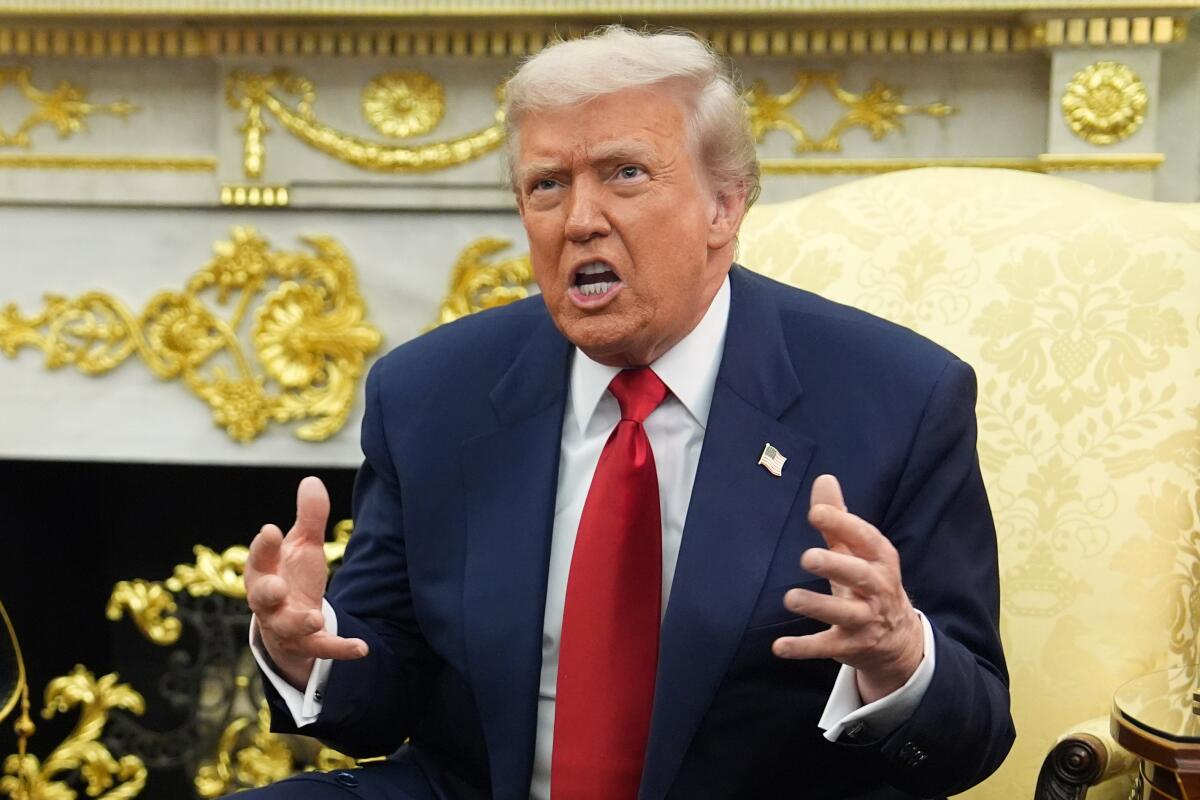
Speaking to reporters, Trump accused Powell of mismanaging interest rates and harming American workers and borrowers. His remarks grew sharper as the exchange continued, culminating in a statement that stunned economists and legal experts alike: Trump suggested that Powell’s actions might warrant a lawsuit. Cameras captured a brief pause in the room before questions erupted, clips of the exchange racing across social media within minutes.
Powell, the chair of the Federal Reserve, has long been a target of Trump’s frustration over monetary policy. During his presidency, Trump repeatedly criticized the Fed for raising rates, arguing that tighter policy undermined growth and disadvantaged the United States against global competitors. Yet even amid those attacks, Trump had often emphasized that he selected Powell because he believed him to be strong and capable. The sudden turn toward legal threats marked a dramatic escalation.
Financial markets reacted swiftly. While major indexes closed with modest moves, traders described heightened unease, particularly in bond markets, where expectations of political interference can quickly translate into volatility. “The independence of the Fed is not a technical detail — it’s foundational,” said a senior economist at a Wall Street firm. “Even the suggestion of legal action against a sitting Fed chair raises red flags.”
Legal scholars were quick to note that a president’s ability to sue — or remove — a Federal Reserve chair is sharply limited. The Fed was designed to operate independently, insulated from short-term political pressures. While the president appoints the chair, removal is generally understood to require cause, not policy disagreement. No modern president has attempted to litigate against a Fed chair over interest-rate decisions.
Behind the scenes, according to people familiar with the matter, the comments triggered urgent conversations across Washington and Wall Street. Some Republican lawmakers privately expressed discomfort, worried that the episode could unsettle investors and complicate the party’s economic message. Others, particularly those aligned closely with Trump, defended his remarks as an expression of accountability rather than an attack on independence.
Trump’s supporters argue that the Fed has grown too powerful and insufficiently responsive to the economic pain felt by ordinary Americans. In their view, Powell’s rate decisions have contributed to higher borrowing costs for mortgages, credit cards, and small businesses. “Why should anyone be beyond scrutiny?” one Trump ally said. “The Fed affects every family in the country.”
Critics counter that public pressure — especially legal threats — risks undermining confidence in the central bank at a delicate moment for the global economy. Inflation has eased from recent highs but remains a concern, and policymakers have sought to communicate stability and predictability. “Central banking runs on credibility,” said a former Treasury official. “Once that’s shaken, the consequences can be severe and long-lasting.”
Powell has not responded directly to Trump’s remarks, and Fed officials typically avoid political commentary. In past appearances before Congress, Powell has emphasized that decisions are driven by economic data, not politics, and that independence is essential to fulfilling the Fed’s mandate of price stability and maximum employment.
The episode adds to a broader pattern of Trump challenging norms that previous presidents largely respected. From the courts to the civil service, Trump has repeatedly argued that entrenched institutions resist democratic accountability. To his critics, this moment fits that pattern; to his supporters, it underscores his willingness to confront what they see as unaccountable power.
Whether the threat of a lawsuit leads anywhere legally remains doubtful. But politically, the impact is already clear. The comments have reignited debate over the proper limits of presidential influence and placed the Federal Reserve — an institution designed to operate quietly, above partisan fray — squarely back in the spotlight.
As the clip continues to circulate and reactions harden along familiar lines, one thing is certain: a press conference meant to project economic strength instead opened a new front in a long-running struggle over who truly controls the levers of the American economy.