Canada’s Potato Pivot Backfires on Washington, Sending Shockwaves Through U.S. Fast-Food Chains
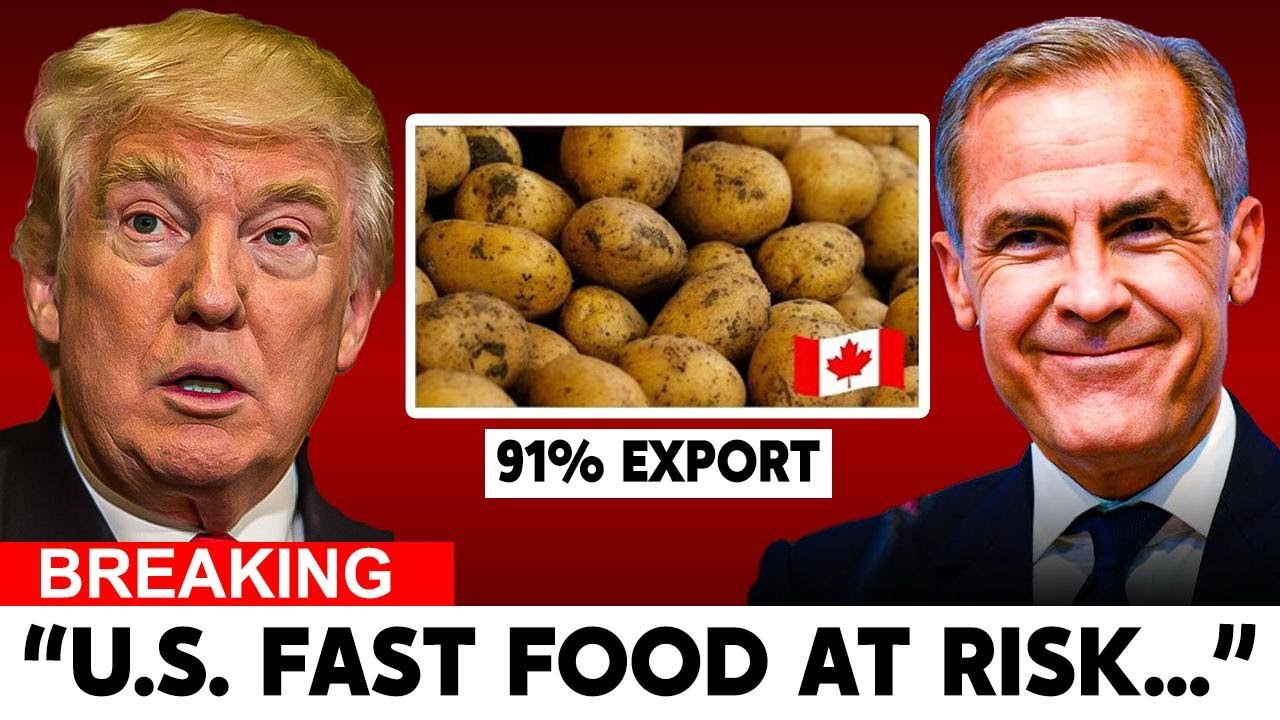
Few Americans ever think about where their French fries come from, but a quiet shift north of the border is now forcing the U.S. fast-food industry to pay attention. Canada, the single largest supplier of frozen French fries to the United States, is reassessing its deep dependence on the American market after years of trade volatility linked to Donald Trump’s tariff threats. What began as a narrow agricultural dispute has evolved into a structural risk for U.S. restaurant chains that rely overwhelmingly on Canadian potatoes.
The scale of that dependence is striking. Canada exports roughly $2.7 billion worth of frozen French fries each year, and about 91% of that supply flows directly into the United States. From McDonald’s and Wendy’s to Burger King and countless regional chains, Canadian fries are not a supplement to American production; they are a cornerstone of it. Entire fast-food menus are built on the assumption that Canadian processors will deliver at massive scale, on time, and at stable prices.

That assumption is now under strain. Ottawa’s earlier export restrictions on Prince Edward Island potatoes, combined with escalating U.S. tariff threats on frozen, fresh, and seed potatoes, injected uncertainty into what had long been one of North America’s most reliable food supply chains. Trump’s proposal of tariffs as high as 25% sent a clear signal to Canadian processors: the U.S. market may no longer be predictable enough to justify total reliance.
Canadian production itself reflects how deeply the system has been optimized for processing rather than fresh consumption. In 2024, Canada produced about 5.8 million metric tons of potatoes, with nearly 70% going directly into processing, primarily frozen fries. Alberta and Manitoba dominate this sector, hosting giant plants operated by McCain Foods, Simplot, and Cavendish Farms, facilities expanded with hundreds of millions of dollars in investment specifically to feed U.S. fast-food demand.
Yet those same investments now give Canada leverage and flexibility. While American fast-food chains cannot easily replace millions of tons of frozen potato supply, Canadian processors can redirect shipments. Even a modest shift matters. A reallocation of just 5–10% of Canadian frozen fry exports away from the U.S. would significantly tighten supply for American buyers already operating near capacity.
That is why Asia is suddenly central to the story. Japan has already emerged as Canada’s second-largest buyer of frozen potato products, while South Korea, Taiwan, and Southeast Asian markets continue to grow as Western-style fast food expands. These markets offer long-term demand without the political volatility increasingly associated with U.S. trade policy. For Canadian exporters, the appeal is not higher prices alone, but stability.

The numbers reveal how exposed the United States has become. America produces roughly 2.2 million tons of frozen potatoes annually, but consumes far more. It has been a net importer of frozen potato products for five consecutive years, with about 86% of imports coming from Canada. There is no hidden reserve waiting to fill the gap if Canadian shipments decline, and expanding domestic capacity would take years, not months.
For U.S. fast-food giants, this creates a rare vulnerability. Fries are cheap, familiar, and culturally ubiquitous, which makes any disruption immediately visible to consumers. Rising costs, tighter contracts, or sporadic shortages would ripple quickly through menus, margins, and customer expectations. What once looked like an invisible supply chain is now a strategic weak point.
Canada’s potato pivot is not an act of confrontation, but a response to risk. Faced with unpredictable tariffs and politicized trade, Canadian processors are doing what global businesses do best: diversifying. The irony is that policies meant to pressure Canada may instead accelerate a long-term shift away from the U.S. market. And in that shift, it may be American fast-food chains, not Canadian farmers, that feel the consequences first.