BREAKING: U.S. Economic Leverage at Risk as Canada and Mexico Quietly Rewrite North American Trade Rules
For more than three decades, North American trade rested on a single assumption: the United States would remain the undisputed center of gravity, setting the terms while Canada and Mexico adjusted around it. That assumption is now under strain. As Donald Trump openly threatens to tear apart the USMCA, split it into bilateral deals, or allow it to expire altogether, Washington is signaling something markets take very seriously—instability.

Trump’s strategy is built on pressure. By invoking tariffs, national security clauses, and the threat of withdrawal, the White House believes it can force Canada and Mexico to negotiate separately and concede more. But what looks like leverage from Washington is producing the opposite reaction beyond U.S. borders. Instead of scrambling to comply, both neighbors are preparing for a future where American trade reliability can no longer be taken for granted.
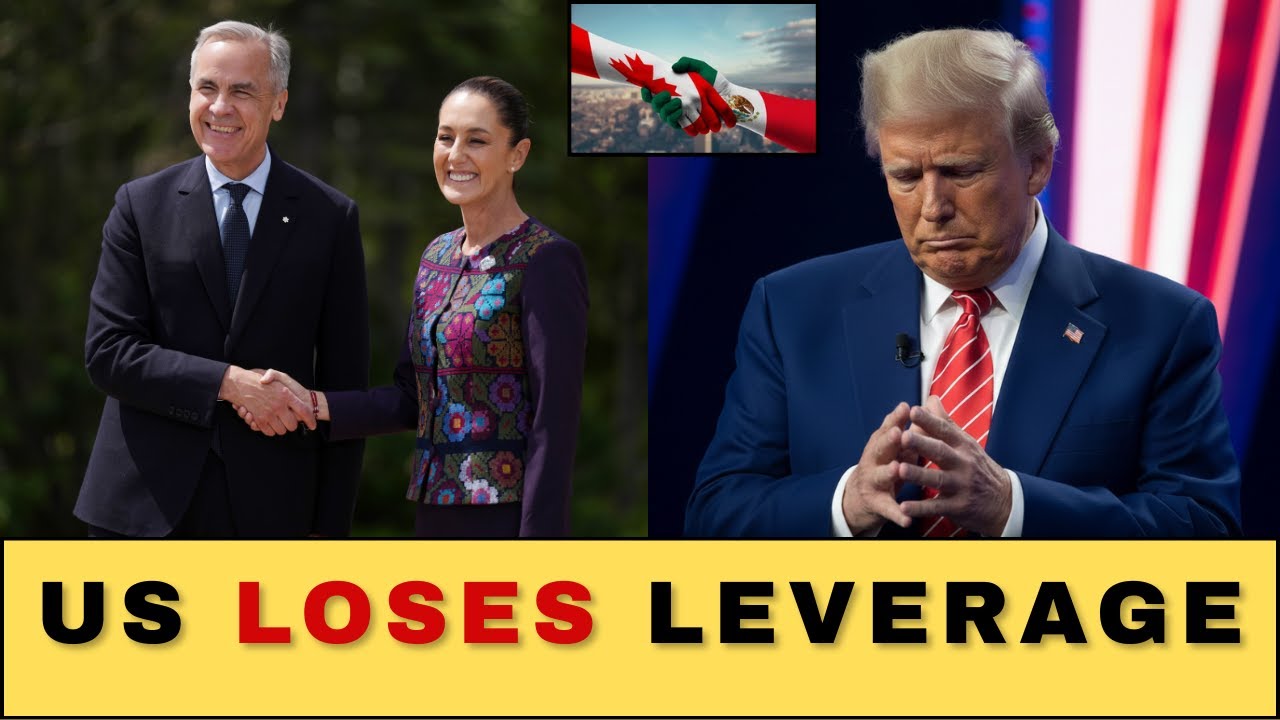
Behind closed doors, Canada and Mexico are doing something unprecedented: coordinating. Trade officials are increasingly aligning negotiating positions, sharing risk assessments, and quietly adjusting supply chains to reduce exposure to U.S. political swings. What appears on the surface to be preparation for the 2026 USMCA review is, in reality, a long-term hedge against American unpredictability.

Rather than accepting a divide-and-conquer approach, Ottawa and Mexico City are strengthening their bilateral relationship. Manufacturing ties are being reinforced, alternative export routes explored, and critical industries reassessing where future investment should land. The message is subtle but unmistakable: if access to the U.S. market becomes a weapon, dependency on that access becomes a liability.
This shift is already unsettling American industry. U.S. manufacturers have spent decades optimizing deeply integrated cross-border supply chains. Auto parts routinely cross borders multiple times before final assembly. Agricultural products, energy flows, and logistics networks were designed around cooperation, not confrontation. Political threats now risk fracturing systems that took generations to build.
The irony is hard to miss. Policies meant to preserve American leverage are accelerating contingency planning for life without it. Companies are no longer waiting for negotiations to begin; they are planning exit scenarios now. Governments, too, are preparing alternatives well before any formal USMCA review, reducing the pressure Washington can exert when talks finally arrive.

This is why the focus on 2026 may be misleading. The most consequential decisions are happening quietly today. By the time formal negotiations begin, Canada and Mexico may no longer be negotiating from positions of dependency. Instead, they are working to ensure they arrive with options, leverage, and insulation from disruption.
This is no longer just a trade dispute. It is a lesson in power dynamics. Leverage only works when partners lack alternatives. When pressure replaces trust, allies do not surrender—they adapt. What began as an attempt to force compliance is now reshaping North American trade in ways the United States may find difficult, if not impossible, to reverse.