Canadian Snowbirds Are Leaving Florida—and the Economic Shock Is Hitting Hard
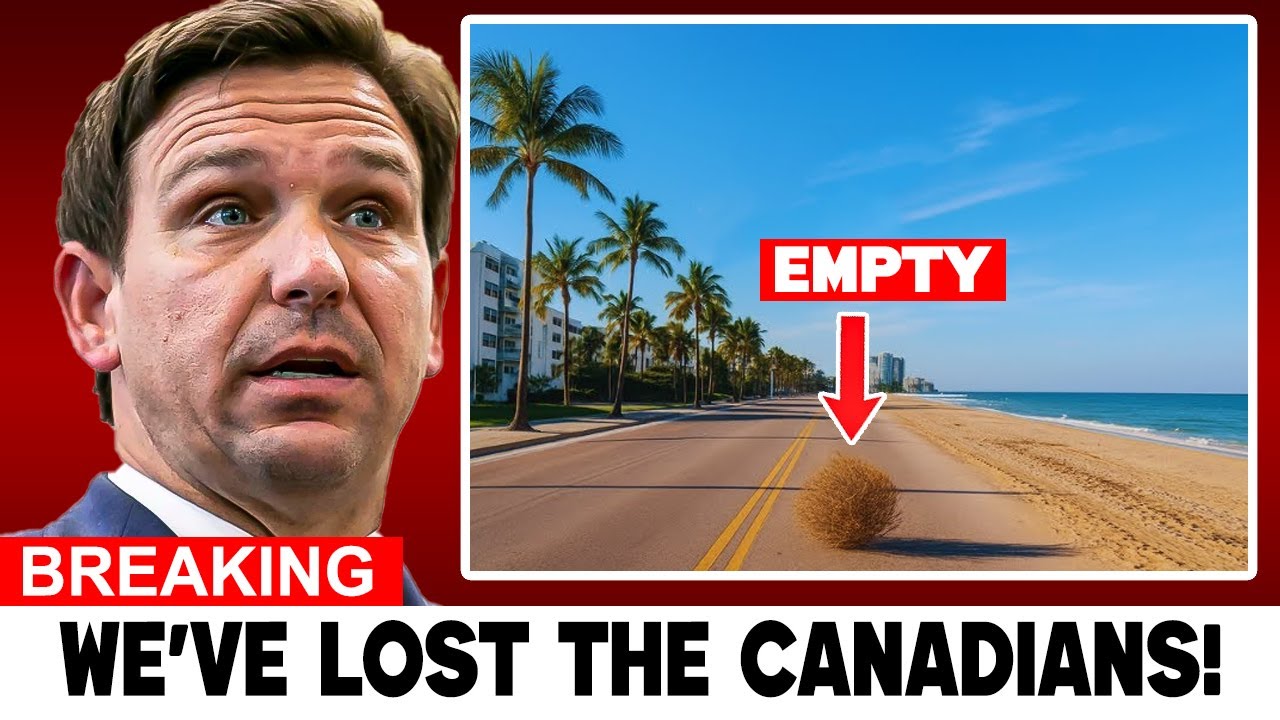
Florida’s winter landscape is undergoing a dramatic transformation as Canadian snowbirds quietly but decisively pull away. Long a cornerstone of the state’s seasonal economy, millions of Canadians who once filled condos, golf courses, restaurants, and coastal cafés are now selling their Florida homes or canceling winter plans altogether. Along the Gulf Coast, businesses say the fallout is already severe, with estimated losses reaching as high as $90 million in some regions.
For decades, Canadians represented one of the most reliable groups of international visitors to the United States. More than one million traveled south each winter, accounting for roughly 13% of all foreign homebuyers nationwide and injecting billions of dollars into Florida’s economy. Cities like Fort Lauderdale, Naples, and Fort Myers were built around that predictability. This season, however, Fort Lauderdale alone is bracing for up to 150,000 fewer Canadian visitors, a sharp break from the past.

Several forces collided to trigger the exodus. New U.S. rules now require Canadians staying longer than 30 days to register, submit fingerprints, and undergo background checks. For retirees accustomed to spending four to six months in Florida without friction, the process feels intrusive and unwelcoming. At the same time, the Canadian dollar has slid to about 72 cents U.S., instantly making everyday Florida expenses nearly 30% more expensive for Canadians on fixed incomes.
Political tension has further accelerated the shift. President Donald Trump’s tariffs on Canadian goods, alongside remarks suggesting Canada could become a U.S. state, struck a nerve north of the border. For many snowbirds who built decades-long routines and friendships in Florida, the rhetoric felt personal. The sense of being welcomed as neighbors has faded, replaced by uncertainty and frustration.
The economic consequences are spreading quickly. Air arrivals from Canada to South Florida are down more than 13%, hotel bookings are slipping, and restaurants that once relied on Canadian regulars report empty tables during months that used to guarantee full dining rooms. Some businesses, desperate to fill the gap, are now marketing aggressively in South America and Europe, underscoring how dependent the local economy had become on Canadian visitors.

Real estate markets are also absorbing the shock. Florida agents report an unprecedented surge in Canadian-owned properties hitting the market. Realtors who once handled a dozen listings in peak season now juggle three times that number as longtime owners rush to sell. Canadians led all foreign buyers in the U.S. housing market as recently as 2024; now that buying power is reversing into a wave of motivated sellers.
Meanwhile, Canadians are redirecting their winters elsewhere. Mexico, Portugal, Spain, and parts of Central America are actively courting former Florida snowbirds with lower costs, simpler residency rules, and explicit messages of welcome. Others are choosing to stay closer to home. Domestic travel within Canada has surged, pushing hotel occupancy rates to their highest levels since 2019 as retirees rediscover local destinations.
The bigger picture extends beyond Florida. International tourism to the United States is slowing sharply, with projected losses approaching $30 billion this year. Visits from Canada alone are down nearly 18% in the first half of 2025, translating to more than 1.7 million fewer trips. Whether Canadians eventually return to Florida remains uncertain. What is clear is that a relationship once taken for granted has fractured, and rebuilding that trust—and the economic stability it brought—may take years, if it happens at all.