Something shifted in Washington long before it appeared in headlines.
There was no dramatic announcement, no formal declaration, no sudden press conference. Instead, the change revealed itself through tone — sharper warnings, carefully chosen words, and signals that suggested this was no longer routine trade posturing. When U.S. officials began openly questioning the future of the USMCA, Canada found itself standing directly in the path of a strategy that appeared designed to test how much pressure Ottawa could absorb.

The moment crystallized when the U.S. Trade Representative repeated, publicly and without hedging, that Washington was prepared to walk away from its trade agreement with Canada and Mexico. The language was deliberate. The USMCA was framed as optional, a framework the United States could abandon or dismantle if it no longer aligned with American priorities.
That statement landed hard.
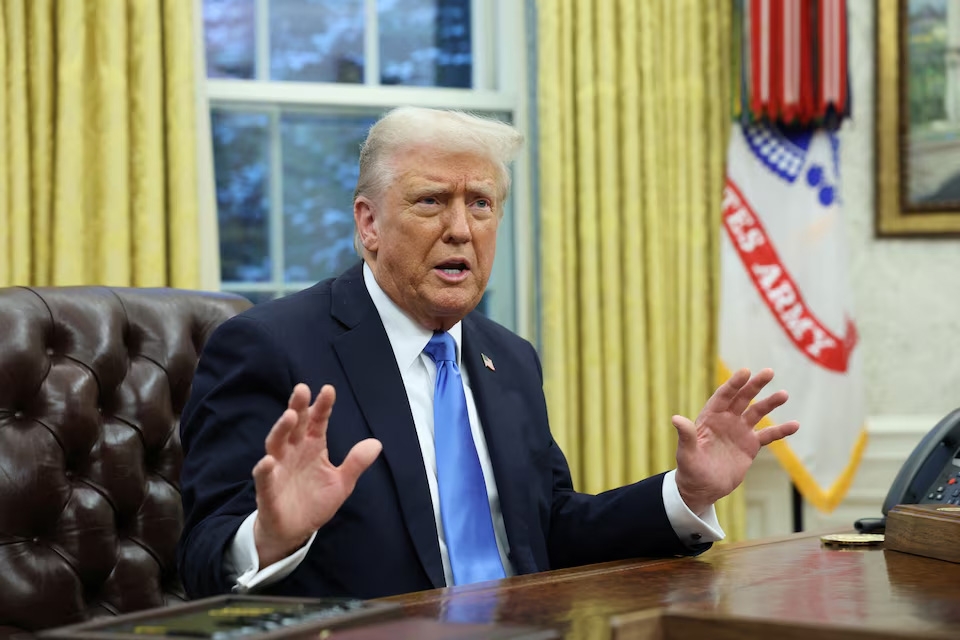
The agreement governs more than a trillion dollars in annual trade and anchors supply chains that took decades to build. Suggesting its expiration was not a negotiating flourish — it was an invitation to disruption on a continental scale. President Donald T.r.u.m.p reinforced the message days later, declaring that Canada would face greater pressure than ever before. To Canadian officials, the tone sounded less like bargaining and more like a warning.
Markets noticed immediately.
Executives, investors, and diplomats understood that Washington was signaling a willingness to weaponize uncertainty. That perception deepened when the U.S. ambassador raised objections to Canada’s political advertising laws, hinting that domestic Canadian regulations could carry cross-border consequences. Ottawa rejected the claim outright, but the dispute froze dialogue at a critical moment.
Then came the escalation few expected: Washington openly floated the idea of splitting the USMCA into two separate deals — one with Mexico and one with Canada. The proposal alone suggested a profound shift. For decades, North American trade relied on the assumption that the framework itself was stable. Now, even that foundation appeared negotiable.
Historically, pressure of this kind often produced compliance. Many assumed Canada would bend again.
Instead, the opposite happened.
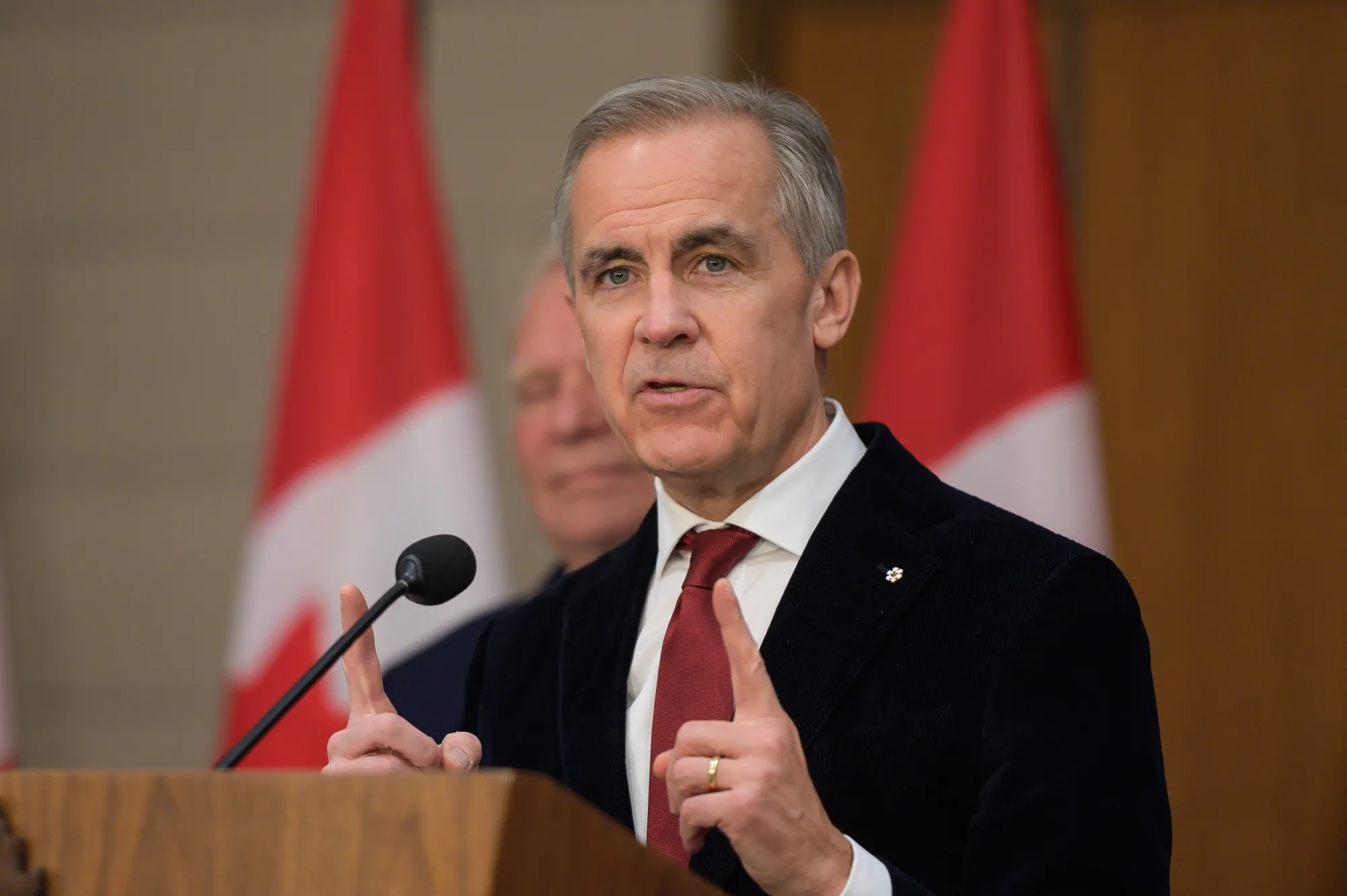
As Washington intensified its posture, economic uncertainty began rising inside the United States itself. Analysts started warning that unpredictable trade policy was weighing on American manufacturing and long-term investment. At the same time, Canadian officials hardened their tone. The industry minister spoke openly of frustration and emphasized coordination with provinces, labor groups, and corporate leaders.
The message was clear: Canada would not retreat. It would adapt.
That shift raised an uncomfortable question in Washington — what if the pressure campaign exposed American vulnerabilities faster than Canadian ones?
Within months, signs of reversal began to emerge. The International Monetary Fund noted that Canada showed unexpected resilience despite looming tariff threats. Foreign direct investment surged by nearly 78 billion dollars, pushing total investment close to 1.5 trillion. Quietly, some analysts admitted Canada was outperforming expectations shaped by Washington’s strategy.
A major reason was speed.
Canadian companies reorganized supply chains with remarkable urgency. Instead of relying on a single continental system, firms built dual pathways — one tailored for U.S. access, another aimed at global markets. This reduced exposure to sudden policy shifts and allowed businesses to hedge against political risk.
Trade relationships with Europe, India, and South America deepened rapidly. Routes once considered secondary became essential. In Newfoundland and Labrador, more than half of oil production now flows to Europe — a dramatic reversal from two decades earlier. What began as defensive diversification evolved into geopolitical realignment, especially as Europe searched for reliable energy suppliers outside volatile regions.
Pressure meant to weaken Canada instead accelerated independence.
Meanwhile, cracks widened south of the border. U.S. manufacturing contracted for nine consecutive months heading into late 2025 — the longest downturn since the financial crisis. Transportation equipment producers cut staff. Consumer spending softened. Cyber Monday sales barely grew, reflecting declining confidence amid rising costs and trade uncertainty.
Corporate America pushed back more openly. Costco filed a legal claim seeking reimbursement for tariff-related costs, raising the prospect of massive government liabilities. Investment funds began reassessing the United States as a higher-risk policy environment. Capital that once flowed automatically into U.S. assets started seeking stability elsewhere.
Canada benefited directly.
Ottawa encouraged domestic manufacturing, nearshoring, and supply-chain independence. Businesses expanded local sourcing, invested in Canadian capacity, and reduced reliance on American components. Future-facing sectors — electric vehicles, clean energy, critical minerals, advanced manufacturing — accelerated as global firms searched for predictable partners.
Canada did not replace the United States. It repositioned itself.
European buyers increasingly viewed Canada as a dependable source of energy and minerals. Asian firms saw it as a stable gateway to Western markets. Analysts now openly speculate that if the U.S. ultimately withdraws from the USMCA, Canada could emerge as a manufacturing and logistics hub within North America itself.
Diplomats continue urging calm. Leaders publicly reaffirm cooperation. Yet the underlying reality has shifted.
What Washington intended as leverage triggered a strategic reset.
The question now facing North America is unavoidable: did the effort to squeeze Canada instead create a stronger, more independent economic rival next door? The answer may shape continental trade for a generation.