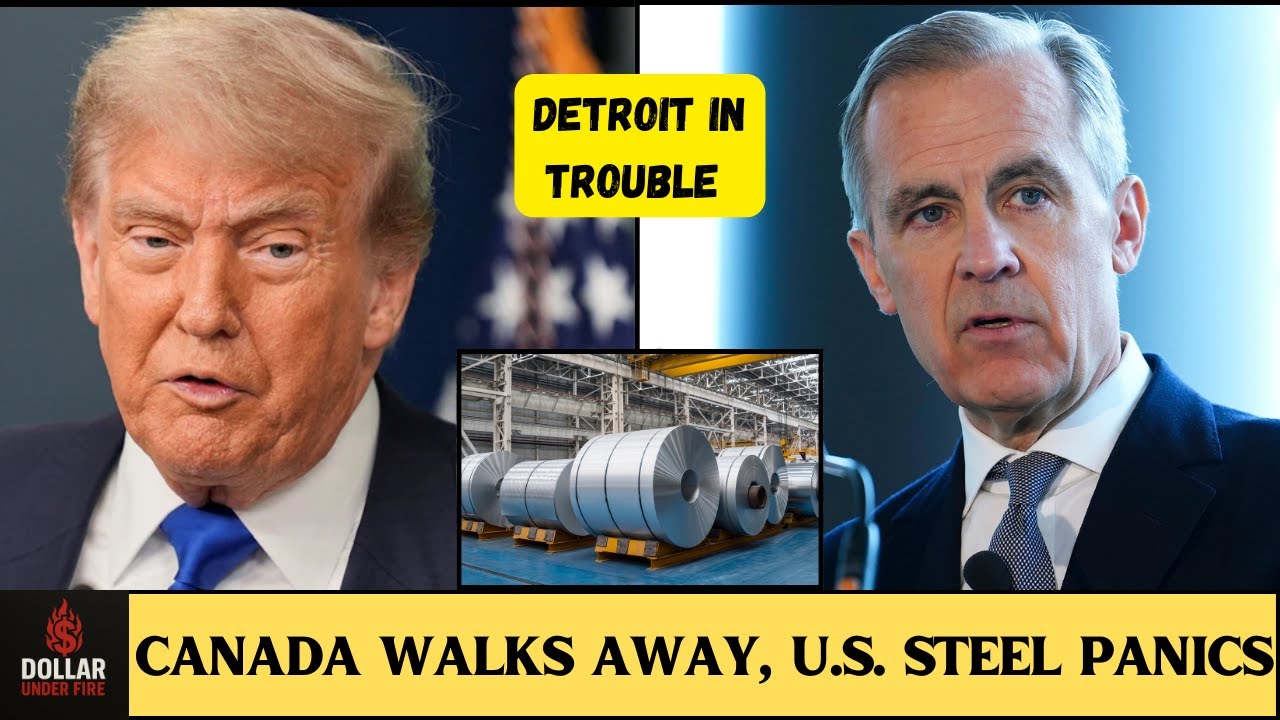
Detroit — For decades, the steel that fed Detroit’s factories moved north to south with little public attention, part of a tightly woven North American supply chain that few questioned. That quiet equilibrium is now under scrutiny, after Canada adjusted its steel supply priorities in a move that industry officials say has begun to ripple through parts of the U.S. manufacturing heartland.
Canadian officials have not announced a formal withdrawal from U.S. steel markets. But industry data and company disclosures suggest a gradual pullback: fewer spot shipments, more long-term contracts redirected toward domestic users and overseas partners, and a growing emphasis on insulating Canadian producers from trade volatility.
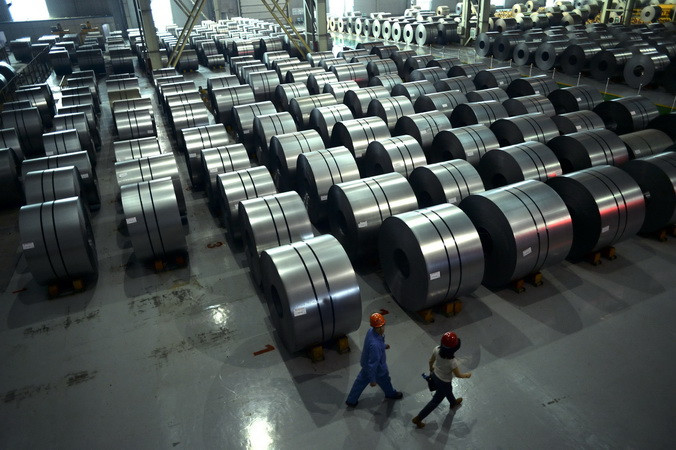
For manufacturers in Michigan, particularly those tied to automotive and construction supply chains, the effects were felt quickly. Several mills slowed production schedules, suppliers reported tighter inventories, and trade groups warned that short-term disruptions could raise costs and complicate planning.
“This wasn’t a shutdown or a ban,” said an executive at a Midwest steel distributor. “It was a recalibration. But in a system this integrated, even small shifts can feel like a shock.”
Canada is the largest foreign supplier of steel to the United States, accounting for roughly a quarter of U.S. steel imports in recent years. That relationship has long been framed as mutually beneficial, with Canadian producers relying on U.S. demand and American manufacturers counting on steady, nearby supply.
What appears to be changing is the risk calculus. Canadian policymakers and industry leaders have spent the past several years reassessing exposure to U.S. trade policy, particularly after tariffs imposed during the Trump administration and ongoing uncertainty about future measures. While some tariffs were lifted or eased, the experience left a mark.
“The lesson for Canada was not that the U.S. is unreliable,” said a former Canadian trade official, “but that predictability can’t be assumed forever.”
Rather than dramatic announcements, Canada’s approach has been incremental. Producers have prioritized domestic infrastructure projects, energy transition needs and long-term export agreements with Europe and Asia. The goal, according to industry analysts, is resilience: reducing reliance on spot markets that can be disrupted by policy shifts.
In Washington, the reaction has been muted publicly but concerned privately. Officials acknowledged that Canada remains a close partner but said the developments underscored vulnerabilities in U.S. supply chains that have received renewed attention since the pandemic.

“This isn’t about Canada turning its back,” said a senior U.S. manufacturing adviser. “It’s about the cost of assuming supply will always be there on the same terms.”
For Detroit, the timing is difficult. Automakers are navigating the transition to electric vehicles, which requires new grades of steel and aluminum, while construction demand remains uneven. Any additional friction in inputs adds pressure to already complex operations.
Labor groups expressed unease, though widespread layoffs have not been announced. “The fear is uncertainty,” said a union representative at a Michigan plant. “When materials get tighter, workers feel it first.”
Markets reacted cautiously. Steel prices ticked upward, but analysts said the movement reflected broader global trends as much as Canada’s shift. Still, investors began to price in the possibility that North American steel flows may no longer be as seamless as they once were.
Canadian officials, speaking publicly, framed the changes as routine market behavior. “Producers respond to contracts, capacity and demand,” one official said. “There is no policy to target U.S. manufacturers.” Yet officials also emphasized the importance of domestic supply security — language that resonated with similar debates in the United States.
The episode highlights a subtle but important shift in cross-border dynamics. Instead of dramatic trade disputes, pressure is emerging through quiet adjustments that reflect long-term strategic thinking rather than confrontation.
“What’s striking is the lack of theatrics,” said an economist at the Brookings Institution. “This isn’t a trade war headline. It’s a slow-moving rebalancing.”
For American policymakers, the moment has revived discussions about domestic steel capacity and industrial policy. Some lawmakers argue the developments strengthen the case for investing more heavily in U.S. production, while others caution that overreacting could damage a relationship that remains fundamentally cooperative.
Canada’s move does not signal a rupture. Steel continues to flow across the border, and existing agreements remain in place. But the shift serves as a reminder that interdependence cuts both ways — and that partners, too, hedge against risk.
For Detroit, the question is not whether Canada will return to previous patterns, but whether the old assumptions still hold. Manufacturers are already exploring alternative suppliers and adjusting inventories, steps that suggest the change may have lasting effects.
“This is what power looks like in a mature supply chain,” said the steel distributor. “Nobody makes a speech. They just adjust.”
As the dust settles, the consequences may unfold gradually rather than dramatically. But in an industry built on predictability, even quiet change can be destabilizing.
Whether this moment marks a temporary adjustment or a longer-term shift will depend on future trade policy, investment decisions and the willingness of both countries to adapt. What is clear is that the balance that once felt automatic now requires attention — and that silence, in trade as in politics, can speak volumes.