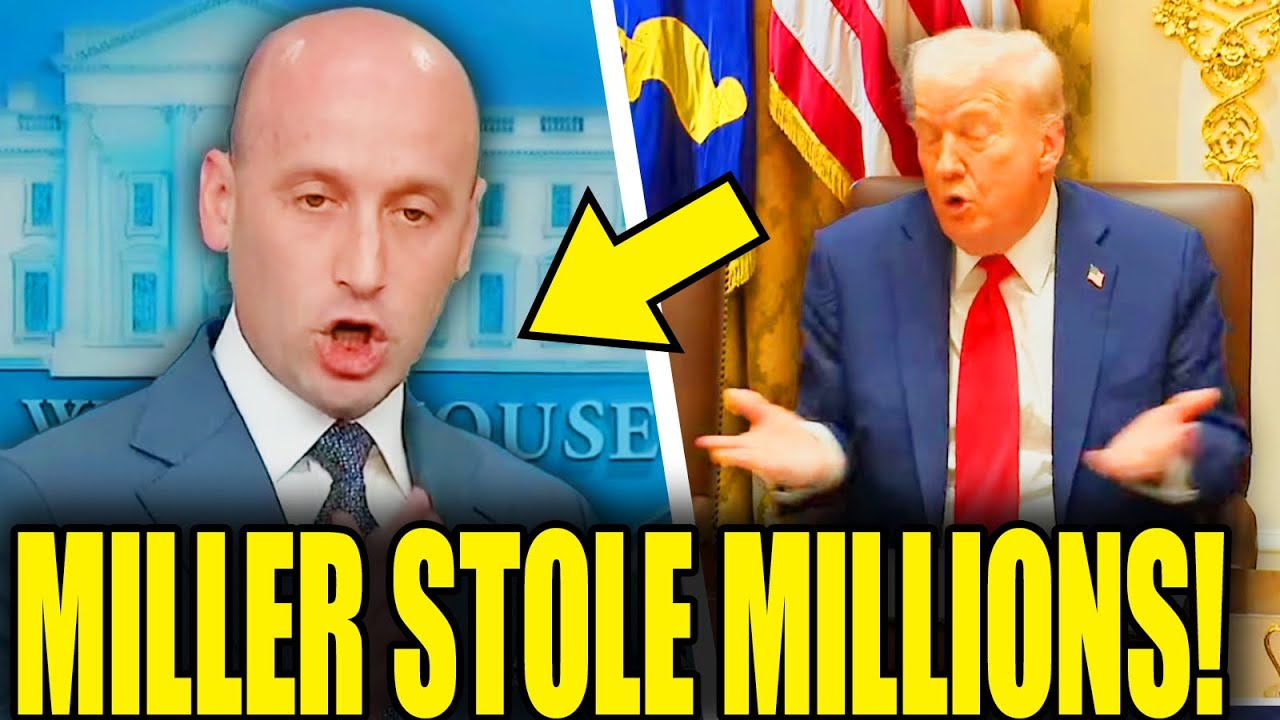
A sudden burst of online attention has thrust longtime Trump adviser Stephen Miller into the center of a fast-moving political controversy, after reports surfaced highlighting the timing of a personal stock transaction that coincided with a major Trump-era policy decision. What initially appeared to be an unremarkable financial disclosure has now ignited a broader debate about ethics, influence, and the thin line between public power and private profit in Washington.
At the heart of the uproar is a stock sale attributed to Miller that, according to critics, occurred shortly after—or in close proximity to—a significant government deal during the Trump administration. The transaction itself, as far as publicly available information shows, was legal and disclosed through standard reporting mechanisms. Yet the timing alone has proven enough to set off alarms among watchdog groups and political opponents, who argue that even the appearance of overlap between policy decisions and personal financial activity demands closer examination.
From Routine Disclosure to Viral Controversy
Financial disclosures by senior political figures are typically dry affairs, reviewed by compliance officers and rarely noticed by the public. This case was different. Within hours of the disclosure circulating online, commentators began drawing connections between the sale and a high-profile administration action, suggesting that Miller may have benefited from nonpublic information or political proximity.
Those claims spread rapidly, amplified by social media accounts that framed the timing as suspicious. Hashtags accusing insiders of “power-and-profit politics” trended briefly, while short clips and screenshots of the disclosure raced across platforms. Supporters of Miller countered just as quickly, arguing that the accusations were speculative and ignored the complexity of financial planning, pre-scheduled trades, and compliance rules that govern officials’ investments.
Allegations, Not Conclusions
It is important to note that no evidence has been publicly presented demonstrating that Miller engaged in insider trading or market manipulation. Legal experts emphasize that proximity in timing does not, on its own, establish wrongdoing. To prove a violation, investigators would need to show that a trade was based on material, nonpublic information and executed with intent to profit from that knowledge.
Still, ethics specialists argue that the controversy reflects a broader problem. “In modern politics, perception matters almost as much as legality,” said one former government ethics lawyer. “When senior officials engage in financial transactions that line up closely with policy decisions, it erodes public trust—even if the conduct ultimately complies with the law.”
Insiders Signal a Larger Debate
Behind the scenes, aides and observers describe a growing unease within Washington about how aggressively such cases are policed. Some insiders suggest the renewed focus on Miller’s transaction is less about one individual and more about pent-up frustration over years of perceived lax enforcement during the Trump era. Others see it as part of a larger political reckoning, as lawmakers from both parties face pressure to strengthen rules governing stock ownership and trading by those close to power.
Several members of Congress have already renewed calls for stricter limits on trading by senior officials and advisers, including blind trusts or outright bans. While those proposals have circulated for years, scandals—real or alleged—tend to give them new momentum.

Competing Narratives Take Hold
As with many Washington controversies, two sharply different narratives have emerged. Critics portray the episode as emblematic of a culture in which insiders blur ethical boundaries, using access and influence to enrich themselves. Defenders insist the outrage is manufactured, driven by partisan hostility rather than facts, and warn that conflating coincidence with corruption sets a dangerous precedent.
Miller himself has not, as of this writing, publicly addressed the allegations in detail. Allies point to his long record as a combative political figure who routinely attracts controversy, arguing that scrutiny comes with the territory. Detractors counter that silence only fuels suspicion, especially when public confidence in government ethics is already fragile.
Why the Moment Resonates
The intensity of the reaction speaks to deeper anxieties about fairness and accountability. At a time when many Americans feel disconnected from economic gains and skeptical of political elites, stories involving stock trades by powerful figures strike a nerve. Even without proof of misconduct, they reinforce a perception that the system favors those on the inside.
For markets, the episode has had little measurable impact. For politics, however, the consequences may be longer-lasting. The controversy has already become a talking point in broader debates over reform, transparency, and whether existing safeguards are sufficient.
What Comes Next
Whether this story escalates further will depend on what happens in the coming weeks. Ethics watchdogs may request additional information. Lawmakers could push for hearings or investigations. Or the attention could fade, replaced by the next viral controversy in a crowded news cycle.
For now, the situation remains one of allegations and questions rather than established facts. Yet the episode has once again highlighted a recurring challenge in American governance: how to ensure that those closest to power are not only acting within the law, but are seen to be doing so.
As speculation continues and reactions pour in, one reality is clear. In today’s political environment, even a routine financial move can become a flashpoint—igniting debate over power, profit, and trust that Washington has yet to resolve.