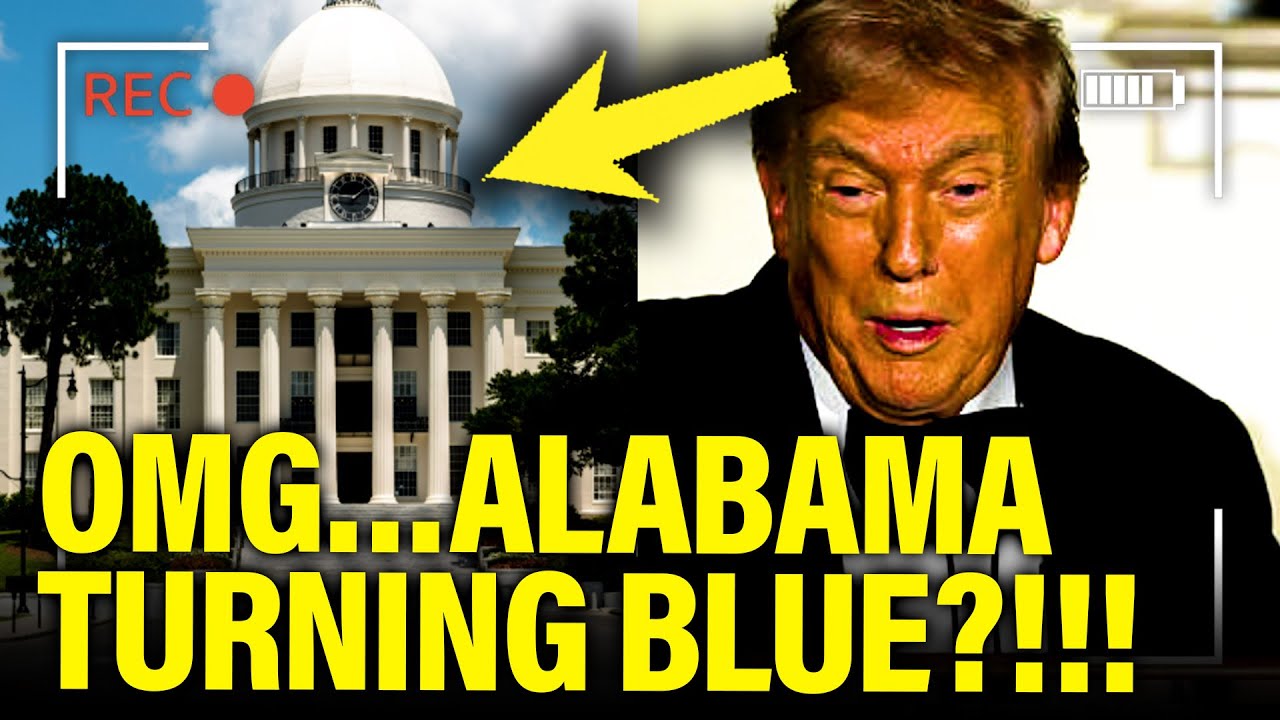
What was expected to be a routine, friendly town hall in Alabama turned into an unexpected flashpoint—one that reverberated far beyond the room and quickly ignited political feeds nationwide. Within minutes, video clips circulated online showing a crowd that was not merely restless, but openly resistant. Boos cut through prepared remarks. Questions sharpened. The mood shifted so quickly that even seasoned observers struggled to keep pace with what was unfolding.
For a political figure long accustomed to enthusiastic crowds in deep-red territory, the moment landed as a jolt. Alabama has been among the most reliable pillars of Republican support, and town halls there are typically predictable affairs. This one was not. Viewers watching online saw a crowd that appeared increasingly vocal about economic stress, policy fatigue, and a sense that long-promised relief has yet to materialize in everyday life.
A Room That Turned on a Dime
According to attendees, the tension did not erupt all at once. It built gradually. Early questions focused on familiar themes—jobs, inflation, health care costs—but the tone hardened as follow-ups pressed for specifics. When tariffs and rising prices came up, the reaction in the room reportedly changed. Applause thinned. Murmurs grew louder. Then came the boos.
The moment quickly became the defining image of the night. Short clips, stripped of context and shared at lightning speed, fueled online debate. Supporters argued the reaction was exaggerated or driven by a vocal minority. Critics countered that it revealed something more consequential: a fracture in a coalition long assumed to be solid.
What made the scene especially striking was not the presence of dissent—town halls are designed for that—but where it occurred. Alabama is not typically where loyalty cracks in public. Yet here it was, playing out in real time.
Economic Pain at the Center
Behind the spectacle lies a set of pressures that have been mounting quietly for months. Rising grocery bills, higher insurance premiums, and anxiety about health care access have reshaped kitchen-table conversations across the state. For many voters, abstract debates about trade or tariffs are no longer theoretical. They are felt in the cost of farm equipment, construction materials, and household goods.
Several attendees later told local media that their frustration was cumulative. It was not one policy or one answer that tipped the room, but a sense that economic pain has outpaced political solutions. When tariffs were mentioned, some voters reportedly pushed back, arguing that whatever their intended long-term benefits, the short-term costs were hitting families now.
That pushback is significant. Trade policy has often been defended as a strategic necessity, even when it brings temporary discomfort. The reaction in Alabama suggested patience may be wearing thin.

A Signal, Not a Verdict
Political analysts caution against overreading a single town hall. Crowds are not electorates, and viral moments can distort reality. Still, symbols matter in politics, and this one landed with unusual force. A public challenge in a place synonymous with party loyalty raises questions that campaigns cannot ignore.
Is this an isolated incident driven by local concerns and a particularly vocal audience? Or is it an early indicator of something broader—a slow erosion of trust fueled by economic strain and policy fatigue? The answer may not be clear yet, but the question itself is new enough to command attention.
What is also notable is how quickly the moment resonated online. Within hours, commentary poured in from across the political spectrum. Some framed the reaction as a warning sign ahead of future elections. Others dismissed it as media amplification. But few denied its impact.
Loyalty Under Pressure
For years, political loyalty in states like Alabama has been remarkably durable. Cultural alignment, party identity, and national polarization have reinforced voting patterns. Yet loyalty is not immune to material conditions. When economic pressure intensifies, it can stress even the strongest affiliations.
Several observers pointed out that voters voicing frustration at a town hall are not necessarily abandoning their party. Many may be demanding recalibration rather than rupture. Still, public dissent is itself a form of leverage. It signals that support is not unconditional.
That dynamic appeared to be on display as the evening progressed. Questions became more pointed. Responses were met with visible skepticism. The exchange felt less like a rally and more like a negotiation—one in which the crowd was asserting its expectations.
Why This Moment Matters
The Alabama town hall matters not because it definitively reshapes the political map, but because it challenges assumptions. It reminds strategists that even in safe territory, voters are watching closely—and reacting to lived experience as much as ideology.
It also underscores the power of unscripted moments. In an era of tightly managed messaging, a live exchange can puncture narratives in seconds. Once online, those moments take on a life of their own, reframed and replayed through countless lenses.
For now, Alabama finds itself at the center of a national conversation it did not expect to host. Whether this episode proves to be an anomaly or a preview remains to be seen. But the images—boos echoing in a familiar stronghold, tension rippling through a once-predictable room—will linger.
As political feeds continue to churn and speculation grows, one thing is clear: the town hall did more than spark a viral clip. It exposed a mood—uneasy, impatient, and increasingly vocal. And in politics, moods have a way of becoming movements if they are ignored.