Not a Debate, but a Reckoning: How Jasmine Crockett Turned Performance Politics Into a Constitutional Trial
WASHINGTON — It began as another predictable exchange in a city saturated with spectacle. But within minutes, the tone shifted. What unfolded on Capitol Hill was not a debate, not a partisan shouting match, and certainly not the performative outrage that has become familiar in the Trump era. It was, instead, something closer to a constitutional reckoning.

Representative Jasmine Crockett, a Texas Democrat with the cadence of a litigator and the timing of a seasoned communicator, did not raise her voice. She did not rely on slogans or viral one-liners. She asked questions — precise ones — and in doing so, reframed the conversation around Donald Trump’s presidency and the political culture it has produced.
Her target was not merely the former president’s policies, but the governing philosophy behind them. Again and again, Crockett returned to first principles: the oath of office, the text of the Constitution, the difference between lawful authority and raw power. In her telling, Trump’s presidency was less an administration than a production — a reality show dressed in the symbols of governance, where optics replaced outcomes and loyalty mattered more than legality.
The critique was devastating precisely because it was restrained. Crockett spoke of free speech and due process, invoking the First, Fifth, and Fourteenth Amendments not as abstractions but as guardrails that, in her view, had been treated as optional. When she asked whether violating those protections was lawful or lawless, the question carried the force of an indictment. The answers were almost beside the point. The record, she suggested, spoke for itself.
This was not an argument about ideology. It was an argument about the rules.
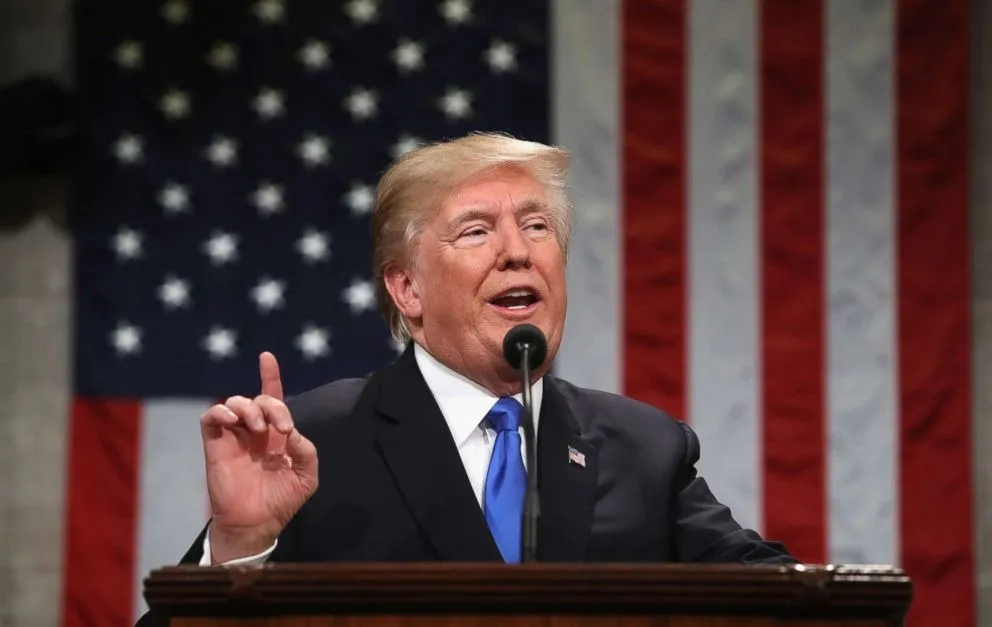
Trump has long thrived in environments where politics is treated as entertainment — where volume substitutes for substance and outrage becomes currency. Crockett refused to play that game. She described a presidency obsessed with applause, branding, and grievance, one that measured success by crowd size rather than constitutional fidelity. Leadership, she implied, had been reduced to performance.
Her critique extended beyond Trump himself. When she turned to Senator JD Vance, the effect was equally striking. Once known as a sharp critic of Trumpism and a chronicler of American dislocation, Vance was cast as a man who had traded conviction for validation. Crockett did not accuse him of hypocrisy outright. She did something more effective: she narrated the transformation. The intellectual rebel, she suggested, had become a supporting character in a larger spectacle — a philosopher who no longer philosophized, but performed.

The power of Crockett’s intervention lay in its structure. Like a prosecutor laying out evidence, she moved from point to point, citing actions and consequences. Ignoring court orders. Impounding congressionally approved funds. Invoking emergency powers without emergencies. Each item added weight, building a case that framed Trump’s governance not as controversial, but as corrosive.
What followed was not chaos in the conventional sense, but discomfort. The kind that settles in when familiar narratives no longer hold. Observers noted that Crockett’s words landed not because they were cruel, but because they were methodical. Her critique did not rely on personal insult. It relied on contrast — between what the Constitution demands and what she argued had been delivered instead.
This approach reflects a broader fatigue in American politics. After years of scandal, spectacle, and saturation coverage, the country has grown weary of outrage without accountability. Crockett tapped into that exhaustion. She described a political system trapped in endless motion, producing noise rather than solutions, branding rather than governance.

In doing so, she offered a subtle but pointed challenge to Trump’s enduring appeal. His supporters see strength in his defiance, authenticity in his bombast. Crockett saw something else: insecurity masked by volume, power confused with popularity, and a governing style dependent on constant validation. The louder the applause, she suggested, the greater the fear of silence.
By the end of her remarks, the conclusion felt inescapable. This was not about left versus right, or Democrats versus Republicans. It was about whether the Constitution remains the foundation of American political life, or merely a prop in an ongoing performance.
“They don’t lead,” Crockett said, in words that resonated beyond the room. “They perform.”
In a city built on ritual and rhetoric, that distinction mattered. And for a moment, Washington stopped applauding long enough to listen.