Carneys’ High-Profile Visit to Asia Draws Attention as Canada’s Diplomacy Gains Visibility
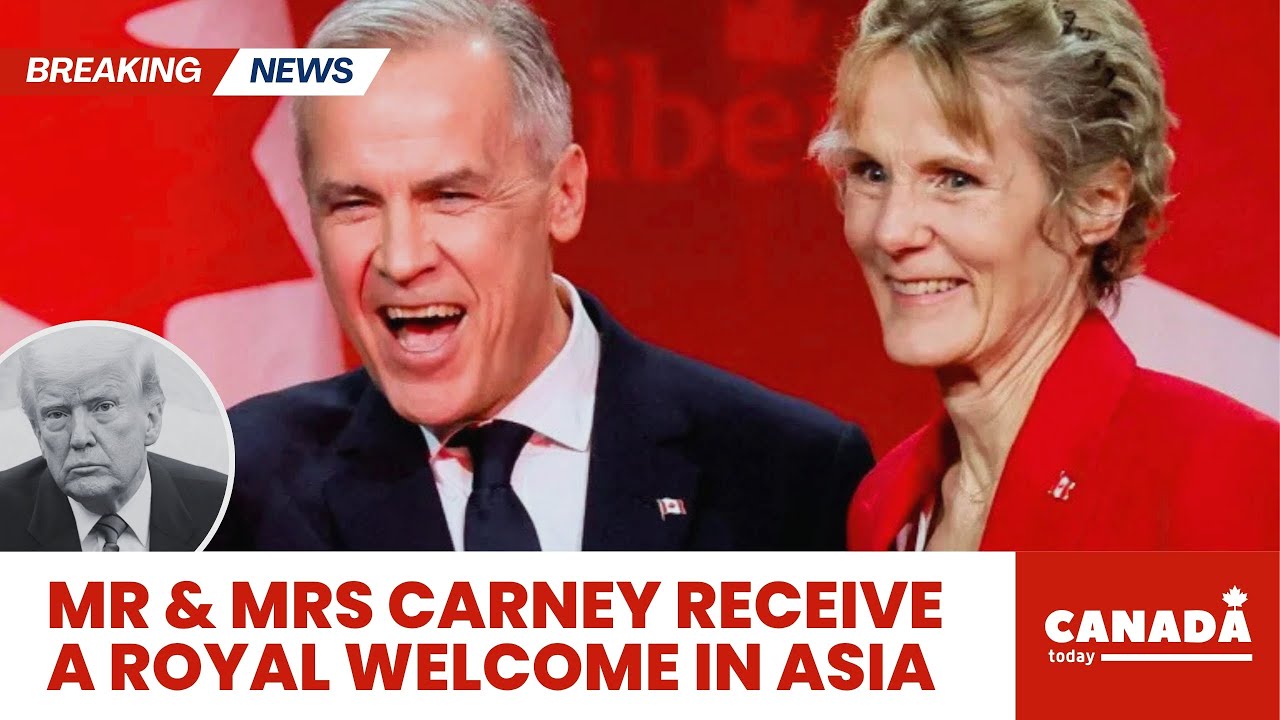
Singapore / Seoul / Tokyo — A high-profile diplomatic visit by Mark Carney, the former Bank of Canada and Bank of England governor, and his wife Diana Fox Carney has drawn an unusually enthusiastic reception across several Asian capitals this week, prompting analysts to remark on Canada’s rising diplomatic profile and sparking quiet unease among some allies — including, according to several officials, within circles aligned with former President Donald J. Trump.
While Mr. Carney holds no elected office, his growing stature as a global economic figure — coupled with speculation about a possible future political role in Canada — has turned the trip into a symbolic moment watched carefully by policymakers. His packed itinerary, including bilateral discussions with finance ministers, climate officials and business leaders, took on the tone of an informal state visit, complete with ceremonial welcomes and extensive local media coverage.
State broadcasters in South Korea and Singapore ran extended segments highlighting the couple’s arrival, noting Mr. Carney’s influence in climate finance, financial regulation and international development. Several commentators described the visit as part of a “new Canadian confidence” amid shifting global alliances.
A Diplomatic Moment That Surprised Even Ottawa
Canadian officials, while not publicizing the full schedule in advance, acknowledged that the trip reflects a deliberate effort to position Canada more prominently in the Indo-Pacific — a region Ottawa has identified as central to future trade, technological partnerships and security cooperation.
Foreign Affairs Minister Mélanie Joly said in a brief statement that Canada “welcomes strong international engagement by leaders in public policy,” calling Mr. Carney “an influential figure whose expertise resonates widely.”
Privately, however, some Canadian diplomats expressed surprise at the scale of the reception. “We expected formal meetings,” one official said. “We did not expect the kind of visibility typically reserved for heads of government.”
Asia’s Motivation: Stability, Climate Policy and Economic Signals

In Seoul, Japanese and Korean financial officials praised Mr. Carney’s work on sustainable finance and called him “a stabilizing intellectual force” at a moment of global uncertainty.
Analysts say Asian governments see Canada as a predictable partner with strong institutional credibility — attributes increasingly valued amid tense U.S.–China rivalry and fluctuating U.S. political signals.
“Carney represents technocratic continuity,” said Eun-Ji Park, a political economist at Yonsei University. “For Asian governments, that reliability is attractive. It symbolizes a Canada able to anchor long-term commitments.”
Officials in Japan highlighted Canada’s potential role in Indo-Pacific supply-chain diversification, including critical minerals and clean-energy transition planning. Meetings between Mr. Carney and private-sector leaders focused heavily on investment frameworks and cross-border innovation, according to people familiar with the discussions.
Quiet Frustration Among Trump Allies
The global attention surrounding the visit drew notice in Washington — particularly among advisers close to Mr. Trump, who has criticized Canada over trade disputes, defense spending and energy policy.
A senior Republican consultant familiar with Trump-aligned foreign-policy circles said the reception in Asia “landed poorly” among those who view Canada as insufficiently supportive of Trump-era economic positions. “It feeds a narrative that middle-power countries are positioning themselves for a world where U.S. influence is less dependable,” the consultant said.
Another former Trump administration official expressed frustration at Mr. Carney’s growing visibility, calling it “premature campaigning on the international stage,” a reference to speculation about Mr. Carney’s possible future in Canadian politics.
Canadian officials declined to respond to those criticisms, emphasizing that the visit is not sponsored by the government.
Diplomats: A Larger Story About Canada’s Positioning
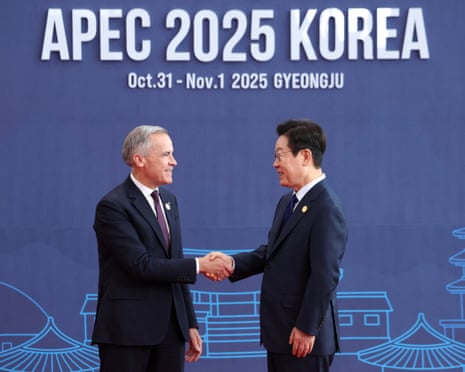
Several diplomats in Asia said the visit’s significance lies not in protocol but in symbolism. Canada is attempting to highlight its role as a constructive, predictable actor in global governance — at a time when the world is preoccupied with U.S. political volatility and China’s economic deceleration.
“The Carneys are not here as substitutes for government,” said a senior Japanese foreign-service official. “But their presence underscores that Canada sees Asia as central to its geopolitical future.”
Canadian think-tank analysts argue that the attention reflects longstanding shifts rather than momentary spectacle. Canada has prioritized Indo-Pacific initiatives for several years, including expanded trade routes, educational partnerships and regional peacekeeping cooperation.
“These developments predate the current U.S. election cycle,” said Shuya Huang, a research fellow at the Asia Pacific Foundation of Canada. “What we’re witnessing is the result of accumulated diplomatic capital and sustained policy.”
Domestic Reaction: Curiosity and Caution
In Canada, reaction was mixed. Supporters praised the visibility as a sign of renewed international relevance. Critics questioned whether the enthusiasm abroad risked being misinterpreted domestically as political positioning.
Liberal and Conservative advisers interviewed said the trip is likely to intensify speculation about Mr. Carney’s political future, although no concrete steps have been indicated.
What the Visit Reveals About the Emerging Global Order

Experts say the Carneys’ reception reveals deeper truths about global diplomacy: a desire among Asian states to diversify partnerships beyond the traditional Washington–Beijing axis, and a recognition that non-elected actors can shape international conversations.
“It reflects a world where influence is distributed, flexible and not entirely bound to formal office,” said Dr. Mei Tan, a regional-security expert in Singapore.
Looking Ahead
Mr. Carney’s next stops include meetings with sustainability coalitions and financial-governance groups across Southeast Asia. Canadian officials say the trip aligns with Ottawa’s Indo-Pacific Strategy, although they stressed it remains independent of government negotiation channels.
Whether the enthusiasm marks a turning point for Canada’s diplomatic presence or a momentary convergence of global interest remains to be seen. But for now, one thing is clear: the Carneys’ tour has reached far beyond ceremonial optics, touching on shifting geopolitical currents that are reshaping power balances across the Indo-Pacific.
https://www.youtube.com/watch?v=Jp1u4TqzUW0