New Delhi — Canadian Prime Minister Mark Carney and India’s Prime Minister have signed a major uranium supply agreement valued at $2.6 billion, marking a significant step in bilateral energy cooperation. The pact, announced during high-level meetings, supports India’s nuclear expansion plans while advancing shared objectives in clean and reliable base-load power generation.
The agreement forms part of a broader package of initiatives unveiled this week. Alongside the uranium deal, the two countries outlined enhanced collaboration in strategic energy partnerships, critical minerals development and ambitions for clean liquefied natural gas exports. Officials described the moves as a deepening of ties that extend beyond traditional trade into long-term supply-chain integration.

In remarks delivered jointly, Prime Minister Carney emphasised Canada’s competitive business environment. He noted that the country’s business investment tax rate stands at half the G7 average and is 4.5 percentage points lower than the rate in the United States. The statement was framed as an invitation to investors seeking predictable and attractive conditions for capital deployment.
Carney also highlighted Canada’s extensive network of free-trade agreements. These pacts currently provide access to 51 nations and a combined market of 1.5 billion consumers. According to the prime minister, this structure offers substantial optionality for Canadian exporters and positions the country as a reliable partner across multiple regions.
The uranium agreement is expected to contribute to India’s growing energy requirements. As one of the world’s fastest-expanding major economies, India faces rising demand for stable power sources. Nuclear energy is viewed as an important component of its strategy to meet infrastructure and technology-driven growth while maintaining a focus on cleaner alternatives. Canadian uranium supplies are positioned to play a supporting role in these ambitions over the coming decades.
Critical minerals cooperation was another area of focus. Both sides agreed to explore opportunities that could feed into future technologies, including those required for renewable energy transitions and advanced manufacturing. Clean LNG ambitions were similarly advanced, with discussions centred on long-term energy security and diversified export pathways.
Prime Minister Carney characterised the overall approach as one of reliability. He stated that Canada intends to act as a dependable supplier and economic partner, particularly in periods of global market volatility. He further committed to streamlining approvals for major projects, aiming to deliver decisions within a two-year horizon — a timeframe described as ambitious given typical infrastructure timelines.
The prime minister also referenced a broader strategic outlook. He observed that “nostalgia is not a strategy,” underscoring the need for adaptation in a changing global environment. The comment was presented not as commentary on any specific relationship but as a general principle guiding Canada’s international economic policy. Officials indicated that the country’s strong fiscal position — noted as the strongest balance sheet in the G7 — would be deployed judiciously to support these initiatives.

This latest round of engagements builds on accelerated diplomatic and commercial activity between Canada and India. In less than a year, the two countries have conducted more high-level interactions than in the previous two decades combined. Foreign ministers have met repeatedly, provincial premiers have participated, and chief executives from key sectors have been directly involved. The pace has been described by participants as a deliberate acceleration rather than a reactive adjustment.
Canada has simultaneously pursued diversification across multiple regions. Recent efforts have included expanded market access in Europe, strengthened engagement across Asia, deepened partnerships in the Gulf states such as the United Arab Emirates and Qatar, and exploratory outreach toward Australia and Japan. Analysts suggest this multidirectional strategy aims to reduce risk by ensuring that no single trading relationship dominates export flows or supply-chain dependencies.
The developments occur against a backdrop of ongoing global trade recalibration. Discussions in various capitals about tariff policies and market access conditions have prompted many economies to examine their external linkages. Canadian officials have framed their actions as proactive rather than defensive, focusing on competitiveness, certainty for investors and the creation of new commercial avenues.
Observers note that the agreements carry implications beyond immediate commercial value. Uranium and critical minerals contracts typically involve decades-long integration into national supply chains. Once embedded, such arrangements can provide stability for both supplier and recipient economies. For India, the uranium supply supports nuclear capacity expansion at a time when energy demand is projected to grow rapidly. For Canada, the deals represent an opportunity to diversify non-US export streams and embed national resources in high-growth markets.
Investment implications were also addressed. With project approval timelines shortened and tax advantages clearly articulated, officials expressed confidence that capital would respond positively. Prime Minister Carney stressed that while agreements are important, execution remains the decisive factor. Regulatory processes, he indicated, would be managed efficiently to convert commitments into tangible outcomes.

Economic analysts offer measured perspectives on the significance of these steps. Some view the uranium deal and associated partnerships as standard evolution in bilateral relations between two resource-rich and technology-oriented economies. Others interpret the timing and scope as evidence of a more intentional repositioning by a middle power seeking greater autonomy in global economic flows. Both interpretations converge on the importance of implementation: success will ultimately depend on whether announced projects move forward within the stated timelines and whether investment inflows materialise as anticipated.
India’s economic trajectory provides context for the partnership’s potential scale. The country’s infrastructure ambitions, technology sector expansion and urban development plans all require secure, long-term energy and materials inputs. Canada’s established expertise in uranium mining, critical minerals processing and LNG production aligns with these requirements. Joint working groups are expected to meet regularly to translate high-level commitments into operational arrangements.
Canadian domestic considerations also feature in the strategy. The government has pointed to its fiscal strength as a foundation for measured international engagement. By maintaining competitive tax policies and accelerating project approvals, Ottawa aims to signal to global investors that Canada remains an open and predictable jurisdiction even as international conditions shift.
The coming 12 to 24 months will serve as a practical test of these initiatives. Key milestones include the pace of regulatory approvals, the scale of follow-on investment, and the actual ramp-up of energy and minerals exports. Should these elements progress as outlined, the agreements could mark a durable expansion of Canada-India economic relations. Should implementation encounter delays, the test of resilience will shift toward sustaining momentum amid competing global priorities.
In the wider international landscape, the moves illustrate how middle powers are navigating complex economic interdependencies. Rather than relying on single dominant relationships, a growing number of nations are cultivating multiple channels for trade, investment and resource security. Canada’s emphasis on reliability, optionality and execution aligns with this pattern while reflecting its specific strengths in resources, governance and fiscal management.
Both governments have committed to continued dialogue at senior levels. Future meetings are expected to address implementation details, explore additional sectors and review progress against the two-year project approval target. The uranium agreement itself is subject to standard regulatory and environmental reviews in both countries, processes that officials indicated would proceed on established timelines.
The partnership is not presented as a substitute for any existing relationship but as a complementary element within a diversified global posture. Canadian exports have historically been concentrated in certain markets; recent policy signals suggest a conscious effort to broaden that base without diminishing established ties. The same logic applies to India, which continues to engage with multiple suppliers and partners to meet its development goals.
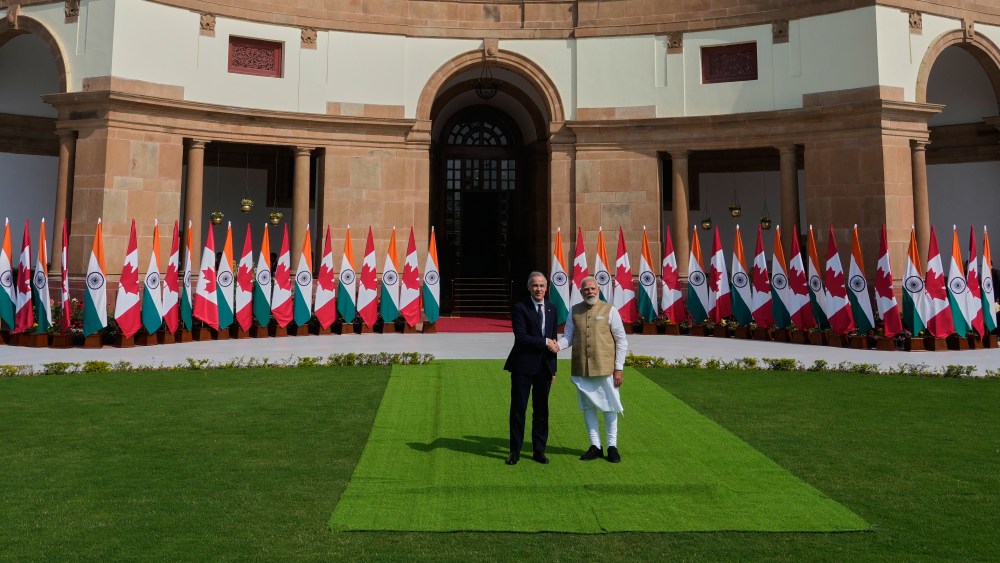
As implementation begins, attention will turn to measurable outcomes: contracts executed, projects approved, investment flows secured and supply chains operationalised. These indicators will determine whether the strategic framework outlined this week translates into sustained economic value for both nations. For now, the agreements stand as concrete steps toward deeper integration in energy and critical materials — sectors central to both countries’ long-term prosperity.
The developments underscore the evolving nature of international economic cooperation. In an environment of shifting trade dynamics, the focus remains on practical arrangements that deliver reliability, predictability and mutual benefit. Canada and India have signalled their intention to contribute constructively to that process through the agreements signed this week.