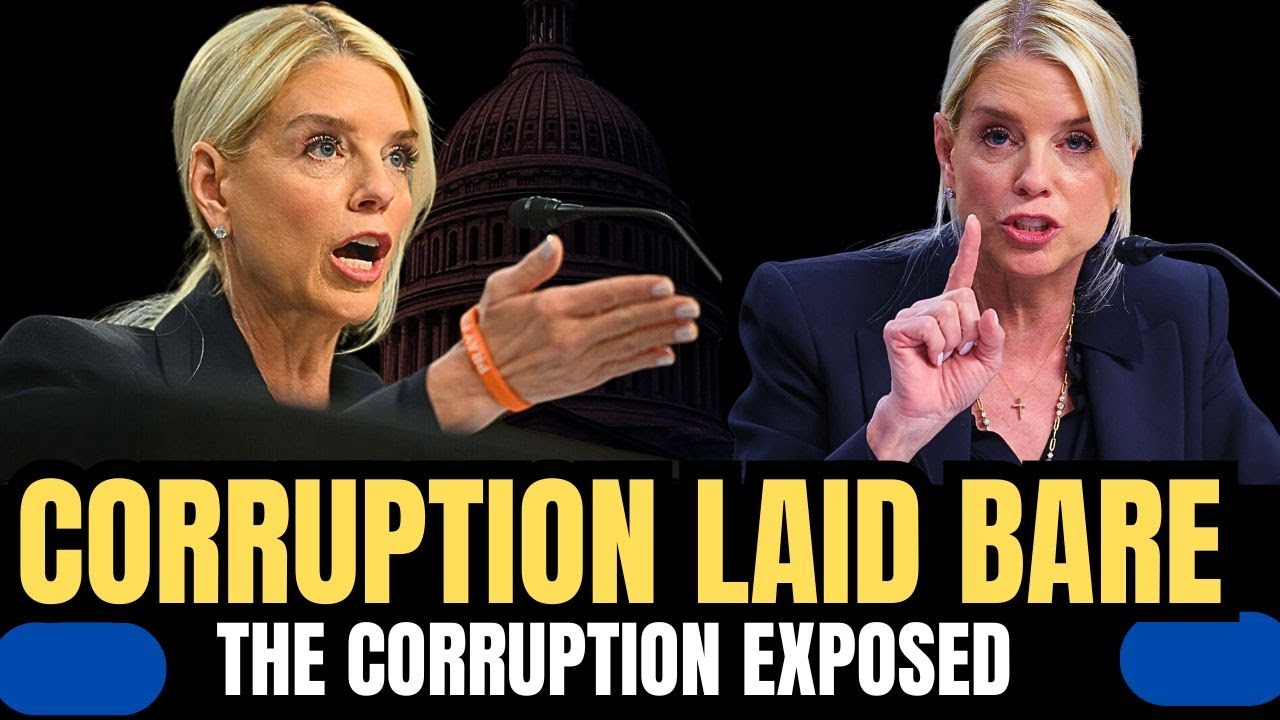
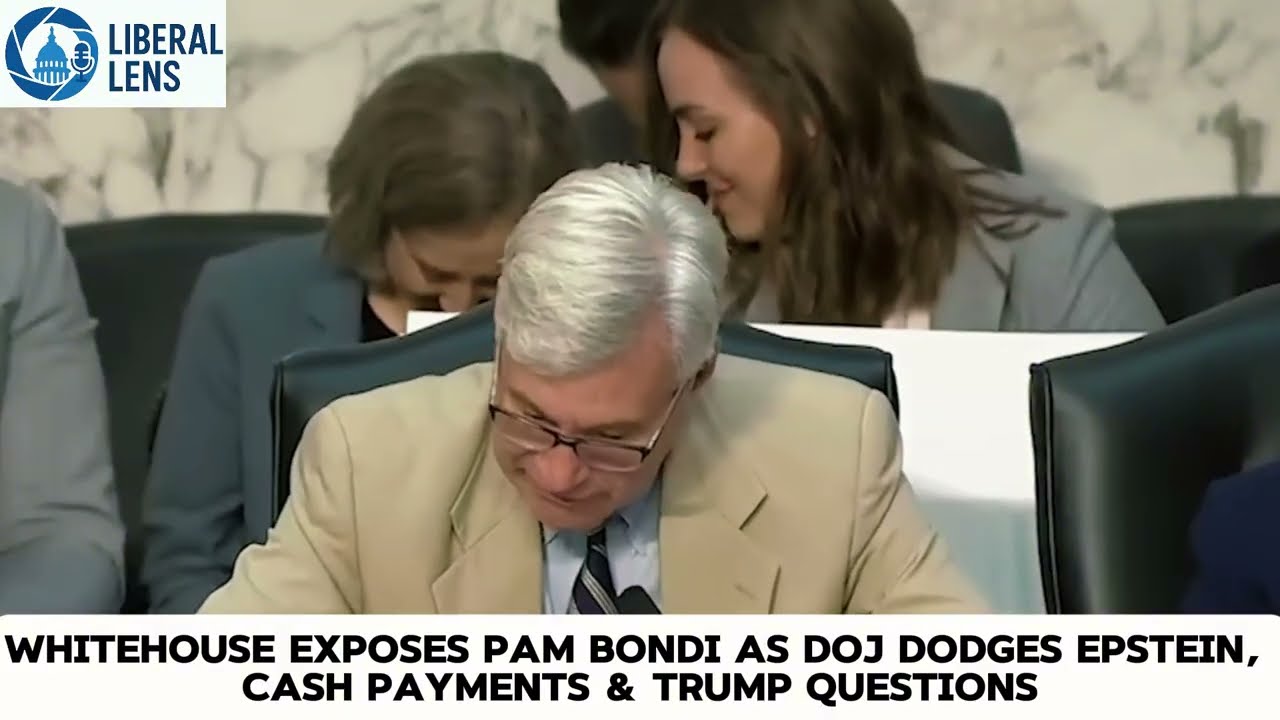
During a tense and unusually confrontational Senate Judiciary Committee hearing this week, Senator Sheldon Whitehouse sharply pressed Attorney General Pam Bondi for answers about several high-profile matters involving the Department of Justice. What unfolded was a prolonged and deeply revealing exchange that left lawmakers, analysts, and observers questioning the DOJ’s commitment to transparency, accountability, and public trust.
The hearing, intended to review departmental operations and oversight practices, quickly veered into controversy as Whitehouse sought specific explanations about three areas that have long generated public scrutiny: the Justice Department’s handling of Epstein-related financial disclosures, the FBI’s treatment of suspicious cash payments, and the DOJ’s approach to sworn testimony involving former President Donald Trump and individuals in his orbit. While the senator’s questions were direct and pointed, Attorney General Bondi responded with evasiveness that only raised more concerns.
A Senator Pushes for Answers — and Meets a Wall
From the outset, Whitehouse made clear that his intention was not to score political points but to obtain factual responses related to documented DOJ procedures. However, almost immediately, the attorney general deflected.
When asked to confirm whether the DOJ had reviewed recently surfaced financial reports linked to associates of Jeffrey Epstein, Bondi shifted the conversation to “ongoing investigations” and “policy limitations,” refusing to say whether such records had even been examined.
Repeatedly, Whitehouse attempted to narrow the questions to basic procedural steps:
-
Did the DOJ receive the reports?
-
Were they logged?
-
Did federal investigators take any action?
Each time, Bondi avoided direct acknowledgment, pivoting instead to criticizing what she called “politically motivated insinuations.”
This pattern—an avoidance of specifics combined with an attack-the-questioner approach—quickly became the hallmark of the exchange.
Cash Payments & FBI Conduct: More Deflection
The questioning intensified when Whitehouse moved to FBI handling of suspicious cash payment reports. These reports, which typically originate from banks under federal law, require review, cataloging, and internal assessment by investigative teams.
Whitehouse asked whether these payments, some connected to individuals tied to Trump’s political circle, were examined according to standard guidelines. Bondi again declined to answer directly, arguing that such details fell under “protected investigative processes.”
The senator countered that he was not asking for investigative strategy or confidential identities, only whether a process had occurred. Still, Bondi framed the inquiry as an attempt to “weaponize routine filings,” sidestepping the core question: was federal law followed?
Analysts observing the hearing noted that Bondi’s non-answers undermined her stated commitment to institutional transparency.
Trump-Related Testimony: The Breaking Point in the Exchange
The most contentious moment emerged when the discussion shifted to sworn testimony involving Donald Trump and individuals connected to ongoing inquiries. Whitehouse asked whether DOJ officials had reviewed statements that appeared to conflict with earlier testimony or publicly available facts.
Rather than addressing the question directly, Bondi accused Whitehouse of “targeting the former president,” asserting that the DOJ “would not be coerced into political theater.”
This accusation sparked a sharp rebuttal from Whitehouse, who emphasized that his questions focused on process, not political figures. The senator highlighted that congressional oversight exists precisely to ensure that powerful individuals do not receive special treatment or exemptions.
Bondi, however, maintained her defensive posture, leaving the matter unresolved and prompting visible frustration among several committee members.
A Pattern of Stonewalling Emerges
Observers quickly noted that Bondi’s approach resembled larger concerns raised by lawmakers in recent months: a Department of Justice increasingly unwilling to provide even the most basic procedural information, especially when matters involve influential individuals.
The exchange highlighted three recurring issues:
-
Refusal to confirm procedural steps even when the information is not classified or investigative in nature.
-
Framing legitimate oversight as political attacks rather than answering straightforward questions.
-
Avoiding accountability by invoking “ongoing investigations” as a universal shield, regardless of context.
Whitehouse articulated these frustrations during the hearing’s closing moments, saying that Congress cannot fulfill its oversight duties when the DOJ refuses to provide information the public is entitled to.

The Broader Implications for DOJ Accountability
Following the hearing, legal analysts and former DOJ officials weighed in on what the exchange revealed about institutional transparency. Many expressed concern that Bondi’s approach signaled a deeper cultural shift within the department—an increasing reluctance to engage meaningfully with congressional oversight.
Some argued that if the DOJ cannot answer whether it followed basic procedures, the public is left with no assurance that investigations involving well-connected individuals are treated fairly.
Others warned that the pattern of evasiveness could erode confidence in federal law enforcement at a moment when political polarization and institutional distrust are already high.
The questions Whitehouse pressed—about Epstein-connected finances, suspicious cash payments, and Trump-related testimony—fall squarely within the public interest. The DOJ’s refusal to provide clarity raises the stakes even further.
A Story That Will Continue to Pressure Washington
As clips of the exchange circulate widely online, pressure is likely to grow on both the DOJ and congressional leaders to revisit the issues raised during the hearing. Several senators have already indicated they plan to submit follow-up inquiries in writing, while others are calling for additional testimony from DOJ officials.
Bondi’s performance may have satisfied some political allies, but for a significant portion of the public and many legal observers, it only deepened suspicions about selective transparency and political sensitivity within the department.
For now, the hearing serves as a vivid illustration of why congressional oversight exists—and why it remains essential. Whether the DOJ chooses to engage more openly in future sessions remains to be seen, but one thing is clear: the questions raised by Senator Whitehouse are not going away.