Washington — A burst of viral online commentary has converged on Minnesota in recent days, knitting together three separate threads — alleged fraud in child care programs, a fight over access to Medicaid data for immigration enforcement, and renewed claims of improper ballot collection — into a single, sweeping narrative about corruption, elections and government spending.
What is verifiable is that federal and state officials are now moving on two of those fronts, with real policy consequences. What remains far more contested is the third: the claim that ballot harvesting or vote buying is being orchestrated at scale, a charge that has circulated for years in Minnesota politics and has repeatedly outpaced substantiated evidence.
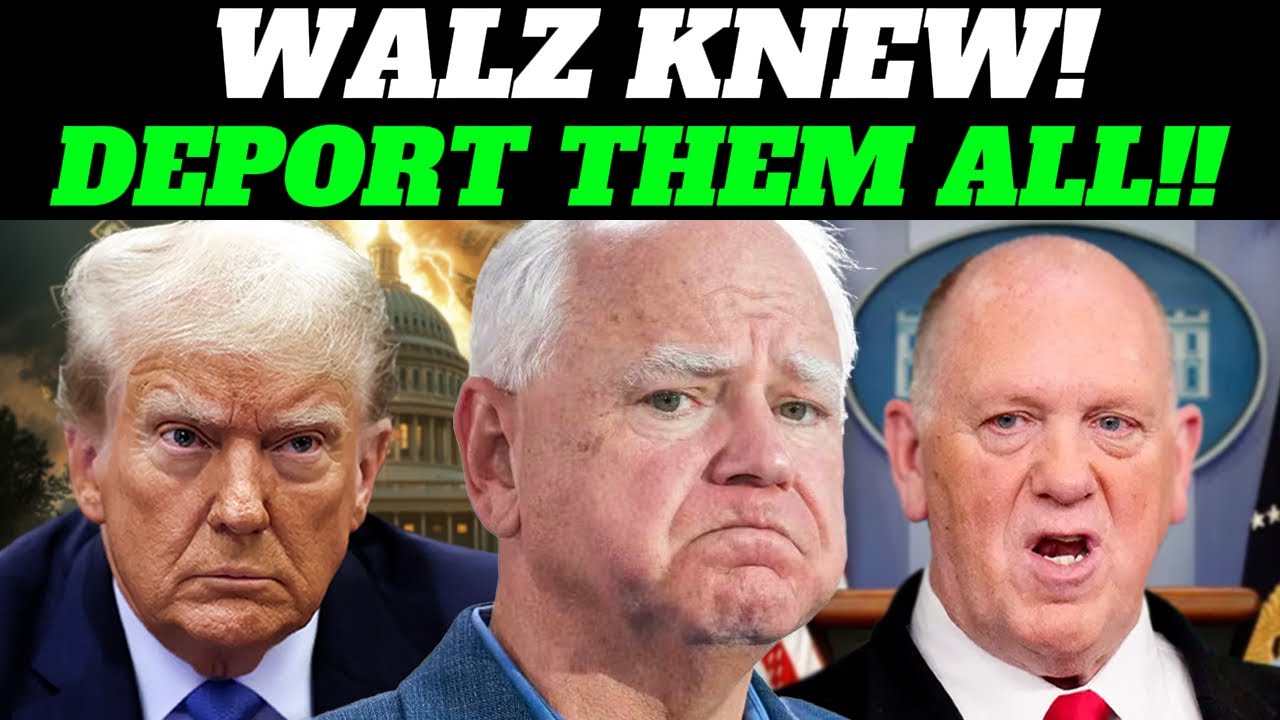
The first flashpoint involves federal child care dollars. The Trump administration’s Department of Health and Human Services has frozen child care payments — first described as a Minnesota-focused response and then broadened in national reporting into a wider pause affecting states — while demanding additional documentation and oversight measures. CBS News reported that HHS froze federal child care funding for Minnesota, citing viral allegations of fraud.
CBS News
ABC News and The Guardian reported that the administration was pausing child care funding more broadly, with an administration official saying funds would be released only after states “prove” legitimacy.
ABC News
The second flashpoint centers on Medicaid data. A federal judge ruled that HHS may resume sharing limited Medicaid information with Immigration and Customs Enforcement — a partial win for the administration, but not the sweeping authority some political allies have described. The Associated Press reported that the decision permits sharing basic biographical and contact information about undocumented immigrants enrolled in emergency Medicaid in states that sued, while keeping restrictions on sensitive health data and on information about citizens and lawful residents in those states.
AP News

In Minnesota itself, the political stakes around fraud allegations have been rising for months. Reuters reported on Monday that Gov. Tim Walz will not seek a third term and said he intends to focus on what Reuters described as a “welfare fraud scandal,” noting that at least 56 people have pleaded guilty since federal charges began in 2022 and that the issue has become a national political target.
Reuters
These are consequential developments: the flow of federal money can be interrupted, state agencies can be pressured into audits and reviews, and personal data can be repurposed for enforcement in ways that courts will scrutinize. But they also illustrate a recurring feature of contemporary politics: the speed at which complex administrative and legal disputes become simplified into moral dramas — and, sometimes, into claims that indict entire communities.
In the online videos and podcasts now ricocheting across social platforms, Minnesota’s alleged fraud problem is frequently attributed to Somali immigrants in blunt and sweeping terms. That framing is not new; it has appeared in earlier cycles of Minnesota political conflict. It is also where rhetoric tends to run furthest ahead of what public records can support.
Fraud in public programs is real and recurring across the United States, and prosecutors have brought cases in Minnesota and elsewhere. Yet fraud cases — even large ones — do not establish collective guilt by ethnicity or religion. Nor do they justify the kind of broad dehumanization that has become common in the online “exposé” economy, where attention is monetized and outrage is rewarded.
The third thread — election-related claims — is the most illustrative of how quickly rumor can harden into “common knowledge.” In the material circulating now, alleged ballot harvesting is presented as an established machine tied to Democratic politicians, sometimes using undercover video clips that surfaced during the 2020 cycle.
But reporting about those claims has long emphasized a gap between insinuation and proof. The Sahan Journal, a Minnesota outlet that closely covered the 2020 Project Veritas episode involving Rep. Ilhan Omar’s district, described it as part of a disinformation campaign around absentee ballots, noting the questionable sourcing and how the story was weaponized nationally.
Sahan Journal
That does not mean election misconduct never occurs — it does — but it underscores why law enforcement investigations and court-tested evidence matter more than viral clips.
This is where the current moment becomes delicate for institutions. When federal agencies move aggressively to “stop the bleed” — freezing funds, tightening documentation requirements, expanding data sharing — the actions can serve legitimate oversight goals. But they also risk widening harm if the measures are blunt, poorly defined, or driven by political incentives rather than documented need.
The Medicaid data fight is a case in point. Supporters cast the decision as a way to quickly find people committing fraud or living unlawfully in the country. Critics argue it will deter immigrants from seeking even emergency care, and that data sharing without clear boundaries can sweep up citizens and lawful residents — precisely the risk the judge’s limits appear designed to reduce.
AP News
The child care funding freeze raises parallel concerns. Fraud prevention is a core function of government, and documentation requirements can be an effective tool. Yet a broad freeze also threatens collateral damage: families who rely on subsidies, providers who are compliant, and state agencies that must manage disruptions. ABC News reported that the HHS official did not provide details about the proof required — ambiguity that can become destabilizing when money is paused.
ABC News
In Minnesota, the political consequences are already visible. Reuters described a landscape in which a real scandal — one involving nonprofit fraud and guilty pleas — has become entangled with national polarization, online virality and attacks that blend enforcement with identity politics.
Reuters

The harder question is what “accountability” means when the public conversation has split into two impulses: one demanding swift punishment at scale, and the other warning that justice administered through generalized suspicion corrodes legitimacy. The answer, in a functioning system, is supposed to be boring: audits that can be replicated, prosecutions based on evidence, and reforms that close loopholes without turning government into a blunt instrument.
That kind of process rarely goes viral. Anger does.
The result is a feedback loop. Viral claims amplify pressure on officials to “do something.” Officials act, sometimes quickly and imperfectly. The action is then used as proof that the original claims were correct in every detail — even when the actual legal decision or agency step is narrower than the narrative suggests.
Minnesota is not the first place where this dynamic has played out, and it will not be the last. The question for the country is whether the institutions now under strain can maintain a basic distinction: between targeted enforcement and collective blame, between verified evidence and viral certainty, between oversight and spectacle.
If those lines hold, fraud can be prosecuted and programs can be reformed without tearing at the social fabric. If they break, the country will continue to experience what the online economy profits from most: a politics of permanent suspicion, in which every scandal becomes a referendum on belonging.