“Canada Is Not America”: Carney Draws a Line in Parliament
OTTAWA — In a brief exchange that quickly reverberated beyond the walls of Parliament, Prime Minister Mark Carney delivered a five-word line that reshaped a heated debate over health care, immigration and Canada’s relationship with the United States.
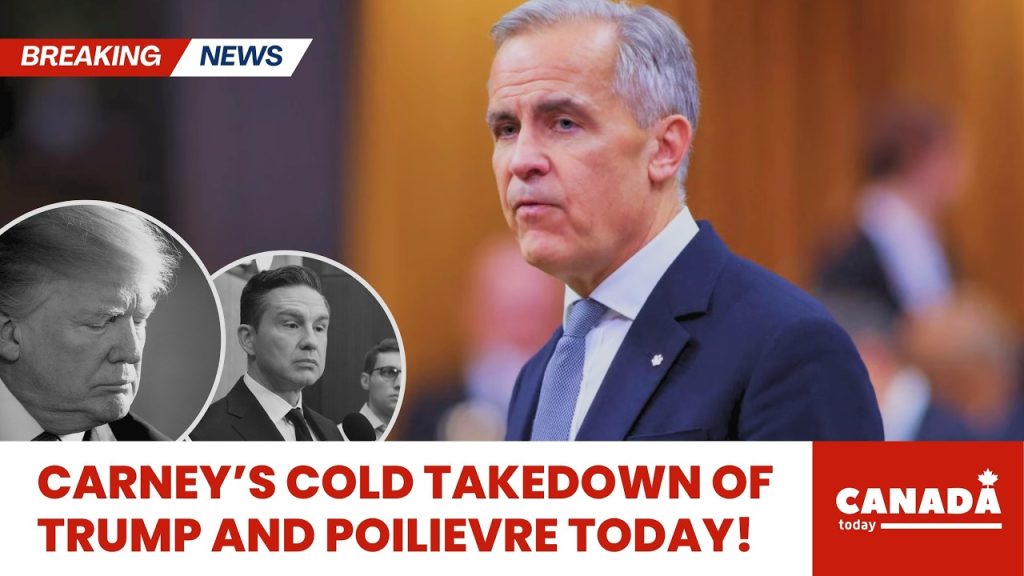
“Yes, Canada is not America,” Mr. Carney said in the House of Commons, prompting applause from government benches and sharpening the contrast with Conservative leader Pierre Poilievre, who had accused the Liberal government of mismanaging immigration and overwhelming the country’s health system.
The remark was not raised voice rhetoric. It was controlled, measured and deliberate. But its implications extended well beyond the immediate exchange.
Mr. Poilievre opened the debate by tying long wait times and doctor shortages to what he described as “out-of-control” immigration levels. He cited millions of Canadians without family physicians and pressed the government to reverse policies he argued were straining public services.
Mr. Carney responded not by disputing that the health system faces pressure, but by reframing the underlying premise. Universal health care, he suggested, is not conditional. It is foundational. And it is not subject to the American model of insurance-based access.
The prime minister then pivoted to numbers, asserting that his government had reduced new asylum claims, temporary foreign worker levels and international student intake during his tenure. The strategy was twofold: defend the principle of universal care while signaling that immigration management was already tightening.
Round after round, the opposition escalated. Mr. Poilievre cited figures describing sharp increases in refugee claims and the cost of benefits. He sought to link 11 years of Liberal governance directly to Mr. Carney, portraying him as inheritor and defender of a broken system.
Mr. Carney countered with a political maneuver that distanced him from that legacy. “I just got here,” he said, noting that he had been in office for less than a year. The line was subtle but strategic. It positioned him as a corrective figure rather than an architect of long-term policy drift.
In doing so, he also turned attention back on Parliament itself, reminding members that structural issues are not the product of one individual. Accountability, he implied, is shared.
The exchange eventually moved beyond health care into criminal law and immigration enforcement. Mr. Poilievre accused the government of allowing a “two-tiered” justice system in which foreign nationals receive preferential treatment. Mr. Carney responded by pointing to pending legislation, inviting opposition support for bills aimed at tightening asylum procedures and addressing system abuse.

The technique is common in parliamentary debate: when accused of inaction, reference active legislation. It forces critics to choose between supporting the measure or weakening their own argument by opposing it.
Yet the moment that lingered was the earlier declaration separating Canada from the United States.
The line carried domestic and international resonance. Domestically, it underscored a defense of universal health care as a core element of Canadian identity. Internationally, it signaled distance from the policy approach of President Donald Trump, who has renewed pressure on trade alignment and regulatory symmetry across North America.
Officials aligned with Mr. Carney say the message was about sovereignty, not confrontation. Coordination with Washington, they argue, will continue — but on negotiated terms rather than inherited assumptions.
Policy analysts note that even incremental divergence in standards, subsidies or industrial regulation could affect cross-border supply chains built on decades of harmonization. The automotive, energy and agricultural sectors remain tightly integrated, and rhetorical hardening can influence diplomatic tone even if economic ties remain intact.
Supporters of the prime minister describe the moment as strategic clarity at a time when voters are increasingly attuned to questions of national autonomy. Critics argue that sharp framing risks narrowing diplomatic flexibility when economic interdependence remains deep.
What unfolded in the Commons was not an extraordinary procedural event. It was a routine question period. But it was also a microcosm of broader political tension: immigration pressures, health system strain, law-and-order politics and continental identity colliding in a few carefully chosen sentences.
In parliamentary democracies, tone can matter as much as policy. Mr. Carney did not raise his voice. He did not personalize the dispute. Instead, he drew a boundary — not only between parties, but between governing philosophies.
Whether that boundary becomes a lasting policy divergence or remains rhetorical positioning will depend on legislation, negotiations and voter sentiment in the months ahead.
For now, five words have crystallized the debate. And in Ottawa, as in Washington, framing often shapes the fight long before the votes are counted.