Something fundamental changed in North American diplomacy the day a carefully scripted Canada–U.S. business event spun out of control. It wasn’t a closed-door negotiation or a leaked memo that triggered it. It happened in public, in front of executives, diplomats, and industry leaders whose companies depend on cross-border stability. A brief but explosive outburst by the U.S. ambassador shattered the room’s composure and, in the process, exposed how fragile the relationship had quietly become.
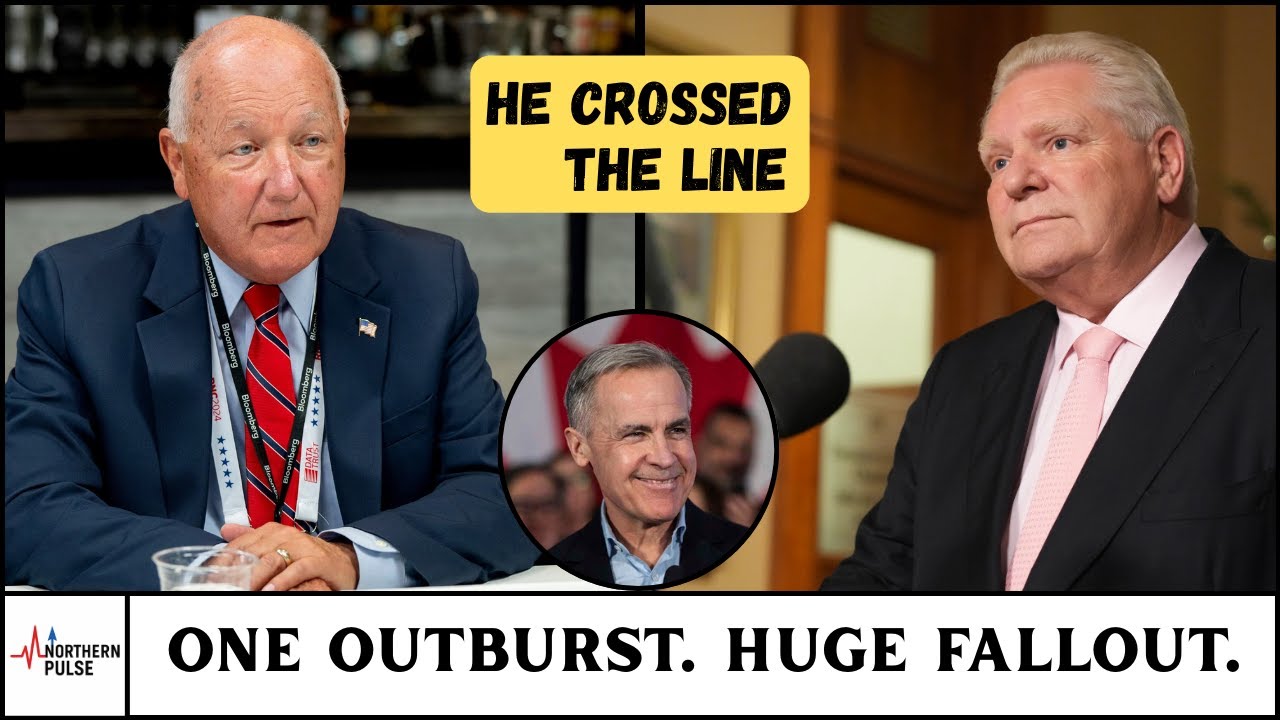
What initially appeared to be a profanity-laced meltdown quickly revealed itself as something much larger. The incident became a stress test of power, respect, and dependency between Canada and the United States. Tariff threats followed almost immediately. Trade discussions froze. Washington was embarrassed. And beneath the noise, Canada accelerated an economic and strategic shift that had been building for years.
The event itself was meant to reinforce cooperation. These gatherings are usually choreographed down to the smallest detail: smiles, handshakes, neutral language, and reassuring talking points. Instead, witnesses described a room that suddenly went silent as the ambassador reportedly launched into a public tirade aimed at Ontario’s trade leadership. This was not a private disagreement or a closed-door reprimand. It happened out loud, in front of ministers, foreign diplomats, and executives with billions of dollars at stake.

What sparked the eruption was an Ontario government advertisement airing across U.S. networks. The ad did not insult America or mock U.S. workers. It quoted Ronald Reagan’s own 1987 warning that tariffs punish workers, raise costs, and weaken industries on both sides of the border. That framing proved incendiary. By using an American president’s words during a tense trade environment, the message bypassed ideology and struck directly at policy credibility. Reports suggest Washington interpreted it not as criticism, but as defiance.
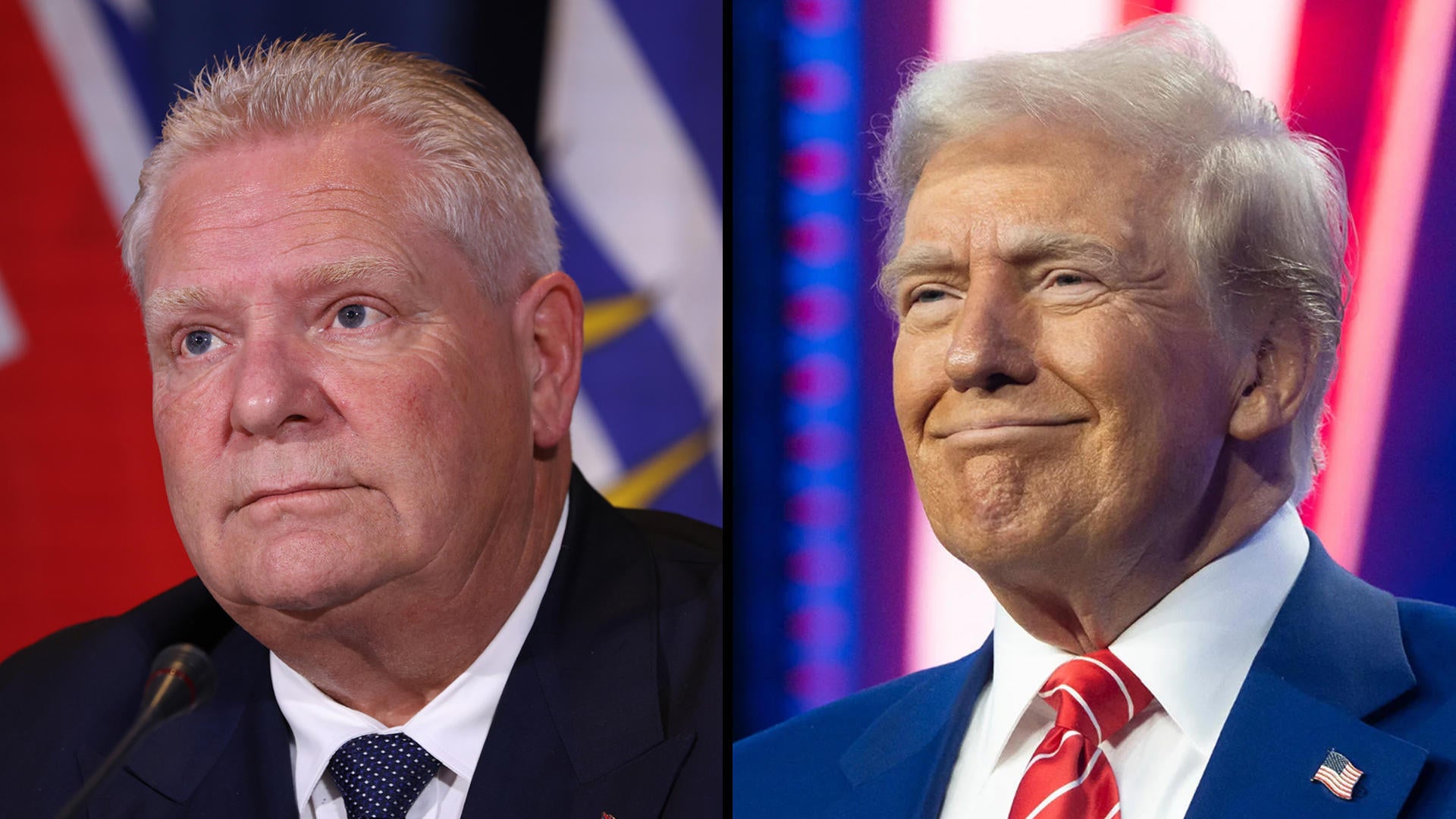
Escalation followed quickly. President Trump reportedly froze trade talks and floated the possibility of an additional 10 percent tariff on Canadian goods. Steel, aluminum, autos, and energy—already under pressure—were suddenly at greater risk. The timing was especially volatile, with U.S. manufacturing hubs in Michigan, Ohio, Pennsylvania, and Wisconsin already absorbing higher costs and job losses linked to earlier tariff waves. The ad did not create that pain, but it reminded people where it came from.
Canada’s response marked a clear departure from past patterns. Ontario Premier Doug Ford did not soften his language or hide behind diplomatic phrasing. He called the ambassador’s behavior “absolutely unacceptable” and demanded a direct apology. His message resonated because it was not emotional posturing. It reflected a growing sense that Canada had tolerated too much volatility and public disrespect while absorbing real economic damage. Tariffs were no longer abstract policy tools; factories, supply chains, and workers were feeling them directly.
At the same time, a very different strategy was unfolding quietly. Mark Carney did not escalate publicly or trade insults. Instead, he moved. Early clarifications around the ad helped keep channels technically open, but behind the scenes, Canada began repositioning itself. While Washington focused on optics and outrage, Canada focused on leverage.
Carney deepened ties with South Korea and Japan, reopened channels across Asia, and strengthened relationships in Europe. Even defense signaling shifted. During a visit to a major shipyard, Carney toured Canada’s next-generation submarine program, part of a modernization effort exceeding $20 billion. Analysts began calling it Canada’s “quiet pivot.” For decades, Canada’s economy had leaned on one core assumption: the United States would remain stable, predictable, and cooperative. That assumption cracked.
Exports were redirected. Ports expanded on both coasts. Domestic steel and aluminum production moved up the priority list after vulnerabilities became impossible to ignore. Rare earth processing shifted from a long-term talking point to an urgent necessity. Energy partnerships expanded beyond North America. Defense procurement increasingly aligned with allies who valued predictability over pressure.

This pivot was not driven by anger. It was driven by math. Strip away the viral clips and political theater, and the incident revealed a deeper values clash. Diplomacy depends on restraint, professionalism, and mutual respect. When those foundations erode, trust fractures. Attempts to downplay Canadian outrage or frame it as anti-American only deepened the divide, especially when paired with jokes about sovereignty and renewed tariff threats.
Canada was not rejecting the United States. It was rejecting chaos as a governing principle. The realization was stark: stability cannot depend on personalities, supply chains cannot depend on moods, and national strategy cannot depend on hoping the next outburst never comes.
This moment did not end the Canada–U.S. relationship. It changed its structure—from reliance to balance, from assumption to strategy. Canada did not announce a breakup or make a dramatic declaration. It simply moved. And once a country learns it can protect its workers, industries, and sovereignty by widening its options, it does not forget that lesson. From that point forward, Canada stopped waiting—and started deciding.