A televised address from Tehran has injected new volatility into an already fragile security landscape in the Middle East, after Iran’s supreme leader, Ali Khamenei, called for the withdrawal of American naval forces from the Persian Gulf and set a defined timeline for action. Speaking on state television, Mr. Khamenei said the United States must begin reducing its military presence within 30 days and complete a withdrawal within 90, warning that Iran would otherwise take unspecified “defensive measures.”
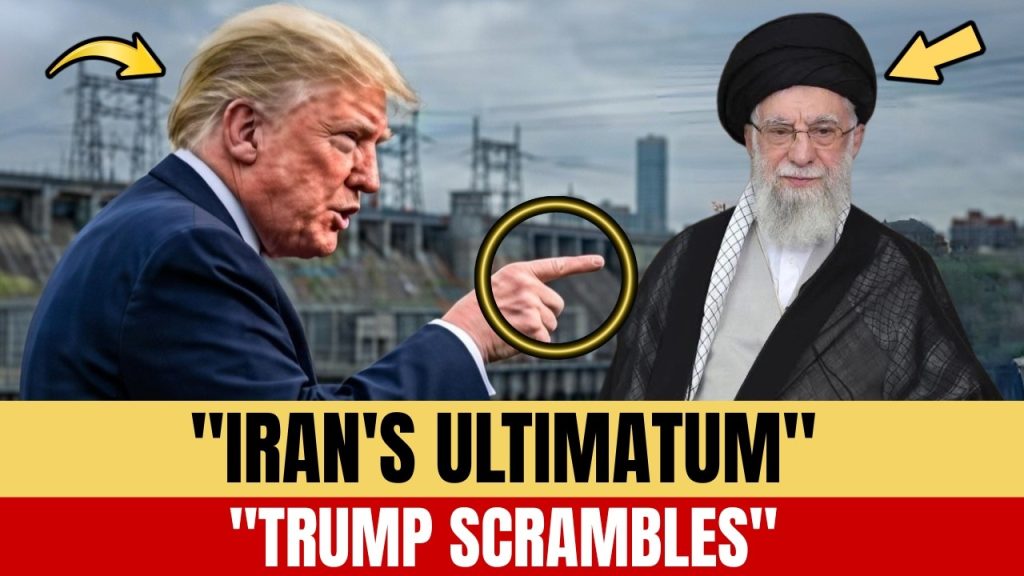
The remarks, delivered in measured but unmistakable terms, represent one of the most direct public challenges to American force posture in the Gulf in years. While Iranian officials have long criticized the U.S. naval presence as destabilizing, attaching a timetable and linking it to potential action elevated the rhetoric into what American officials are treating as a formal ultimatum. Within hours, senior members of the Trump administration convened emergency consultations, according to people familiar with the discussions.
The White House responded with a statement rejecting Iran’s demands as illegitimate and affirming that U.S. forces would remain in the region to protect American interests and ensure freedom of navigation. Shortly thereafter, the Pentagon announced that the aircraft carrier USS Gerald R. Ford would reposition toward the broader Gulf region, a move widely interpreted as a signal of resolve. Defense officials declined to describe the deployment as a direct response but acknowledged heightened monitoring of Iranian military activity.
At the center of the confrontation lies the Strait of Hormuz, the narrow waterway through which roughly a fifth of the world’s oil supply passes each day. Iranian military planners have long invested in asymmetric capabilities designed to complicate U.S. naval operations there, including anti-ship missiles, fast attack craft and sea mines. Western intelligence analysts say recent satellite imagery indicates an increase in exercises and repositioning of coastal defense systems, though they caution that such movements do not necessarily presage imminent action.
Iranian officials have framed the ultimatum as a matter of sovereignty, arguing that American naval forces operate in waters adjacent to Iranian territory without legal justification. In his address, Mr. Khamenei said Iran had shown restraint for years despite sanctions and what he described as encirclement. He insisted that Tehran was not seeking war but would not accept permanent foreign military pressure. The speech was followed by commentary on Iranian state media portraying the moment as a test of national resolve.
In Washington, the reaction has exposed divisions that reflect broader uncertainty about America’s global posture. Some lawmakers urged a firm response, warning that acquiescing to Iranian pressure would undermine deterrence. Others cautioned against military escalation, particularly at a time when relations with several traditional allies have been strained. “We must avoid sleepwalking into another prolonged conflict,” one senior senator said, calling for diplomatic engagement alongside visible deterrence.

Energy markets responded cautiously, with oil prices edging upward amid concerns about potential disruption. Analysts note that even limited harassment of commercial shipping could trigger insurance surcharges and supply shocks. A sustained closure of the strait, while considered unlikely given the global economic consequences for Iran itself, would have profound effects on inflation and growth worldwide. “The mere perception of instability in Hormuz carries economic weight,” said an energy strategist at a London-based firm.
The diplomatic dimension may prove as consequential as the military one. European governments have historically supported efforts to preserve maritime security in the Gulf but have also advocated de-escalation and preservation of nuclear diplomacy frameworks. If tensions intensify, Washington may find coalition-building more complex than in past crises. Russia and China, both of which maintain economic ties with Tehran, have criticized American force deployments in the region, though neither has indicated support for direct confrontation.
For President Donald Trump, the moment presents a strategic dilemma. A forceful military response could reaffirm deterrence but risks retaliation that would entangle global energy markets and potentially draw the United States into sustained operations. A negotiated adjustment to naval deployments, meanwhile, could be portrayed domestically and regionally as a concession. Administration officials have signaled that backchannel communications remain open, though no formal talks have been announced.
Whether this episode becomes a prelude to confrontation or an opening for recalibration will depend on decisions taken in the coming weeks. Military assets are repositioning, rhetoric is hardening and markets are attentive. Yet both Tehran and Washington are acutely aware of the costs of open conflict. The ultimatum has clarified stakes that were once implicit: control of strategic waterways, credibility of deterrence and the balance between projection of power and avoidance of overreach. How those tensions resolve will shape not only Gulf security but the broader architecture of American influence in an increasingly contested global order.