Unverified Claims of Judicial Action Against Trump Circulate Online
WASHINGTON — A viral social media post claiming that 29 federal judges have voted to convict President Trump, rendering his resignation “nearly unavoidable,” has spread rapidly across online platforms in recent days, amplifying partisan divisions and prompting swift denials from the White House.
The post, which features dramatic headlines and references to “legal and political pressure tightening,” alleges a coordinated judicial effort tied to ongoing controversies surrounding the Trump administration. It further suggests panic within the president’s inner circle, with purported emergency meetings at his Mar-a-Lago estate in Florida and resurfaced clips of former Representative Adam Kinzinger advocating for the 25th Amendment during the previous administration.
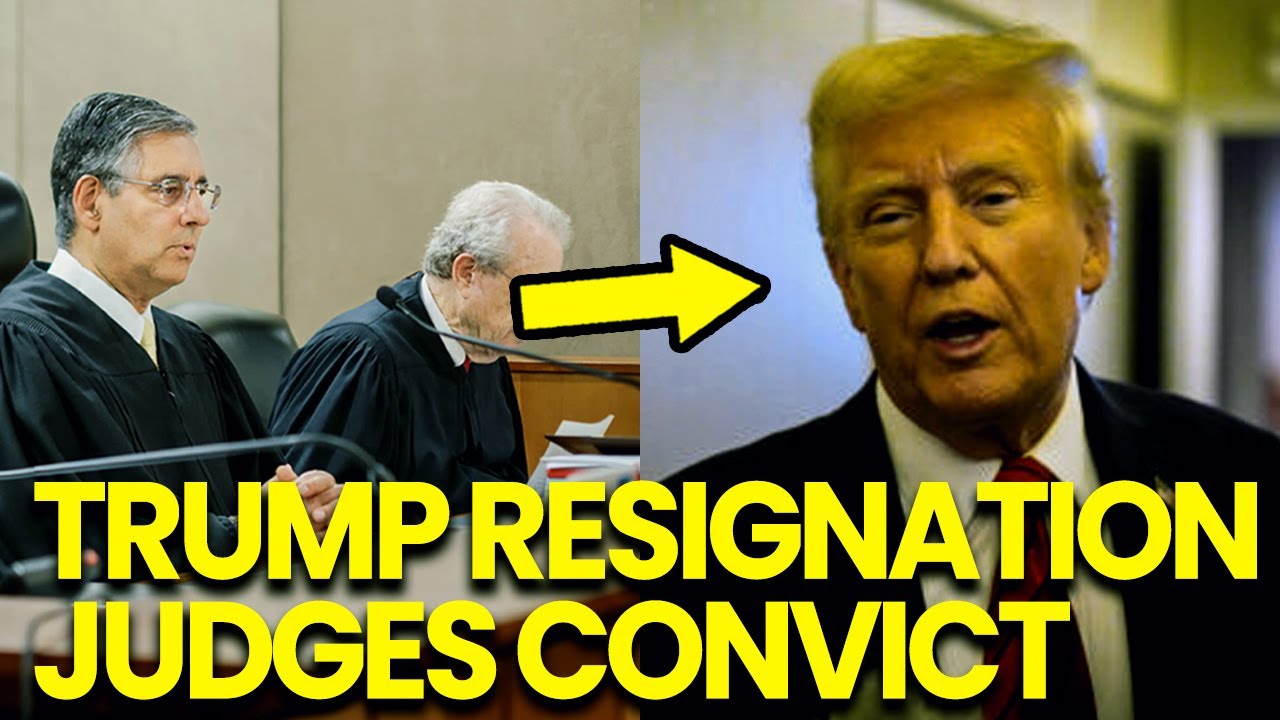
White House officials dismissed the claims as baseless on Friday, with a spokesperson describing them as “yet another example of disinformation designed to undermine the president.” Allies of Mr. Trump echoed this sentiment on social media, labeling the narrative “fake news” and pointing to the administration’s recent legal victories, including appeals in longstanding cases from his pre-presidential business dealings.
The assertion appears to stem from sensational YouTube videos and fringe online channels that have recycled similar themes in recent months, often blending unrelated court rulings with hyperbolic predictions of political downfall. No credible reporting from major news outlets or official court records supports the existence of any such vote by 29 judges to convict the sitting president. Federal judges do not collectively “vote” on convictions in criminal matters; those are determined by juries or, in rare cases, bench trials presided over by individual judges.
Legal experts consulted by The New York Times emphasized that the Constitution provides specific mechanisms for removing a president — impeachment by the House and conviction by the Senate — none of which involve direct judicial intervention in this manner. “This sounds like a misrepresentation of scattered rulings in immigration or administrative cases,” said one constitutional scholar, who spoke on condition of anonymity to discuss unsubstantiated claims freely. Recent Supreme Court decisions, for instance, have involved disputes over policies affecting immigration judges’ speech rights, but these bear no relation to criminal proceedings against Mr. Trump.

The post’s timing coincides with heightened scrutiny of the administration’s second term, now nearing its first year. Mr. Trump has faced a barrage of lawsuits challenging executive actions on immigration, regulatory rollbacks and agency appointments. In November, more than 200 federal judges — appointed by presidents of both parties — issued rulings critical of a mass detention policy for certain immigrants, according to analyses by legal tracking organizations. However, these were individual decisions in separate cases, not a unified “vote” on the president’s fate.
Adding to the intrigue, the viral message invokes Mr. Kinzinger, the former Illinois Republican who became a vocal critic of Mr. Trump after the January 2021 Capitol riot. Old footage of Mr. Kinzinger calling for invocation of the 25th Amendment — which allows the vice president and Cabinet to declare a president unable to discharge his duties — has been recirculated amid the latest frenzy. Mr. Kinzinger, who left Congress in 2023 and has since appeared as a commentator on cable news, did not immediately respond to requests for comment on the renewed attention.
At Mar-a-Lago, where Mr. Trump has spent considerable time this holiday season hosting allies and conducting informal meetings, sources close to the president described a routine schedule focused on policy planning rather than crisis management. The estate, a frequent backdrop for both leisure and political strategy sessions, has seen visits from Cabinet nominees and foreign leaders in recent weeks. Insiders portrayed the atmosphere as confident, with discussions centered on legislative priorities for the new year, including tax reforms and border security enhancements.
Supporters of Mr. Trump rallied online in defense, sharing memes and counter-narratives that portrayed the claims as part of a broader “deep state” effort to destabilize his presidency. Critics, meanwhile, seized on the moment to revive debates about accountability, though many Democratic leaders urged caution against amplifying unverified information.
In an era of fragmented media and algorithmic amplification, such posts highlight the persistent challenge of distinguishing fact from fiction in political discourse. Fact-checking organizations, including those affiliated with major tech platforms, have flagged variations of this narrative as false or misleading.

As the story continues to trend, it underscores the enduring polarization surrounding Mr. Trump’s tenure. With no evidence of an impending resignation or judicial coup, the episode serves as a reminder of how quickly misinformation can dominate public conversation, even as the administration presses forward with its agenda.