By XAMXAM
When President Donald T.r.u.m.p announced a tariff on Canadian energy, the move was framed as a show of strength. A modest 10 percent levy on oil and gas, aides suggested, would pressure Ottawa without rattling American consumers. The message was familiar: tariffs would make the United States stronger, more independent, less vulnerable to neighbors and rivals alike.

What followed revealed something far more uncomfortable. The policy did not squeeze Canada into submission. It illuminated how deeply the American energy system depends on Canadian oil—and how little room Washington actually has to maneuver.
For decades, energy has been treated as a background certainty in U.S.–Canada relations. Pipelines ran north to south, refineries operated without drama, gasoline prices reflected global markets more than bilateral politics. That stability made it easy to forget a basic fact: Canada is not just a supplier. It is the backbone of America’s imported crude.
In 2024, Canada accounted for well over half of U.S. crude oil imports. Every day, millions of barrels cross the border, feeding refineries in the Midwest and Great Lakes regions that were engineered specifically to process Canadian heavy crude. This is not a commodity that can be swapped out with a phone call to another producer. Different oil grades require different infrastructure, different blending, different logistics. Energy independence, in this context, is not a slogan. It is an engineering problem.
The tariff announcement forced that reality into view. Analysts quickly noted that even a limited disruption in Canadian supply could ripple through refinery operations, tighten fuel markets, and push prices higher. Midwest refiners, already operating on thin margins, would face increased costs. Those costs would not stay contained within corporate balance sheets. They would travel—through diesel prices, through jet fuel costs, through the everyday expenses that shape inflation.
Canada’s response was notable for what it lacked. There were no dramatic threats, no televised ultimatums, no nationalist chest-thumping. Instead, Canadian officials spoke calmly about “all options remaining on the table.” Ontario Premier Doug Ford, whose province sits at the heart of cross-border energy flows, made a point of emphasizing technical reality rather than political theater. U.S. refineries, he noted, are built for Canadian oil. That is not an opinion. It is a design choice made over decades.
That restraint mattered. Markets tend to react more sharply to quiet confidence than to loud posturing. Investors understand leverage when they see it. Canada did not need to shut off the taps to make its point. The mere acknowledgment of dependence was enough to trigger concern.
In Washington, the narrative of easy dominance began to fray. The administration’s assumption—that the United States could impose costs without absorbing them—proved flawed. Energy is not like consumer goods. It is not easily rerouted, quickly substituted, or painlessly absorbed. When oil prices rise, they touch nearly every corner of the economy.
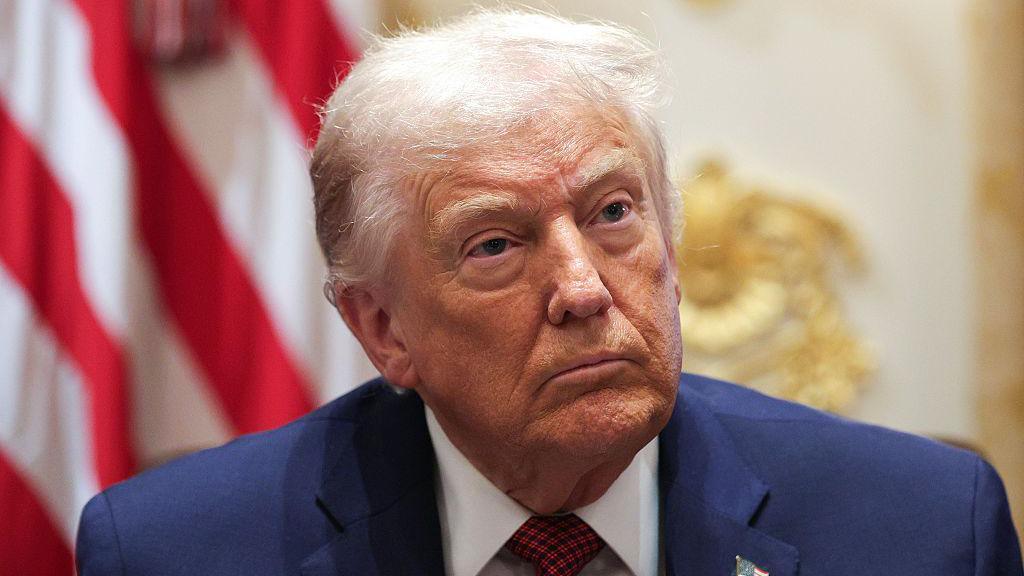
This is where the tariff strategy backfired most clearly. The stated goal was to protect American consumers and industry. The likely outcome was the opposite: higher fuel prices, increased inflationary pressure, and added stress on regions already sensitive to energy costs. The Midwest, often cited as a beneficiary of “America First” policies, stood to bear the brunt.
The episode also exposed a deeper misunderstanding about power in integrated economies. Leverage does not always belong to the larger market or the louder voice. It often belongs to the party that controls infrastructure, compatibility, and time. Canada’s oil flows are embedded in American systems in ways that cannot be undone quickly or cheaply. That embeddedness creates mutual dependence—but it also creates asymmetry when one side assumes it has more freedom than it does.
For American readers, the lesson is not that Canada “won” a confrontation. It is that the confrontation itself was built on a misreading of the relationship. Energy integration has long been a stabilizing force between the two countries. Turning it into a pressure point risks destabilizing both sides.
There is also a broader implication. As global energy markets grow more volatile and geopolitical risks multiply, reliability matters more than rhetoric. Policies that introduce uncertainty into foundational supply chains carry costs that slogans cannot offset. Allies notice. Markets notice. Voters eventually notice.
Canada’s decision to emphasize facts over fury underscored a quiet truth: influence does not always announce itself. Sometimes it is revealed when pressure is applied and the system strains in unexpected places. In this case, the strain appeared not in Alberta’s oil fields, but in America’s refineries and price forecasts.
T.r.u.m.p set out to demonstrate control. Instead, the tariff episode demonstrated constraint. It showed that even a superpower operates within the limits of infrastructure it did not build alone. Oil, not speeches or tariffs, defined the boundaries of the fight.
The danger now is not escalation, but repetition—doubling down on a strategy that mistakes interdependence for weakness. Energy policy, like trade policy, rewards precision and punishes blunt force. The United States can choose to treat Canada as a lever to pull or as a partner to manage a shared system. The tariff experiment suggests the latter approach is less likely to boomerang.

In the end, the most striking outcome was not Canada’s restraint, but America’s rediscovery of its own reliance. The oil never stopped flowing. It didn’t have to. The reminder alone was enough.