2026 Warning: Trump’s Fertilizer Tariffs Could Crush American Farmers — and Hand Canada a Global Advantage
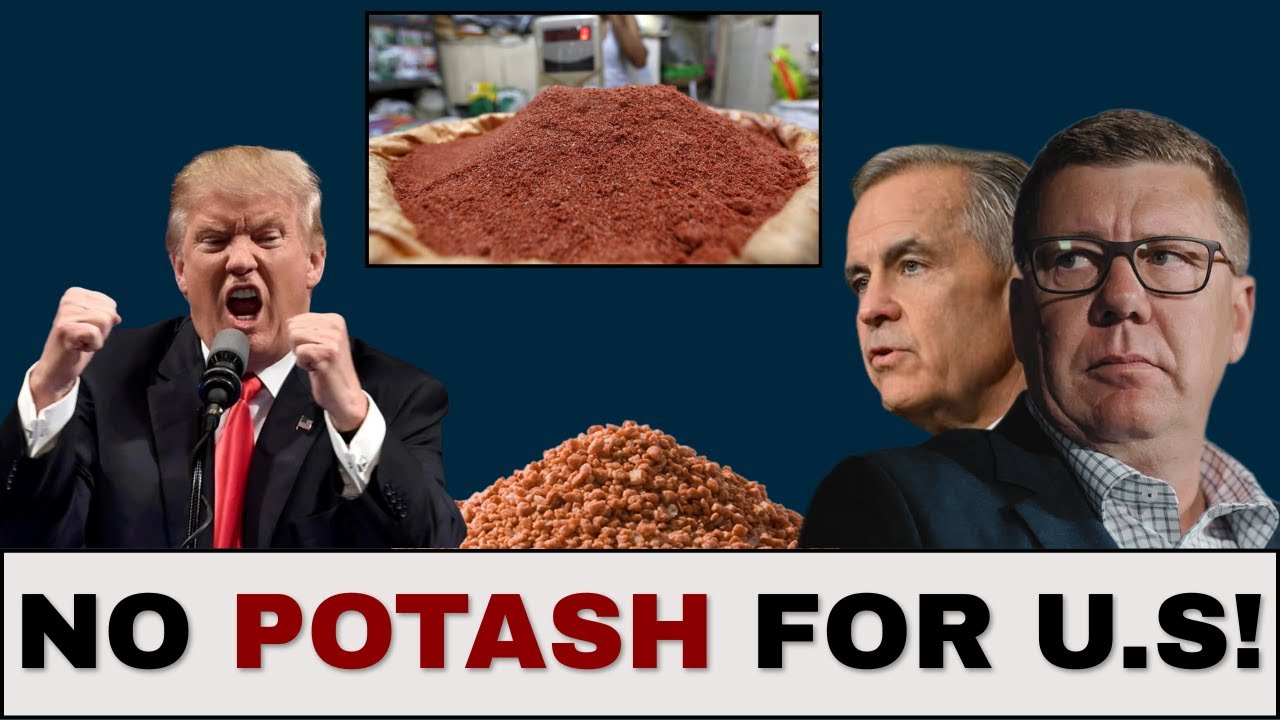
The United States may be walking straight into another self-inflicted economic crisis. Former President Donald Trump has signaled that he could impose “very severe” tariffs on fertilizer imports from Canada, reigniting fears across America’s agricultural heartland. While framed as a push to boost domestic production, the reality behind U.S. fertilizer supply tells a far more dangerous story—one where American farmers pay the price, food costs surge, and Canada quietly strengthens its global dominance.
Fertilizer is not a minor trade commodity. It is the backbone of North American farming, and potash is its most critical ingredient. For decades, U.S. agriculture has relied heavily on Canadian potash, much of it sourced from Saskatchewan, home to some of the richest reserves on Earth. Despite political rhetoric about reshoring production, the United States simply does not have the capacity to replace this supply—now, or anytime soon.

American farmers consume millions of tons of potash every year, yet domestic output covers only a fraction of that demand. Thin, scattered reserves across a few U.S. states cannot support the vast farms stretching from Iowa to Nebraska and across the Great Plains. Even industry leaders acknowledge that building new mines and infrastructure would take 10 to 15 years, assuming approvals, investment, and environmental hurdles are cleared without delay.
Still, Washington continues to present tariffs as a quick fix. Experts warn this approach is not economic strategy, but political theater. Fertilizer production cannot be switched on overnight, and disrupting supply chains would immediately drive up costs for farmers. Those higher costs would ripple outward—raising crop prices, squeezing food processors, and ultimately pushing grocery bills higher for American families already struggling with inflation.

Industry groups are urging caution, noting that farmers are already under immense pressure from rising diesel prices, expensive equipment, volatile weather, and shrinking margins. Adding fertilizer tariffs would be yet another blow, particularly to rural states that have historically supported Trump. Many farmers are now calling the policy a self-inflicted wound that harms U.S. agriculture far more than it hurts Canada.
There is also a geopolitical irony at play. If the U.S. cuts itself off from Canadian potash, it may be forced to seek supplies from countries Washington has long labeled as national security risks—including Russia. Punish an ally, depend on rivals, then deny responsibility when prices explode. Critics say this contradiction exposes the deeper flaws in America’s current trade posture.

Meanwhile, Canada is far from panicking. Canadian potash producers know global demand is rising fast, from Asia to South America, and alternative buyers are ready to step in. With established logistics, strong reputation, and massive reserves, Canada can redirect exports quickly—while the U.S. struggles to fill a gap it helped create.
The fertilizer dispute highlights a broader truth: North American agriculture works because the U.S. and Canada are deeply integrated and mutually dependent. Canada relies on U.S. phosphate just as America relies on Canadian potash. Breaking that system for political messaging is not strength—it is recklessness. If tariffs move forward, the imbalance will grow, and once again, it will be ordinary farmers and consumers who absorb the shock, while markets move on without the United States.