When a Press Conference Ends in Silence, the Questions Get Louder
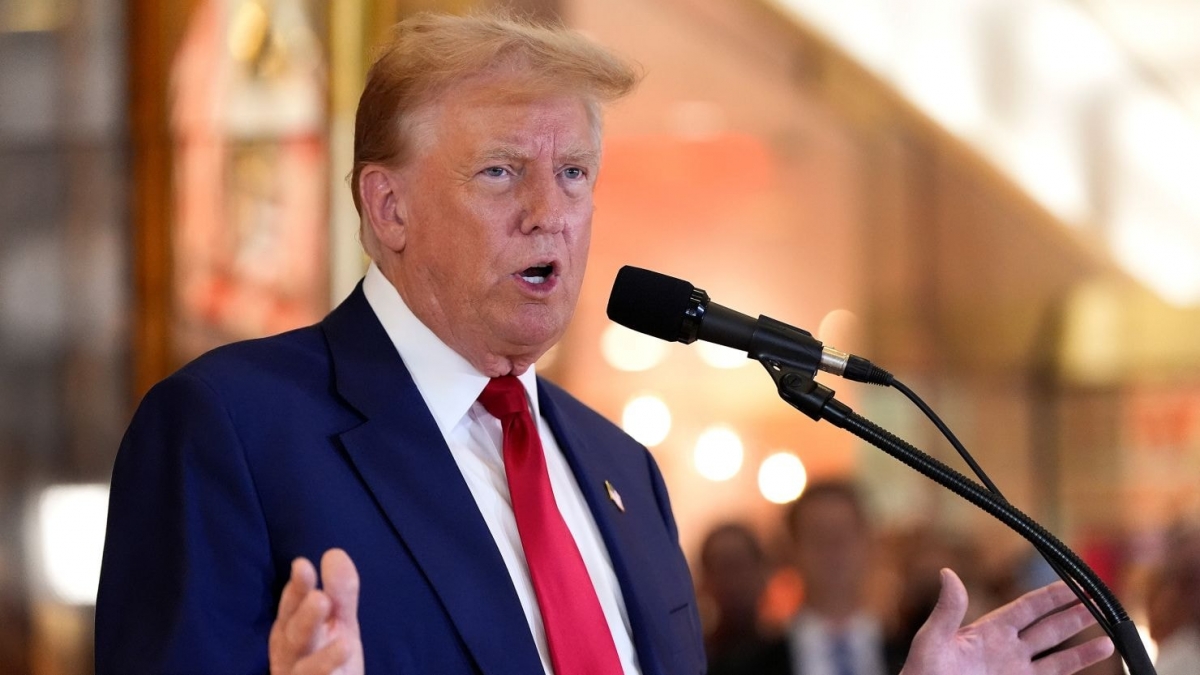
WASHINGTON — The moment did not unfold with a bang, but with an absence. After arriving nearly half an hour late to a White House press conference, President Donald Trump stood at the podium just long enough to make his announcement, praise himself, and usher a line of corporate executives through ritual expressions of gratitude. Then, abruptly, he ended the event. No questions. No follow-ups. No clarifications. He turned and walked out.

For a president known for his appetite for confrontation with the press — for sparring, lecturing, improvising, and often lingering — the decision to refuse questions was striking. It was, in the choreography of Trump-era politics, a conspicuous deviation. And as is often the case with deviations in Washington, it was the silence that became the story.
Officially, the event was about “Trump RX,” a new administration-backed website designed to offer discounted prescription drugs and allow consumers to bypass insurance companies. Pharmaceutical executives stood behind the president, nodding as he described price reductions of historic proportions and boasted of stock market returns that strained credulity. The tone oscillated between populist bravado and promotional spectacle, with Trump repeatedly invoking his own name as both brand and policy.
But hovering over the room — and over Trump’s swift exit — was an entirely different matter. That day, the administration was expected to release long-promised files related to Jeffrey Epstein, the disgraced financier whose associations with powerful figures have fueled years of public speculation. The documents were not released. Reporters came prepared to ask why.
Trump did not give them the chance.
“I won’t even take questions today,” he said near the end of the event, asserting that no inquiry could possibly compare to the magnitude of what had just been announced. The line drew muted reactions in the room. Within minutes, clips of the walk-off were circulating online, dissected frame by frame, trending across platforms, and interpreted less as confidence than as avoidance.
The episode was emblematic of a broader pattern in Trump’s second term: an administration eager to wield power theatrically while sidestepping accountability when the spotlight shifts from performance to scrutiny. The president has framed rising unemployment numbers — now higher than they were a year ago — as a necessary consequence of cutting the federal workforce, even as government data show job losses extending well beyond public-sector roles. Manufacturing, among other sectors, continues to shed positions.
Trump, for his part, presented the increase as a virtue. He suggested that he could lower unemployment instantly by hiring unnecessary federal workers, but implied he would only do so if the media gave him sufficient credit. The remark, delivered without irony, reflected a transactional worldview that critics say reduces governance to a reward-and-punishment exercise based on praise.
What made the press conference especially surreal was the presence of pharmaceutical executives, who appeared to be navigating an uneasy balance between deference and self-preservation. One by one, they thanked the president, pledged cooperation, and promised affordability — all under his watchful eye. When Trump later floated the idea that drug prices could be cut by 50, 60, even 70 percent, the cameras caught fleeting expressions of discomfort. The flattery, it seemed, had limits.
Behind the scenes, according to people familiar with the event’s planning, there was concern about how long the president would remain at the podium. Staffers anticipated aggressive questioning and debated how to control the optics. Ending the press conference early, one aide reportedly said, was preferable to allowing it to veer off message.
The strategy may have backfired. By refusing questions, Trump invited the very speculation he appeared to be trying to avoid. Commentators quickly linked the exit to the missing Epstein files, framing the walk-off as an admission of vulnerability rather than strength. Supporters dismissed the criticism as media obsession. Detractors called it a tell.
The spectacle also underscored a deeper irony of the Trump presidency. For years, Republicans have warned of “socialism” and government overreach, yet Trump has repeatedly used federal power to pressure corporations, law firms, and industries into public submission. His willingness to strong-arm private actors — particularly when cameras are rolling — has drawn comparisons not to free-market conservatism but to a more coercive model of executive authority.
Whether that authority produces tangible results remains an open question. If drug prices fall dramatically, the administration will claim a victory. If they do not, the press conference will be remembered less for policy than for performance — and for the questions that were never asked.
In Washington, answers have a way of surfacing eventually. For now, the image that lingers is simple: a president stepping away from the microphone, leaving a room full of reporters behind, and allowing the unanswered to speak for itself.