Canada is weighing a consequential decision about the future of its air force, one that could reshape not only its military posture in the Arctic but also its long-standing defense industrial ties with the United States. After years of signaling its intent to acquire the American-built F-35 fighter jet, officials in Ottawa are now giving serious consideration to Sweden’s Saab Gripen E, according to people familiar with the deliberations. The prospect of such a shift has stirred quiet concern in Washington and prompted debate within NATO about interoperability and alliance cohesion.
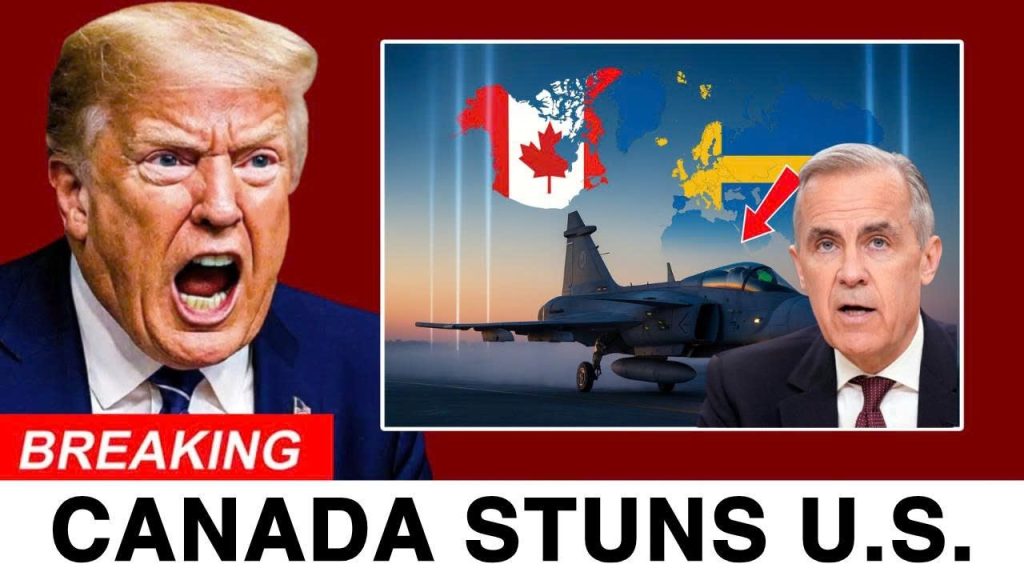
The Royal Canadian Air Force has been seeking to replace its aging fleet of CF-18 Hornets, many of which have been in service since the 1980s. The competition, launched formally several years ago, narrowed to two finalists: the F-35, manufactured by Lockheed Martin, and the Gripen E, produced by Saab. While the F-35 is widely regarded as the most advanced multirole fighter in production, it is also embedded in a tightly integrated American-led logistics and software ecosystem. The Gripen, by contrast, has been marketed as a platform offering greater operational autonomy and industrial participation for partner nations.
Canadian officials have declined to comment publicly on the status of the evaluation, describing it as an ongoing procurement process. But defense analysts say the contours of the debate have sharpened in recent months as Ottawa reassesses the balance between interoperability and sovereignty. “This is not just about performance metrics,” said one former senior defense official. “It’s about how much control Canada wants over its own sustainment, software updates and industrial base.”
The F-35 program operates through a centralized global support network, including maintenance systems and mission software updates managed largely through U.S.-based infrastructure. Advocates argue that this architecture ensures standardization across allied air forces, strengthening joint operations. Critics counter that it can limit a country’s ability to independently modify or maintain its fleet. Saab has emphasized that the Gripen E is designed with distributed operations in mind, allowing smaller crews to service aircraft in austere conditions and offering broader technology transfer agreements.
Arctic security looms large in the discussion. As climate change opens new shipping routes and resource prospects in the High North, Canada faces mounting pressure to monitor and defend its vast northern territory. Russian military activity across the Arctic has increased in recent years, and NORAD modernization remains a priority for both Ottawa and Washington. Some analysts contend that an aircraft optimized for shorter runways and dispersed basing could offer advantages in remote regions where infrastructure is limited.
At the same time, interoperability with the United States — Canada’s closest military partner — remains a central consideration. The two countries share responsibility for continental air defense under NORAD, and their forces operate closely within NATO. Pentagon officials have not publicly weighed in on the potential Canadian pivot, but defense experts in Washington caution that diverging from the F-35 program could complicate logistics and joint training, even if communications systems and weapons remain compatible.

Economic factors are also at play. Saab has proposed extensive industrial offsets, including final assembly and component manufacturing in Canada, along with commitments to technology transfer and workforce development. Supporters argue that such arrangements could revitalize segments of Canada’s aerospace sector and anchor high-skilled jobs domestically. The F-35 program offers industrial participation as well, but through a multinational supply chain in which work is allocated competitively rather than guaranteed to a single country.
Cost over the life cycle of the aircraft is another variable. Publicly available estimates suggest that the F-35’s per-hour operating expenses exceed those of the Gripen, though comparisons depend heavily on configuration and mission profile. “Acquisition cost is only part of the equation,” said a defense economist. “Sustainment, upgrades and infrastructure over 30 or 40 years can dwarf the initial purchase price.”
Politically, the decision carries symbolic weight. Canada’s cancellation of the Avro Arrow fighter project in the late 1950s, amid shifting strategic priorities and pressure to integrate more closely with U.S. systems, remains a touchstone in national debates about defense sovereignty. While today’s circumstances differ markedly, the historical memory underscores how procurement choices can resonate beyond the military sphere.
For NATO, the implications are nuanced. Several European allies already operate the Gripen, while others have opted for the F-35. Alliance officials generally stress that capability and readiness matter more than platform uniformity, provided systems can communicate effectively. Yet the F-35 has increasingly become a backbone of allied airpower planning, and any deviation by a major member like Canada would be closely scrutinized.
No final announcement has been made, and officials caution that negotiations and evaluations are ongoing. But the mere possibility of a shift has highlighted broader questions about how middle powers navigate defense integration in a multipolar world. As security and technology grow ever more intertwined, the choice between deep integration and greater autonomy is becoming a defining strategic dilemma.
Whether Canada ultimately proceeds with the Gripen or reaffirms its commitment to the F-35, the debate reflects a maturing defense conversation — one that weighs not only performance and price, but also sovereignty, industrial policy and alliance dynamics. The outcome will shape Canada’s airpower for decades, and signal how it balances partnership with independence in an era of shifting geopolitical currents.