WHITE HOUSE IN CRISIS: PANIC AND CONTROVERSY OVER VENEZUELA STRIKES AND CAROLINE LEAVITT’S ON-AIR REMARKS
On Tuesday, the White House held a press briefing that quickly turned into a focal point of controversy, as spokesperson Caroline Leavitt made remarks regarding the administration’s military operations that drew widespread attention and scrutiny. The briefing, initially intended to clarify the circumstances surrounding a series of U.S. naval strikes off the coast of Venezuela, instead raised urgent questions about accountability, legality, and the chain of command within the West Wing. Video clips from the briefing circulated online within minutes, sparking debate among lawmakers, international observers, and human rights advocates.

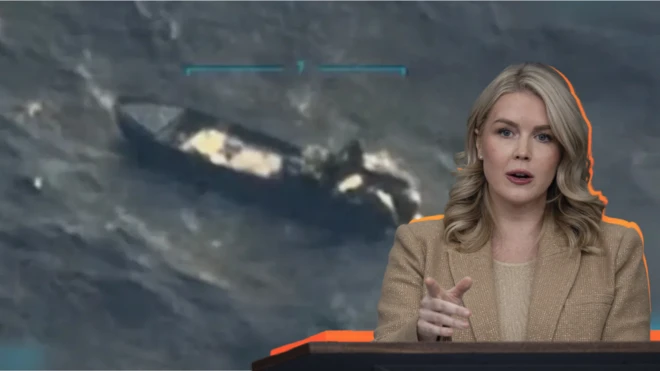
The dispute centers on strikes conducted on September 2nd against vessels described by the administration as narco-terrorist threats. According to Leavitt, Admiral Bradley and operational commanders executed the follow-up strike after survivors remained from the initial attack. She asserted that all actions were conducted “well within authority and the law,” framing the strikes as necessary to eliminate threats to U.S. citizens and national interests. Yet her comments, in which she emphasized the operational responsibility of the Admiral and SEAL Team Six, prompted criticism that the administration was deflecting accountability for decisions that resulted in civilian deaths, potentially crossing into violations of international law.
Legal experts note that targeting individuals who survive an initial strike is explicitly prohibited under both the U.S. Manual of Law of Armed Conflict and the Geneva Conventions. While the administration maintains that the actions were justified under the principles of self-defense and the law of armed conflict, human rights organizations have expressed concern that the public statements, coupled with a lack of released operational footage, undermine transparency and may constitute a violation of international humanitarian law.
Inside the West Wing, sources report that the briefing sparked urgent discussions among senior staffers and advisers. Leavitt’s remarks were described as “off-script,” highlighting the tension between the need for controlled messaging and the real-time pressure of responding to probing questions from the press. According to one source familiar with the White House communications team, there was immediate concern that her statements could be interpreted as a partial acknowledgment of unlawful conduct, prompting rapid attempts to clarify and redirect the narrative.
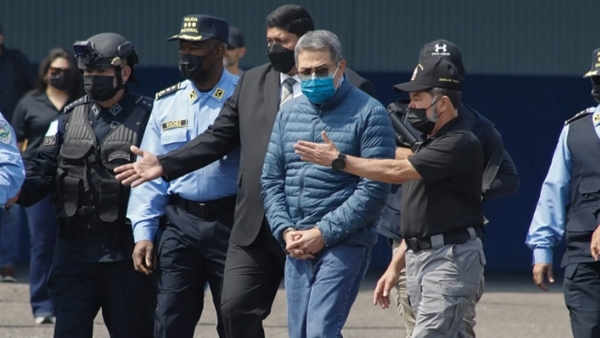
The controversy is compounded by broader questions regarding the administration’s approach to drug enforcement and foreign policy. Days before the briefing, President Trump had commuted the sentence of former Honduran President Juan Orlando Hernandez, a convicted drug trafficker. Critics note a stark contrast between the administration’s defense of lethal action abroad and its domestic clemency decisions, suggesting inconsistencies in policy that raise ethical and political concerns. Leavitt defended the commutation, arguing that Hernandez’s prosecution was politically motivated and overreached by the prior administration, but the decision nonetheless drew scrutiny from members of Congress and the public alike.
Beyond military operations, the briefing also touched on questions about President Trump’s health, including discussion of MRI results and preventive imaging. Leavitt presented summaries from physicians rather than direct medical reports, citing cardiovascular and abdominal evaluations as normal. Health experts and journalists noted that the information provided was limited and lacked the transparency typically expected of executive medical disclosures, further contributing to perceptions of confusion and incomplete reporting.
The press briefing underscored the ongoing challenge faced by the administration in balancing operational secrecy, public accountability, and media scrutiny. Lawmakers from both parties have called for further briefings and documentation regarding the strikes, emphasizing the need for clarity on rules of engagement, oversight of military operations, and adherence to both domestic and international legal standards.
Public and media reaction was immediate. Clips of Leavitt’s statements circulated widely, prompting questions about the administration’s chain of command, the legality of the strikes, and the president’s role in authorizing or reviewing lethal actions. Analysts emphasize that this episode could have lasting implications for U.S. credibility in international law, congressional oversight, and public trust in military and executive decision-making.
The September 2nd Venezuela strikes and the subsequent press briefing reveal the intricate and often precarious relationship between executive power, military authority, and public accountability. As debates continue over legality, policy consistency, and transparency, the administration faces a critical test in demonstrating both adherence to the law and effective communication. For observers and policymakers, the episode serves as a reminder of the high stakes involved when national security decisions intersect with legal obligations, political pressures, and the scrutiny of an engaged public.