Keanu Reeves Refused to Present an Award to Whoopi Goldberg and Revealed a “Dark Side” That No One Dared to Talk About for Years…
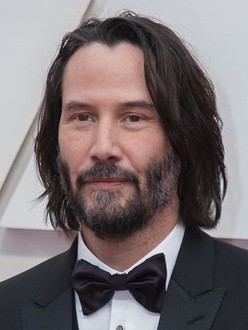
In the glitzy world of Hollywood, where reputations are carefully curated and controversies can erupt overnight, a viral story in 2025 set social media ablaze with claims that Keanu Reeves refused to present a Lifetime Achievement Award to Whoopi Goldberg, citing her “dark side.” The story, which originated from a satirical article but gained traction through posts on X, alleged that Reeves called Goldberg “not a good person” during a live TV event, shocking audiences and exposing long-buried secrets about the beloved The View host. However, fact-checking reveals a different truth, one that underscores the dangers of misinformation in an era of instant outrage and polarized media.
The controversy began in January 2024, when The Dunning-Kruger Times, a self-described satirical website part of the America’s Last Line of Defense (ALLOD) network, published an article claiming Reeves declined to present Goldberg with an award from the “TV Production Committee.” The piece quoted Reeves as saying, “She’s not a nice person. I don’t want to be remembered as the guy who made that mistake.” The story quickly spread across platforms like X, Facebook, and TikTok, with posts amassing millions of views. By July 2025, a post by @ElonMuskNews47 reignited the furor, garnering 3.3 million views with the caption, “BREAKING: Keanu Reeves Refuses to Present Whoopi Goldberg’s Lifetime Achievement Award: ‘She’s Not a Good Person’ Do you support this? YES OR NO.”
The viral claim tapped into existing tensions. Goldberg, a 69-year-old EGOT winner and The View co-host, has been a polarizing figure due to her outspoken criticism of President Donald Trump, particularly after his 2024 reelection. Her November 2024 comment on The View, suggesting Elon Musk was Trump’s “true vice president” over JD Vance, drew ire from conservative circles, fueling narratives of her as divisive. Reeves, meanwhile, is Hollywood’s “nice guy,” known for his humility and kindness, making the alleged snub seem plausible to those eager to believe in Goldberg’s “dark side.” Posts on X, like one from @TinaG_tlp claiming Reeves said, “She’s not worthy of this,” amplified the story, painting Goldberg as a villain hiding behind her public persona.
But the story is unequivocally false. Multiple fact-checking outlets, including Reuters, Snopes, and Lead Stories, debunked the claim, tracing it to The Dunning-Kruger Times, which explicitly states, “Everything on this website is fiction.” A representative for Reeves confirmed to Lead Stories that the story was “absolutely false,” and no evidence suggests Reeves and Goldberg, who appeared together on The Graham Norton Show in 2017, have any personal animosity. The “Lifetime Achievement Award” and “TV Production Committee” were fabrications, with no record of such an event or organization. Christopher Blair, the creator of ALLOD, admitted the story was satire, designed to exploit confirmation bias for clicks.
So, what fueled this firestorm? The “dark side” narrative aligns with a broader campaign against Goldberg, who has faced social media hate for her political views. Conservative X users, like @RANCDT1957, celebrated the fake story, with comments like, “Good for Keanu! She’s a disgrace.” This reflects a polarized media landscape where satire is weaponized to smear public figures. The story’s virality, despite being debunked by X’s Community Notes, highlights how misinformation thrives on emotional resonance rather than facts. Goldberg’s critics seized on her Trump critiques, including her Musk comment, to paint her as untrustworthy, while Reeves’ saintly image made him a perfect foil to amplify the narrative.
The incident also underscores the fragility of truth in 2025’s media ecosystem. The View’s cancellation, announced days after a separate controversy involving Joy Behar and Sara Haines, added fuel to speculation about network pressures. Posts on X suggested ABC’s decision was tied to Goldberg’s polarizing presence, though the network cited financial restructuring. The Reeves-Goldberg story, though fictional, fed into a broader narrative of media suppression, with some users claiming it was “too real” to be fake. Yet, the lack of any credible source—no video, no event, no statement from Reeves or Goldberg—exposes the story as a fabrication designed to exploit division.
For Goldberg, the episode is a reminder of the challenges of being a vocal woman in media. Her decades-long career, from Oscar-winning roles to moderating The View, has been marked by resilience, yet she remains a lightning rod for criticism. The “dark side” alluded to in the viral posts lacks specifics, relying on vague innuendo to vilify her. Reeves, meanwhile, has stayed silent, consistent with his low-key approach to controversy. His support for causes like Ukraine and his reputation for kindness make the alleged outburst implausible, yet the story’s traction shows how even the most beloved figures can be weaponized in online wars.

The fallout has sparked calls for better media literacy. Fact-checking outlets urge consumers to verify sources before sharing, noting that sites like The Dunning-Kruger Times thrive on outrage clicks. The episode also parallels other debunked stories, like a false claim that Reeves replaced Goldberg as an Oscars host. As America grapples with a polarized media landscape, where Trump’s FCC looms over mergers like Disney’s, the Reeves-Goldberg saga is a cautionary tale. A single fake post can ignite a firestorm, but the truth—buried under millions of views—reveals no “dark side,” only the power of fiction to shape perceptions in a divided nation.