By XAMXAM
The remark was striking not for its volume, but for its candor. “We do not need Canada,” the U.S. ambassador to Ottawa said on radio, without qualification or diplomatic cushioning. In another era, such a sentence would have been unthinkable—precisely because it would not have been necessary. Powerful relationships, after all, rarely require reassurance through denial.
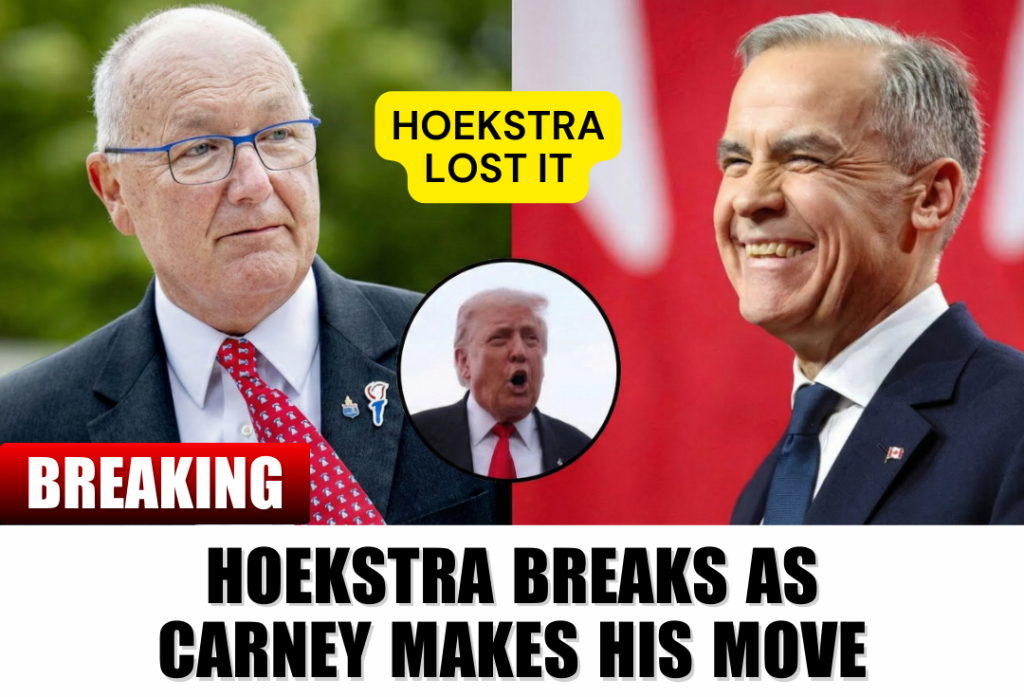
What made the comment resonate was timing. It came just days after Canada finalized a sweeping reset with China, and on the very day Prime Minister Mark Carney arrived in Doha for high-level meetings with Qatari leadership. One statement sounded defensive. One trip looked deliberate. Together, they revealed a shift that Washington is only beginning to confront.
Diplomacy is usually an exercise in restraint. Ambassadors exist to cool tensions, not inflame them. When one publicly asserts that his country does not “need” a close ally, it is rarely a declaration of strength. More often, it is a response to the perception that leverage is slipping.
That perception has been building for months.
Canada’s recent agreements with China—lowered agricultural tariffs, preferential electric vehicle access, visa-free travel—demonstrated something Washington long assumed would not happen quickly: Canada has viable alternatives. Not symbolic alternatives, but signed, operational ones. Access reopened. Markets diversified. Pressure absorbed.
Instead of pausing to smooth relations, Carney accelerated. He did not linger in Beijing or issue statements designed to reassure Washington. He boarded a plane to the Gulf.
Qatar is not simply another trade partner. It is one of the world’s most influential capital hubs, anchored by sovereign wealth with horizons measured in decades. Its investments shape infrastructure, energy systems, transportation networks, and strategic assets across continents. When leaders engage Doha, they are not negotiating short-term trade flows. They are competing for long-term confidence.
That distinction matters. Trade relationships can be reversed. Tariffs can rise again. Governments change. Capital behaves differently. Once large-scale investment settles, it is slow to move and resistant to political pressure. Infrastructure funded by sovereign wealth does not pivot with election cycles.
Carney’s pitch was understated and familiar: rule of law, institutional stability, predictable courts, a country where contracts endure. It is a message global investors understand immediately. It is also one that contrasts sharply with the volatility that has increasingly characterized U.S. trade policy under Donald Trump.
This is where Washington’s discomfort becomes clearer. For decades, American influence over Canada rested on an assumption so embedded it was rarely articulated—that integration was automatic. Supply chains were fixed. Energy flowed south. Alignment was presumed, not negotiated. Pressure worked because alternatives felt distant or impractical.
That assumption is now broken.

China demonstrated that access could be restored elsewhere. Qatar signals that long-term capital may follow. Together, they point toward a Canada less vulnerable to coercion and less responsive to threats. When options multiply, leverage weakens.
The ambassador’s comment, stripped of context, sounded dismissive. In context, it read differently. If the United States truly did not need Canada, there would be little reason to say so publicly. Power, when secure, does not explain itself. It assumes.
What has changed is not ideology but risk perception. Tariffs, public threats, and unpredictable rhetoric altered how Canada assessed its exposure. No government can anchor its economic future to a partner that signals conditionality. Diversification, under those circumstances, becomes policy rather than posture.
Carney’s role in this matters. His credibility with global finance predates his political office. Investors remember his stewardship during past crises and his emphasis on institutional resilience. Capital responds to track records, not slogans. When he enters a room, explanations are rarely required.
This is why the shift unfolding now appears quiet rather than dramatic. There is no rupture, no declaration of separation. Canada is not turning away from the United States; it is reducing dependence. The difference is subtle, but decisive.
As capital begins to view Canada as a destination rather than an extension of another economy, influence recalibrates. Pressure loses effectiveness. Decisions move from reaction to choice. By the time that change becomes obvious, it is usually entrenched.
The most revealing aspect of the moment may not be where Carney landed, but what Washington felt compelled to say as he did. When denial replaces assumption, it often signals that a relationship is entering a new phase—one where control is no longer implicit.
Canada did not set out to force that realization. It responded to uncertainty by building options. The consequences of that choice are now becoming visible, not through confrontation, but through capital quietly deciding where it feels safest.