JUST IN: Supreme Court Limits Trump’s Tariff Authority — Why Mark Carney’s Strategy Now Looks Strategic
A Major Legal Blow to Presidential Tariff Power?
A reported decision by the Supreme Court of the United States has ignited intense debate across global trade circles. According to commentary circulating online, the Court ruled that the president does not have unilateral constitutional authority to impose sweeping tariffs under emergency powers.
At the center of the controversy is the use of the International Emergency Economic Powers Act (IEEPA), a statute frequently invoked by former President Donald Trump to justify broad tariff measures.
The constitutional principle at stake is straightforward:
Article I of the U.S. Constitution grants Congress — not the president — the power to “lay and collect taxes and duties.”
If tariffs are considered a form of taxation, the legal argument suggests executive authority may be limited without congressional approval.
While the full scope and final impact of the Court’s ruling remain subject to further legal clarification, the political and economic implications are already being debated.
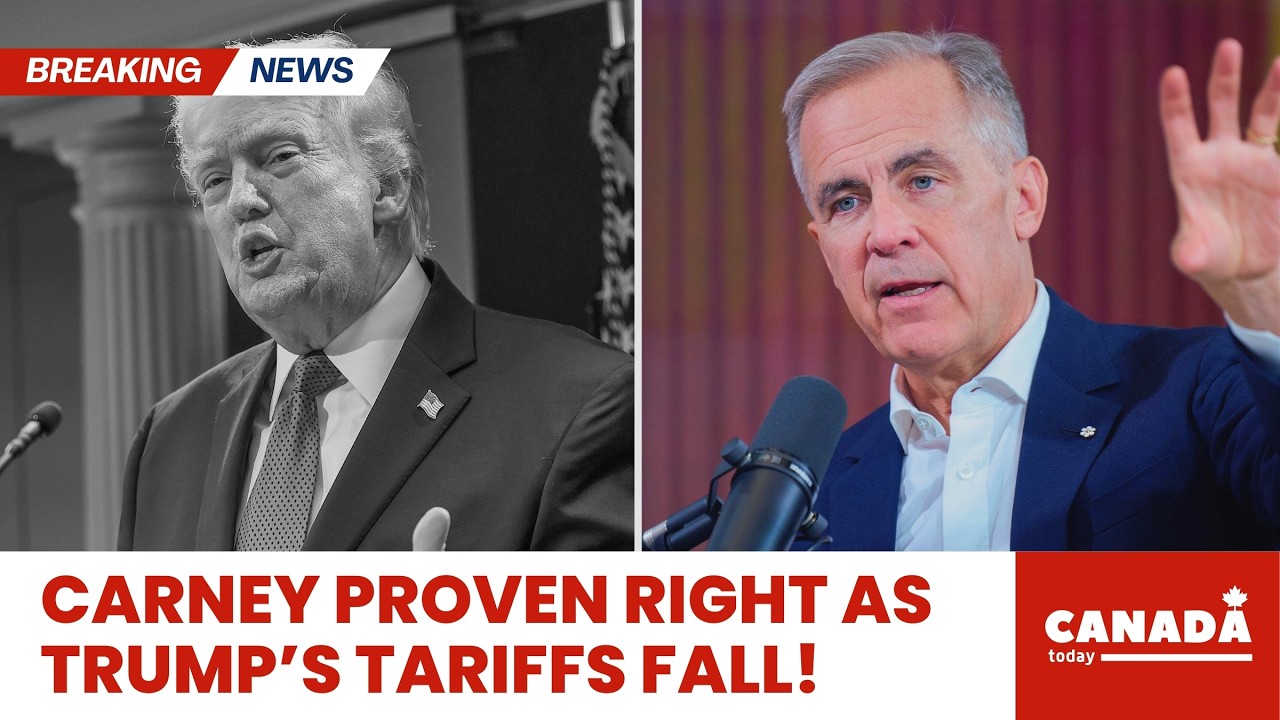
Trump’s Tariff Doctrine: Emergency as Leverage
During his presidency, Trump positioned tariffs as a central economic tool. Steel, aluminum, autos, and a wide array of goods faced elevated duties. Tariffs were framed as:
-
Negotiating leverage
-
A revenue source
-
A mechanism for industrial protection
-
A response to trade deficits
To bypass congressional gridlock, the administration relied heavily on emergency justifications under IEEPA and other statutory authorities.
Critics argued that trade deficits do not constitute national emergencies in the traditional legal sense. Supporters countered that economic vulnerability can be a security threat.
If the Supreme Court has now narrowed the emergency pathway, it significantly alters the legal terrain.
Section 122 and the 150-Day Window
Even if emergency authority under IEEPA is constrained, presidents retain alternative trade mechanisms.
One such tool is Section 122 of the Trade Act of 1974, which allows temporary tariffs for up to 150 days without full congressional authorization.
Reports suggest that a 10% global tariff has been imposed under this authority, but with strict time limitations.
The difference is critical:
-
Emergency authority: potentially broad and open-ended
-
Section 122 authority: temporary and subject to congressional oversight
That shift introduces uncertainty into ongoing trade negotiations.
Why This Matters Globally
If tariff legality is in flux, trade partners face new risks:
-
Previously negotiated tariff ceilings may no longer align with new limits
-
Revenue collected under challenged authorities may face refund litigation
-
Businesses must price goods amid regulatory uncertainty
-
Mid-shipment changes could disrupt global supply chains
Estimates circulating in policy discussions suggest between $140–$175 billion in tariff revenue could be legally questioned depending on final judicial interpretation.
That number alone underscores the magnitude of the issue.
Enter Mark Carney: Strategic Patience Over Panic
Amid earlier waves of tariff pressure, Canadian Prime Minister Mark Carney faced intense calls to secure quick concessions.
Tariffs on steel and aluminum hit Canadian producers.
Automotive threats loomed.
Public rhetoric escalated.
Many governments rushed to negotiate under pressure.
Carney chose restraint.
He declined to restructure Canada’s trade position around short-term tariff relief. Instead, he maintained alignment with the existing U.S.-Mexico-Canada Agreement (USMCA), known in Canada as CUSMA.
That compliance framework preserved 0% tariff treatment for qualifying goods.
CUSMA Compliance: The Quiet Shield
The North American trade agreement remains intact.
For compliant goods moving between Canada and the United States, tariffs remain at zero under treaty terms.
That insulation matters now more than ever.
If sweeping emergency tariffs are curtailed and temporary tariffs face expiration limits, Canada’s strategy of staying within the existing legal framework appears less risky in hindsight.
Other nations that renegotiated under pressure may now face unstable tariff ceilings.
Canada’s structural position remains comparatively steady.
The Core Lesson: Leverage vs. Volatility
Trade negotiations are ultimately about leverage.
Trump’s approach relied on unpredictability and pressure.
Carney’s approach emphasized stability and diversification.
If courts narrow executive tariff authority, unpredictability becomes less potent as a negotiating weapon.
Countries that avoided panic concessions may now hold stronger structural positions.
That does not mean Canada “won” and the United States “lost.”
It means the rules of engagement may be changing.
What Happens Next?
Several outcomes are possible:
-
Congress could formalize broader tariff authority through legislation.
-
The executive branch could rely more heavily on sector-specific investigations.
-
Legal challenges could delay tariff enforcement.
-
Trade partners could revisit prior agreements.
Businesses now face a complex environment:
-
Legal uncertainty
-
Time-limited tariff authority
-
Potential congressional intervention
-
Ongoing geopolitical tension
Markets dislike unpredictability. Investors price in stability.
If judicial scrutiny reduces executive flexibility, the administration’s trade strategy must adapt.
Is This the End of Tariffs?
No.
The Supreme Court, even if limiting emergency powers, does not eliminate all presidential trade tools.
Steel and aluminum tariffs imposed under Section 232 (national security grounds) remain separate from IEEPA authority.
Section 301 investigations also remain available.
The ruling, if confirmed as described, narrows one path — it does not close the entire road.
Why Carney’s Approach Now Looks Calculated
Carney’s decision not to rush into high-profile concessions now appears strategic.
By preserving Canada’s structural trade alignment under CUSMA:
-
Canada avoided emergency-driven renegotiation
-
Canada minimized exposure to short-term tariff swings
-
Canada maintained legal certainty
Strategic patience can look risky in the moment.
It can look prudent when volatility increases.
The Bigger Picture: Constitutional Boundaries and Trade Policy
At its core, this debate is not just about tariffs.
It is about constitutional separation of powers.
The U.S. system assigns taxation authority to Congress. Presidents historically receive delegated authority through legislation.
If courts signal that delegation has limits, the balance between executive flexibility and legislative oversight shifts.
Trade policy becomes more procedural.
Negotiations become slower.
Tariff threats become less immediate.
For allies and rivals alike, that recalibration changes expectations.
Final Takeaway
If the Supreme Court has indeed constrained emergency tariff authority, the global trade environment enters a new phase.
Trump’s tariff strategy faces judicial limits.
Congress may reclaim greater oversight.
Trade partners must reassess exposure.
For Canada, the lesson appears clear:
Avoid negotiating from panic.
Preserve structural leverage.
Diversify where possible.
Let volatility play out before conceding ground.
Whether this marks a temporary legal correction or a long-term shift in U.S. trade authority remains to be seen.
But one thing is certain:
When courts intervene in economic policy, the ripple effects travel far beyond Washington — and every trading partner is watching closely.